European-American move west devastated eastern Kansas Indians
When William Becknell followed the route from Missouri through Kansas in 1821 that would officially become known as the Santa Fe Trail, it opened a new chapter in the European-American move west — a chapter largely devastating to the native population of eastern Kansas.
That chapter would be enlarged upon throughout the 1820s as the Santa Fe Trail grew in use and the Oregon-California Trail came into being.
First, and of the greatest immediate consequence, was the impact of disease on the native people.
Contact with European Americans brought about “virgin soil epidemics,” said Dan Wildcat, professor of American Indian studies at Haskell Indian Nations University.
Virgin soil epidemics occur when a disease is introduced into a population that has no immunity to it.
This made smallpox, cholera, chicken pox, influenza, measles and other illnesses absolutely catastrophic to native people, Wildcat said.
Along with disease, larger numbers of European-American traders, such as William Becknell, came with the growing traffic on the trails. Both had a demoralizing effect on the native peoples of the area, according to Randy Thies, Kansas State Historical Society archeologist.
Wildcat said the traders were “very unscrupulous individuals who used whiskey as their primary tool in robbing native people of their wealth and their property.”
Missionaries, who sought to change native religions, beliefs and ideas, were another “plague that came upon native people,” Wildcat said.
“You would often have, within tribes, splits between those who would want to continue the traditional ways of their ancestors in terms of their own spirituality and religious institutions and then those who became converts to Christianity,” Wildcat said.
But the problems presented to native people by missionaries and traders soon would pale in comparison to the federal government’s effort to deal with the “Indian problem.”
Next week, read about how the reservation era and the Indian Removal Act of 1830 compounded the plight of the American Indians of eastern Kansas in “River City Chronicles.”
City Government

Developer seeks incentive from City of Lawrence to build 131 units of housing near Wakarusa and Queens

Lawrence city leaders will consider whether to keep Community Building open, make 2 other rec centers free to access
A STAR Bond application raises questions for city leaders about Costco and housing west of the SLT
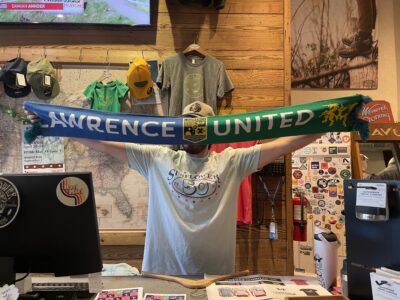
Soccer gear honoring Lawrence history’s all-star team is now on sale as part of city’s public art exhibition
To honor public servants, Lawrence’s July 4 celebration will have a whole gallery of their photos on display; submissions open now