School board braces for challenging year
The biggest challenge facing the Lawrence school board this year can be summarized in four letters — NCLB.
The federal education reform act, No Child Left Behind, is putting public school districts across the nation on edge. It requires all students, whether they be poor, non-English speakers or disabled, to be rated “proficient” in math and reading by 2014.
To reach that plateau, district and schools need to make annual improvement in the number of students scoring well on tests in both subjects.
Central Junior High School, Free State High School and Lawrence High School are already on a watch list for not demonstrating “adequate yearly progress” on student assessments in reading and math.
“We all recognize how formidable the task is,” said Randy Weseman, superintendent of the 9,900-student district. “We are not giving up on anybody.”
Other questions on the school board’s agenda this year:
- Fiscal — Approach voters with a sales tax for education? Develop a new bond issue for school construction and renovation? More budget cuts?
- Academic — In addition to No Child Left Behind, what can the board do to help build professional learning communities in each school?
- Physical — New five-year facility plan? Redraw school boundaries? Expand vocational-technical programs? What becomes of Lawrence Alternative High School? Elementary school class sizes?
Some members of the school board are frustrated with No Child Left Behind.
Board member Leonard Ortiz, who teaches history at Kansas University, said he questioned the practicality of a law mandating all public school students to be “proficient” in the core subject areas. Too many Americans live in poverty to expect the goal to be achieved, Ortiz said.
“Anybody who has taught knows it is unobtainable,” he said.
Dan Neuenswander, the district’s school improvement specialist, said the administration of the district was committed to goals of the law. Even if a teacher doesn’t buy in, Neuenswander said, that person better work as if he or she does.
“For eight hours a day, you better act like it,” he said.
In August, the school board agreed to study options for a city or county sales tax that would raise money for public schools.
There are two basic options:
- County sales tax — Revenue would be shared by eight districts serving children in Douglas County. Cash could be divided on a per-pupil basis.
- City sales tax — All revenue would go to the Lawrence district.
Movement to develop a sales tax for public schools follows voter approval in Johnson County of a quarter-cent sales tax that will raise $45 million over three years for public school districts in that county.
Board member Linda Robinson said she was prepared to vote for a sales tax right now.
“I don’t think we can put ourselves in the situation like the federal government is doing — continuing to spend and cut revenue sources,” Robinson said.
Ortiz said the district shouldn’t seek community support for a sales tax at the same time it pushes adoption of a revised school bond plan.
“It’s probably not a good idea to do both at the same time,” he said.
In April, voters defeated a $59 million bond plan for school construction and renovation.
Weseman said planning should begin for developing a more comprehensive vocational-technical education program for Lawrence students.
Another issue on the table is finding the right balance between autonomy in management of district schools and buying into the district’s overall goals for student achievement in reading, writing and math, he said.
“We identified it as a problem,” Weseman said.
City Government
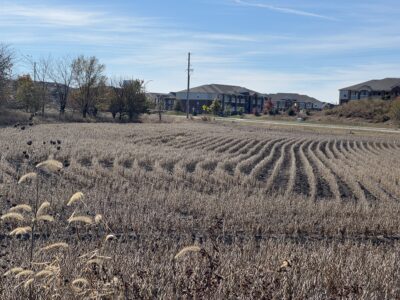
Developer seeks incentive from City of Lawrence to build 131 units of housing near Wakarusa and Queens

Lawrence city leaders will consider whether to keep Community Building open, make 2 other rec centers free to access
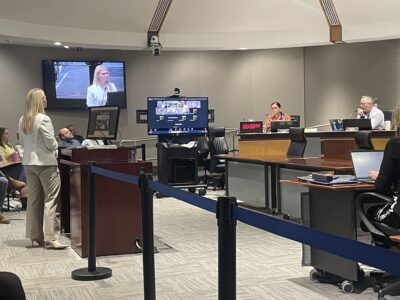
A STAR Bond application raises questions for city leaders about Costco and housing west of the SLT

Soccer gear honoring Lawrence history’s all-star team is now on sale as part of city’s public art exhibition
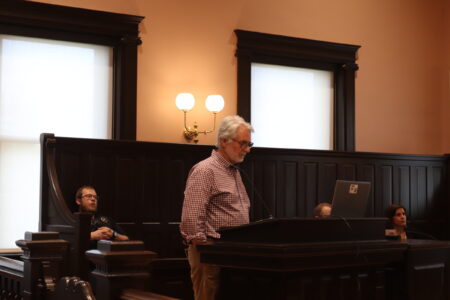
To honor public servants, Lawrence’s July 4 celebration will have a whole gallery of their photos on display; submissions open now