Lecompton growth hinges on water
Lecompton ? Mark Tunstall won’t be getting new neighbors anytime soon.
His hometown simply can’t squeeze any more water from its parched one-well system.
“Right now, if anyone wanted to come in and put up 50 to 100 houses, it would be real hard for us to supply them enough water,” said Tunstall, a member of the Lecompton City Council. “We already use everything we have. With 50 to 100 more homes, we’d be over — way over.”
And with a developer angling to build at least that many homes — plus a few retail shops and maybe even a town square to go with them — leaders of this city of about 600 people are making a run at expanding the water system to allow for growth.
Council members will meet soon to discuss seeking as much as $800,000 in grants to help defray the estimated $1 million cost of drilling a new water well and improving the city’s treatment system to allow for 250 more residents.
For J. Stewart, who owns or holds options on 1,000 acres of open land between Lawrence and Lecompton, the move can’t come soon enough.
“I’m still enjoying working with the city, but we need more active, progressive participation by the city if they want to get something done,” said Stewart, president of Terravest Custom Homes in Lawrence. “I have great faith in Roy (Paslay) as the mayor — that things now possibly might get done.”
Shake out the rust
During their May 19 meeting, Lecompton City Council members will revisit a year-old engineering study that recommended a $1 million upgrade for the city’s water system.
The reasoning: The city’s average use of 18 million gallons a year already stretches the limits of the system, even including a separate contract to buy water from nearby Douglas County Rural Water District No. 3. Add to that complaints of “rusty” water pouring from spigots at the outer reaches of the city’s water lines.
Paslay and Tunstall said the time could be ripe for asking the federal government to soak up some of the project costs.
The city could qualify for as much as $800,000 in grants, through a combination of federal Community Development Block Grants and rural development grants administered through the U.S. Department of Agriculture.
“If you can find some federal grant money where you don’t have to pay anything, that’s a great situation,” said Mike Dalrymple, vice president of Kramer Engineering in Topeka, the city’s consultant on water projects.
Even with the grants, Lecompton residents likely would face a increase on their water bills.
The city’s 262 customers pay an average of $25.75 a month for water. That bill that could jump by $6 — or 23 percent — to pay for the city’s share of project costs, Dalrymple said.
Shopping for help

 6News video: Growth putting pressure on Lecompton water supply (4-29-03)
Lecompton officials also have been approached about upgrading distribution lines and building a sewage treatment plant to handle the products of what could be an increasingly urban area.
Stewart wants to build anywhere from 40 to 80 homes — selling for $150,000 each — on 300 acres southeast of Lecompton. An additional 700 acres with frontage on the Farmers Turnpike could be reserved for dozens of other homes — including some on 3-acre “estate” lots — plus commercial and retail projects arrayed around a traditional town square.
But such development won’t happen without significant public investment, he said, though the water projects could be a start.
“This is just one item on the city’s shopping list that needs to be answered,” Stewart said.
Tunstall said it was time for the city to climb aboard the growth bandwagon.
“You can’t stay small forever,” said Tunstall, who works at the Kaw Water Treatment Plant in Lawrence. “We need businesses. We need a McDonald’s down on a corner somewhere. We need to have a few more conveniences, instead of having to drive to Lawrence or Perry for everything.”
But he said officials would be careful not to sacrifice the city’s quaint, quiet quality of life.
“If we boomed up as big as Lawrence right now — say, within 10 years — I think it would be difficult on us,” Tunstall said. “We’d be doing a lot of scrambling to catch up. But in 20 years, to be half the size of Lawrence, we’d be happy.”
City Government
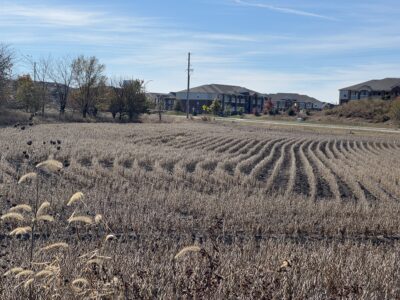
Developer seeks incentive from City of Lawrence to build 131 units of housing near Wakarusa and Queens

Lawrence city leaders will consider whether to keep Community Building open, make 2 other rec centers free to access
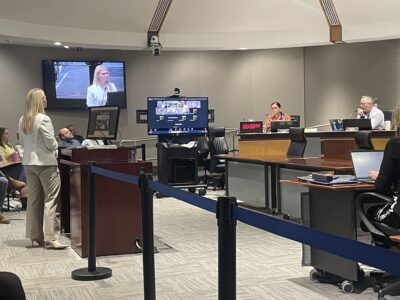
A STAR Bond application raises questions for city leaders about Costco and housing west of the SLT

Soccer gear honoring Lawrence history’s all-star team is now on sale as part of city’s public art exhibition
To honor public servants, Lawrence’s July 4 celebration will have a whole gallery of their photos on display; submissions open now