Briefly
California: Higher ed donations drop
Contributions to colleges and universities in the United States dropped slightly during 2002 — the first decline in more than 15 years, according to a study.
Private gifts to higher education declined 1.2 percent to $23.9 billion for the fiscal year that ended June 30, 2002, the RAND study released Thursday said.
Alumni giving declined the most, dropping by 13.6 percent, or about $1 billion. Foundation support surpassed alumni support for the first time in 25 years, according to the annual survey by the Santa Monica-based think tank’s Council for Aid to Education.
The study also found that the University of Southern California outperformed Harvard University to become the most successful fund-raising university in the nation.
USC, which ranked 11th in fiscal year 2001, raised more than $585 million during the 2002 fiscal year. Harvard raised $478 million.
Washington, D.C.: New AIDS drug may be too costly for many
A new drug offers great hope to AIDS patients, but its price may put it out of reach for many, especially those who rely on state-funded, cash-strapped programs.
The Food and Drug Administration on Thursday approved Fuzeon, the first in a new class of medications to fight AIDS.
State AIDS directors had been awaiting the approval with excitement about its potential mixed with anxiety about its cost. Drug makers haven’t announced a U.S. price yet but said it would be close to the $20,400 per year they are charging in Europe.
The last resort for many patients, state AIDS Drug Assistance Programs already spend nearly $10,000 on the average patient. Fuzeon must be combined with some existing drugs, so its total cost per year could approach $30,000.
Washington, D.C.: Audit: Imported meat jeopardized food supply
The Agriculture Department jeopardized the safety of the U.S. food supply by letting in 823,632 pounds of meat from foreign plants that might not have been approved, department auditors say.
Some of the meat, imported from 1999 to 2001, came from plants in Argentina, Uruguay, the United Kingdom and Italy, “four countries that had outbreaks of foot-and-mouth disease in 2001,” according to a report by the department’s inspector general.
Foot-and-mouth disease cannot infect humans but can easily spread among farm animals such as cattle, pigs and sheep. An outbreak can cost a country billions of dollars, including lost food sales.
The report found 66,299 pounds of the meat came from plants that were banned from trading because they didn’t comply with U.S. food safety laws or were coping with an animal disease outbreak.
Garry L. McKee, administrator of food safety, said the agency was working to correct the problems.
Albuquerque: Teachers suspended for antiwar signs
Dozens of students walked out of class to protest the suspensions of two Rio Grande High School teachers who were removed after refusing to take down antiwar posters in their classrooms.
Carmelita Roybal, a ninth-grade English teacher, was placed on leave with pay Wednesday after refusing to remove a black-and-white “No War Against Iraq” poster from her classroom. Art teacher Heather Duffy was asked to leave Thursday and suspended with pay for refusing to remove a similar poster. About 45 students walked out in protest Thursday.
Rigo Chavez, a spokesman for the Albuquerque school district, said such posters could be displayed if there was a class discussion about the issue, but “they’re not supposed to promote one side or another of a controversial issue.”
City Government
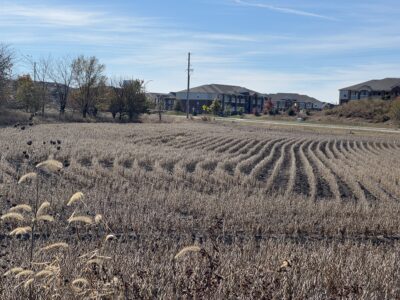
Developer seeks incentive from City of Lawrence to build 131 units of housing near Wakarusa and Queens

Lawrence city leaders will consider whether to keep Community Building open, make 2 other rec centers free to access
A STAR Bond application raises questions for city leaders about Costco and housing west of the SLT
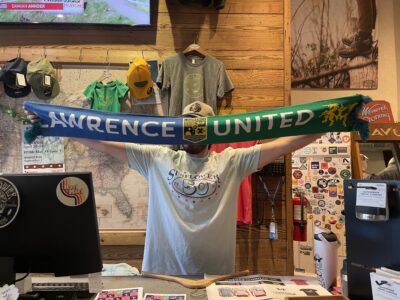
Soccer gear honoring Lawrence history’s all-star team is now on sale as part of city’s public art exhibition
To honor public servants, Lawrence’s July 4 celebration will have a whole gallery of their photos on display; submissions open now