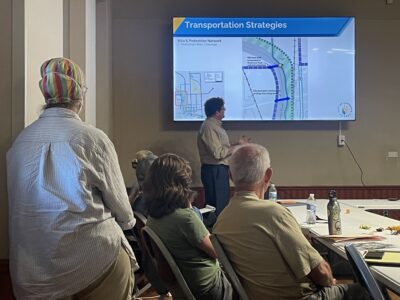
School, government officials plan strategy for southern growth
Randy Weseman looks south of the Wakarusa River and sees the future of Lawrence — even if it’ll take another 20 or 30 years to get there.
“So far, the growth’s just splattered out there,” said Weseman, superintendent of the Lawrence school district. “My thinking is: Is that going to continue? I would rather, obviously, see a planned-growth effort. I’m watching it all the time and trying to make some plans to be ahead of the curve instead of just being reactive.”
Weseman isn’t alone.
The schools administrator and other officials from city and Douglas County governments are busy mapping out a strategy to cross the Wakarusa, a move that one day could bridge the rural boundary that divides farm fields and small subdivisions from a burgeoning urban core.
City and county officials already are mulling an engineering study that shows Lawrence could build its second sewage-treatment plant along the banks of the Wakarusa for about the same cost as expanding an existing plant on the Kansas River.
Such a sewage scenario, coupled with completion of the South Lawrence Trafficway and new development standards south of Lawrence, could drive development of bigger roads, dozens of businesses and hundreds of new homes south of the Wakarusa.
“That’s where we’re going to grow,” said Charles Jones, a county commissioner. “All the logic in the world pushes us south of the Wakarusa River.”
Allowing Lawrence to continue its westward expansion wouldn’t make sense, Jones said, because it would create a “linear” city — with extremes to the east and west but little development to the north and south.
Narrow vision
Such moves would encourage new homes to be built at the always-expanding western edge of town, he said, pushing residents farther and farther away from the growing and job-rich communities in Johnson County and the Kansas City metro area.
“We’ll have more traffic problems,” Jones said.
Areas west of the South Lawrence Trafficway also introduce more hills and other impediments to efficient construction, whether it’s for sewers, roads or other public projects.
And then there’s the matter of community identity. Lawrence’s expansion to the northwest already has crept into the Perry-Lecompton school district, and the more it reaches to the west, the closer the prospect of having more Lawrence residents attending classes in schools run by administrators in Shawnee County becomes.
There’s no question that Lawrence will continue to grow, Jones said.
“The issue is the direction, and the decision is all but made to go south,” Jones said. “The only question is under what conditions.”
That’s where fellow Commissioner Jere McElhaney and others come in.
McElhaney, who lives south of Lawrence, has been openly critical of officials’ efforts to impose tighter development guidelines on properties in Lawrence’s “urban growth area” — land where the city logically can be expected to expand in the near future.
McElhaney wants to be sure that residents south of the river don’t get trapped into living under city-imposed development guidelines and paying higher taxes without benefiting from a promised stable of public services — including police and fire protection, and treatment for water and sewage.
And that doesn’t even include the lack of a completed trafficway, which state and federal officials want to drive through the Baker Wetlands but others seek to push south of the river.
Learning experience
“We can’t have the expected density growth south of the Wakarusa River unless we have the proper road and infrastructure in place,” McElhaney said.
Weseman isn’t so sure the roads, sewers and other growth-driving projects will be in place anytime soon. The superintendent figures developers will continue to favor building more homes at Lawrence’s western edge, pushing the city’s boundaries beyond the trafficway’s connection with U.S. Highway 40.
On the western frontier, Weseman foresees a need for “new elementaries, and another junior high. And for that, I’m thinking more to the west.”
But such needs are only the beginning.
“A new high school? That’s a coin flip right now, depending on what happens,” Weseman said. “There’s no doubt about it. In a decade or so, in 12 years, you’ll have a third high school either to the west or to the south. You could have one leaning to the southwest and another farther south — way out, at the 20-year mark or something like that.”
Weseman pauses, mulling the thought.
“That’s so far out people look at me funny when I start talking about that,” he said. “But it’s coming.”
City Government
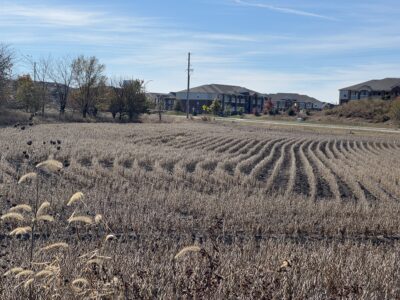
Developer seeks incentive from City of Lawrence to build 131 units of housing near Wakarusa and Queens

Lawrence city leaders will consider whether to keep Community Building open, make 2 other rec centers free to access
A STAR Bond application raises questions for city leaders about Costco and housing west of the SLT
Soccer gear honoring Lawrence history’s all-star team is now on sale as part of city’s public art exhibition
To honor public servants, Lawrence’s July 4 celebration will have a whole gallery of their photos on display; submissions open now