Lawrence population maintains pace
Lawrence’s population has been growing at a steady, strong clip for decades, and the forecast is that it will continue to do so.
“The city of Lawrence has historically shown about two percent annual increase in population that dates way back to the 1960s and 1970s,” said Bryan Dyer, a long-range planner with the city. “It’s a very long trend that has been going on.”
For 2003, the estimated population of Lawrence is 85,282, just more than two percent than in 2002. At its current rate of growth, the city would be near 100,000 by the time of the next census count in 2010.
A destination for students, retirees and all demographic groups in between, Lawrence growth has far out-paced the state of Kansas as a whole.
From 1990-2000, while the statewide population grew 8.5 percent, Lawrence and Douglas County saw more than a 20-percent increase
And in Lawrence, growth is limited by only two factors, although they are big factors — land and people.
“The biggest factor is where is there buildable land,” Dyer said.
The Kansas River to the north and Wakarusa River to the south, which converge east of Lawrence, take out a lot of land from development. “To the north, south and east there are significant flood-plain issues,” he said. “Those areas within the FEMA (Federal Emergency Management Agency) flood-plains are not that conducive to residential development,” Dyer said.
This has pushed most of the growth to the western part of the city, and to some extent the southeast.
And as people push west, more questions about development and growth arise — questions that Lawrence residents wrestle with continually in the poltical and economic spheres.
There are probably few towns in the country where more coffee shop debates revolve around planning, zoning and whether to build shopping centers.
“Obviously, the outcome of the growth is the city’s continual need to handle the infrastructure. There is always the question of who is responsible to bear those costs,” Dyer said.
“We have the infrastructure ability to serve X-number of people unless we make a signficant investment. That’s probably the biggest limiting factor, whether to put forward money to handle the growth. The city is always looking for how to improve and how we are going to need to improve the infrastructure,” he said.
Although a problem, it’s one that many towns in Kansas, which are losing population, would like to have.
And as the city grows, the influence of its biggest employer, Kansas University, becomes less.
Like many in Lawrence, Dyer remembers a time as late as the 1980s when KU’s student population was nearly half of the town.
“Lawrence is still thought of as a college town, but we have folks living here now who don’t have any involvement in KU,” he said.
He said many couples move to Lawrence because of its location within commuting distance of two larger urban areas, Topeka and the Kansas City-metro area.
Now, he said, “Lawrence is becoming more thought of as a mid-sized town.”
City Government
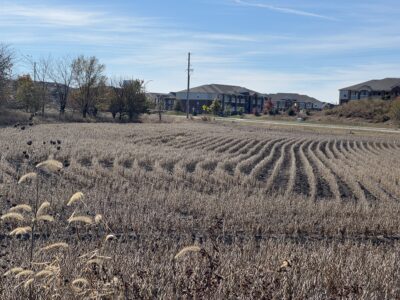
Developer seeks incentive from City of Lawrence to build 131 units of housing near Wakarusa and Queens

Lawrence city leaders will consider whether to keep Community Building open, make 2 other rec centers free to access
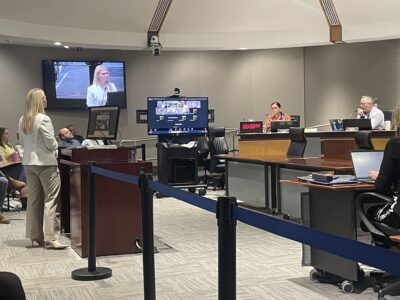
A STAR Bond application raises questions for city leaders about Costco and housing west of the SLT

Soccer gear honoring Lawrence history’s all-star team is now on sale as part of city’s public art exhibition
To honor public servants, Lawrence’s July 4 celebration will have a whole gallery of their photos on display; submissions open now