Fish, vegetables offer quick meal
Most home cooks wouldn’t want to be without their microwave ovens, even if they use them only for popcorn and reheat foods.
But you can actually cook in them. It’s quick, healthful and involves little cleanup, something to remember as you are getting the gunk out of the grooves of an indoor grill.
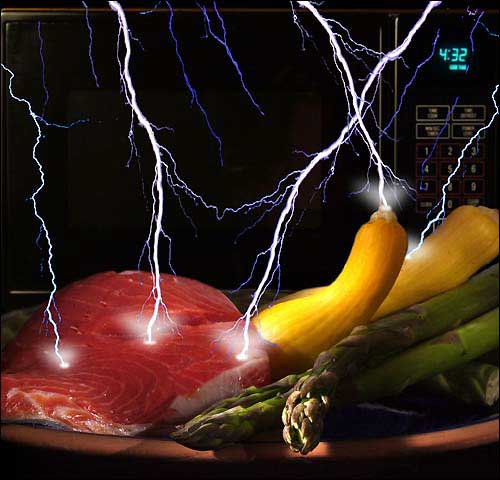
Two foods that blossom in the moist microwave environment fish and vegetables also rank high with those following a healthful diet.
“They do beautifully,” said Owene Lewis, a home economist in microwave engineering at Sharp Manufacturing Co. of America in Bartlett, Tenn.
Vegetables not only retain their color and texture in the microwave, they also hang onto water-soluble vitamins because they are cooked in just a little liquid.
When properly zapped, fish steams or poaches to moist perfection.
“What’s really great is you can put the vegetables and the fish on the same plate and have them ready at the same time,” said Barbara Kafka, author of “Microwave Gourmet.”
“I like the microwave because I can cook an assortment of vegetables all at one time,” Kafka said.
“I just put them in concentric circles with the densest ones to the outside, the fragile ones in the center.”
She adds a bit of water and covers the dish or plate with a lid or plastic wrap.
“It saves you from using a lot of pots if you want to make pasta primavera,” Kafka said.
If you like to use roasted garlic to flavor vegetables or other dishes, Kafka has a recipe for cooking it in 6 to 8 minutes in the microwave. Standing time is 10 minutes.
The whole heads of garlic are not really roasted, but they have the desirable mild flavor of oven-cooked garlic.
Traditional sauces for vegetables bechamel and cheese also are easy to do in a microwave. You don’t need a double boiler and the sauces thicken more quickly than when prepared on the top of a range.
One of Lewis’s favorite vegetable preparations is an oriental-style asparagus with sesame sauce. Sesame seeds toasted in the microwave won’t turn golden but they will have a toasted flavor.
Corn on the cob, still in the husk or with the husk removed, responds well to a steamy microwave. And you can have an artichoke faster than you can bring a pot of water to boil.
Conventional methods require about an hour of active stirring for risotto’s creamy results. In the microwave, the rice needs only about 3 minutes of preparation and 18 minutes of unattended cooking.
| Here are some tips to help you properly cook fish in the microwave:Fillets of fish are usually much thinner at the tail end. Tuck the end under so it doesn’t cook more quickly than the thicker parts.To avoid overcooking, always check the fish at the minimum time called for in the recipe. One pound of fish will cook in about 3 minutes.To test for doneness, insert the tip of a sharp knife in the thickest section to see if the flesh is opaque. You also can use two bamboo skewers to spread the flesh and peek inside.You can substitute similar fish in most recipes: flounder, sole, snapper and catfish are interchangeable as are tuna, amberjack and grouper.Microwaves intensify the flavor of dried herbs. If adapting a conventional recipe to the microwave, use a smaller quantity of herbs. |
“From being a once-a-year treat, risotto can go to being an everyday delight,” Kafka writes in her cookbook.
One of her recipes teams risotto with shrimp and spring vegetables.
But if vegetables become more colorful after zapping, most fish remains decidedly pale, especially when compared with grilled fish and its brown hash marks.
“I just don’t think brown is better-looking per se than white,” Kafka said. “And standing outside grilling while everyone else is inside eating isn’t my favorite thing to do.”
She said color can be added to fish dishes in a number of ways: with fresh herbs, spices, nuts, pesto or tapenade (a mixture of chopped olives, capers and anchovies).
Because they are often steamed, shellfish such as shrimp, clams and mussels are great in the microwave.
“Clams and mussels are coaxed into opening without becoming rubbery,” writes Carl Jerome in “The Good Health Microwave Cookbook.” “Lobster becomes succulent and sweet without toughening. Scallops melt in your mouth.”
Kafka presents microwave versions of classics such as moules marinieres (mussels in wine sauce), Clam Posillipo, Shrimp Creole and Truite au Bleu (blue trout), as well as creative recipes, some combining fish with vegetables.
Lewis, who grew up on the Gulf Coast, likes to do gumbo (especially the roux) in the microwave, as well as a number of shrimp and crab dishes.
Most microwave ovens are now engineered to distribute the energy well enough to make constant turning and moving of the food unnecessary, Lewis said.
Some Sharp microwaves also are equipped with sensors that respond to moisture and automatically sense when food is done.
But home cooks will do well to think of their microwave as a steamer, not an oven. Foods requiring dry heat for roasting or baking do not do well in the microwave.
“The microwave is wonderful for some things,” Kafka said. “But I’m not going to cook a good piece of steak in it.”
Food
David Tamarkin’s recipe for Greens, Grains and Fried Egg works for any meal
Slow-cooked, sticky-glazed pork ribs go with cucumber slaw in Sam Way’s recipe
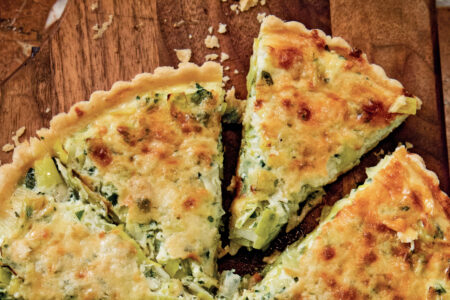
This quiche just might make you love leeks