News briefs
California: Last SLA suspected arrested
The last Symbionese Liberation Army fugitive wanted in a deadly 1975 bank robbery was arrested Friday in South Africa, a day after four former comrades :quot; now graying and middle-aged :quot; pleaded guilty to murder in the case.
James Kilgore, 55, was seized at his home in the luxury Cape Town suburb of Claremont, 27 years after the Californian went underground.
He had entered South Africa five years ago under the name Charles Pape and had landed a post at the University of Cape Town as a lecturer, said police spokeswoman Mary Martins-Engelbrecht. Kilgore’s wife is also a lecturer there.
South African police tracked him down with help from Interpol, Martins-Engelbrecht said.
Through his lawyer, Kilgore had been trying to negotiate his surrender and a plea bargain similar to those worked out by fellow members of the SLA, the ’70s radical group that kidnapped newspaper heiress Patricia Hearst. But Kilgore was arrested on his original 1976 federal warrant, for possessing a pipe bomb, before a deal was reached.
Washington, D.C.: Pentagon trying to find who released suspects’ photos
The Pentagon was investigating Friday to find out who took and released photographs of terror suspects as they were being transported in heavy restraints aboard a U.S. military plane.
Four photographs of prisoners – handcuffed, heads covered with black hoods and bound with straps on the floor of a plane – appeared overnight on the Web site of radio talk show host Art Bell.
“Anonymous mailer sends us photos taken inside a military C-130 transporting POWS,” the headline said.
The photos are the first giving a glimpse into security measures aboard any of the airplanes used during the past year as prisoners were transferred to prisons in and around Afghanistan and elsewhere around the world, including to the high-security prison at Guantanamo Bay, Cuba.
It has long been known that prisoners were heavily restrained, and photos of prisoners bound and kneeling after arrival in Cuba early this year created a stir among human and prison rights groups.
Washington, D.C.: Troops may chase terrorists, even without OK from locals
Even if local governments don’t agree, American forces may launch assaults into lawless or poorly governed areas around the world to go after terrorists hiding there.
“We make every, every effort to work with countries, most of whom are very eager to get rid of the al-Qaida,” Pentagon spokeswoman Victoria Clarke told a news conference Friday.
“But … without speculating where, there may be circumstances when we go into an ungoverned area in pursuit of al-Qaida,” she said on the question of getting local permission first. “I’ll just leave it at that.”
In the year-old war on terror, there have been no known instances of the U.S. military capturing or killing a terrorist suspect without the prior consent of the government where the operation occurred.
It also is not known if such operations have been performed by the CIA.
City Government

Developer seeks incentive from City of Lawrence to build 131 units of housing near Wakarusa and Queens

Lawrence city leaders will consider whether to keep Community Building open, make 2 other rec centers free to access
A STAR Bond application raises questions for city leaders about Costco and housing west of the SLT
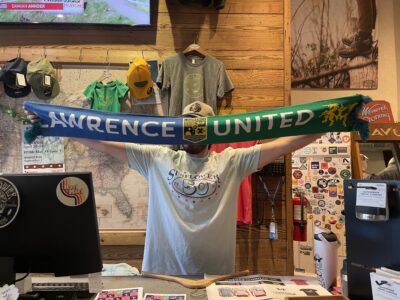
Soccer gear honoring Lawrence history’s all-star team is now on sale as part of city’s public art exhibition
To honor public servants, Lawrence’s July 4 celebration will have a whole gallery of their photos on display; submissions open now