Briefly
California
Four former SLA members plead guilty to killing woman
Four former members of the Symbionese Liberation Army pleaded guilty to murder Thursday in the shotgun slaying of a bank customer during a 1975 holdup, virtually ending one of the most notorious and violent sagas of radical 1970s politics.
The four are William Harris; his ex-wife, Emily Montague; Michael Bortin; and Sara Jane Olson, who is already serving 14 years behind bars for a 1975 attempt to blow up two Los Angeles police cars. Each will get six to eight years in prison.
The defendants, now in their 50s and most with families and children, were once members of the radical group that became prominent when it kidnapped newspaper heiress Patricia Hearst in 1974. A fifth suspect in the bank slaying, James Kilgore, 55, has been a fugitive since the 1970s.
Montague admitted in court that she pulled the trigger in shooting 42-year-old Myrna Opsahl during an April 21, 1975, robbery of the Crocker National Bank in suburban Sacramento.
Indonesia
Police say suspect admits to van’s use in Bali bombing
In the first major break in the inquiry into the Bali nightclub bombings, Indonesian officials said a suspect had admitted to taking part in the bombing and led police to a house where residue of the explosives was recovered.
Made Mangku Pastika, deputy chief of the criminal investigation division of the Indonesian national police, would not say today where the house was located but told reporters that a police forensic unit was searching the residence.
Pastika said police thought six to 10 people were involved in the attack on a nightclub district frequented by foreigners that killed nearly 200 people, and that there were signs of international involvement.
Gen. Da’i Bachtiar, the national police commander, said Thursday that the suspect, an Indonesian man identified only as Amrozi, owned the L300 Mitsubishi minivan laden with at least 110 pounds of explosives that exploded outside a packed Bali nightclub.
Washington, D.C.
FCC: Drug policy office must be identified as ad sponsor
The White House drug policy office must be identified as a sponsor of dozens of public service announcements that receive free air time on network television, the Federal Communications Commission ruled Thursday.
The decision could prompt several nonprofit groups who don’t necessarily want their message associated with the Bush administration to stop producing the ads altogether.
For every dollar of advertising time purchased by the Office of National Drug Control Policy for anti-drug messages, TV networks are required to make an equivalent amount of free time available for public service ads on other topics.
More than 50 nonprofit organizations ” from the Alliance for Youth to the Girl Scouts ” take advantage of the arrangement. Proposed ads are reviewed by the Ad Council, a nonprofit group that works with the drug policy office.
The office’s ad campaign is expected to cost nearly $1 billion over five years.
City Government
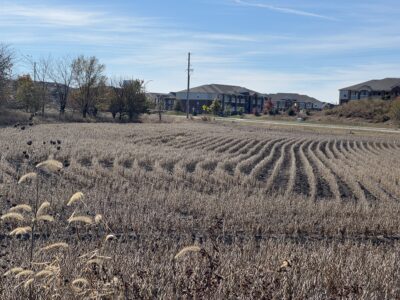
Developer seeks incentive from City of Lawrence to build 131 units of housing near Wakarusa and Queens

Lawrence city leaders will consider whether to keep Community Building open, make 2 other rec centers free to access
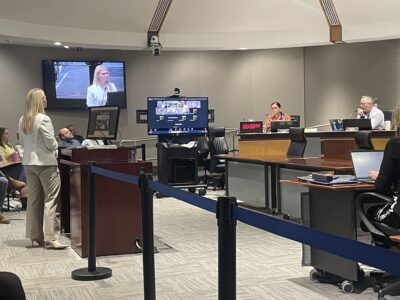
A STAR Bond application raises questions for city leaders about Costco and housing west of the SLT
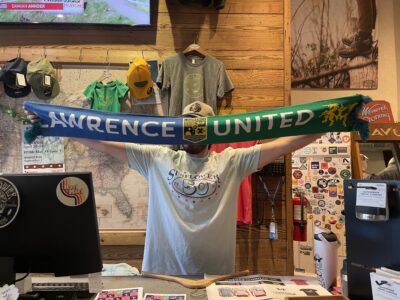
Soccer gear honoring Lawrence history’s all-star team is now on sale as part of city’s public art exhibition
To honor public servants, Lawrence’s July 4 celebration will have a whole gallery of their photos on display; submissions open now