Advocate fights for rights of poor
The homeless in Philadelphia knew it was time to speak up when the mayor sent a couple Johnny On The Spots to what was supposed to be their temporary tent city.
So an army of homeless about 60 families’ worth walked 140 miles in 10 days in 1996 to tell the governor they were tired of being invisible, tired of having no access to affordable housing.
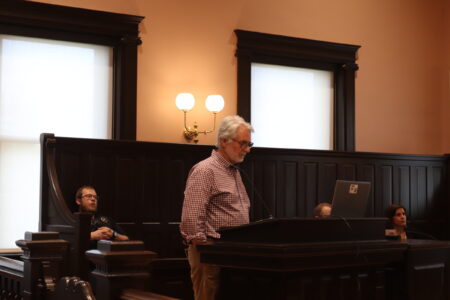
What became known as the March for Our Lives is one example of the bold tactics the Kensington Welfare Rights Union employs to bring attention to the plight of the poor and homeless in Philadelphia. The Lawrence Coalition for Peace and Justice and the Kaw Valley Living Wage Alliance brought Cheri Honkala, executive director and a founding member of the 11-year-old union, on Thursday night to Lawrence to share the story of her life and how the union evolved.
Allan Hanson, coordinator of the Coalition for Peace and Justice, said Honkala’s talk inspired members of the host organizations because they are involved in similar battles locally.
“One of most important connections locally is the living-wage movement,” Hanson said. “Honkala’s imagination and her dedication to the cause of the homeless is only inspiring to people who are trying to develop a living wage here in Lawrence against a certain amount of opposition.”
Kensington Welfare Rights Union is a multiracial organization formed by homeless and poor who work on behalf of homeless and poor. The union is based in Kensington, the poorest neighborhood in Philadelphia. Its ultimate goal is to end poverty and homelessness in America.
In 1995, when then-Pennsylvania Gov. Tom Ridge wouldn’t listen to their concerns about access to medical care and affordable housing, the group’s founding families moved into the rotunda of the State Capitol. In a restaging of that action, the organization makes a practice of moving poor families into abandoned HUD housing.
Once the organization “wins” the HUD homes through a series of evictions, sit-ins and arrests, they move families in until they can make enough money to get on their feet. Those families then are committed to working on behalf of the homeless and poor.
Hanson said he was intrigued by the idea of claiming abandoned homes to compensate for a lack of affordable housing.
“Anything like that is interesting in the sense that if there’s a resource that’s just lying there unused on the one hand, a people that need it on the other hand, it makes a sort of logical sense to put the two together,” Hanson said.
Mark Horowitz of the Kaw Valley Living Wage Alliance added, “It’s sad that groups like this have to go outside the boundaries … to really attain what should be a basic need in our country.”
City Government
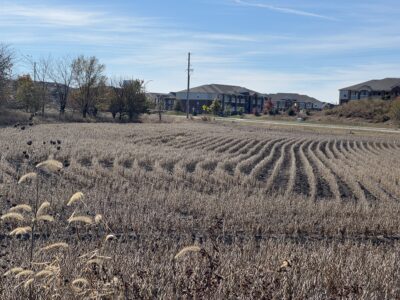
Developer seeks incentive from City of Lawrence to build 131 units of housing near Wakarusa and Queens

Lawrence city leaders will consider whether to keep Community Building open, make 2 other rec centers free to access
A STAR Bond application raises questions for city leaders about Costco and housing west of the SLT
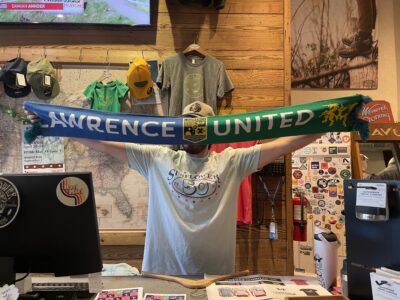
Soccer gear honoring Lawrence history’s all-star team is now on sale as part of city’s public art exhibition
To honor public servants, Lawrence’s July 4 celebration will have a whole gallery of their photos on display; submissions open now