New center shelters more animals
The Lawrence Humane Society has big paws to fill.
Each year, the shelter at 1805 E. 19th St. takes in approximately 5,500 animals, or an average of 10 to 15 each day.
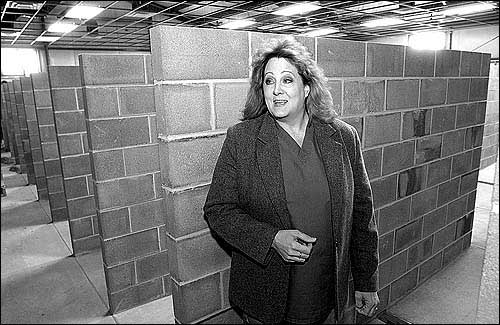
Midge Grinstead, director of the Lawrence Humane Society, 1805 E. 19th St., is excited about the new wing of the facility that holds stray and picked-up animals.
Some days, though, the influx of unwanted pets is higher than others. On the shelter’s busiest day ever, 82 animals crossed the threshold in need of a place to stay until permanent homes could be found.
In January, the shelter took in 191 cats and 204 dogs. That may sound like a lot, but it’s not even close to the number of animals who come in during a typical June or July roughly 400 cats and 300 to 400 dogs.
And the job is only getting bigger.
“The numbers are going up,” said Midge Grinstead, the shelter’s executive director. “Over the last four years, the number of animals we take in each year has increased by 1,000.”
That growth in the amount of surplus pets in town directly tracks the upsurge in Lawrence’s human population in the last decade or so.
The shelter’s key challenge these days, according to Grinstead, is to meet the demands of a growing city.
For instance, the facility operates a 24-hour emergency pickup service throughout Douglas County for injured domestic animals. Last year, the number of pets that were picked up increased more than 200 percent.
The shelter also has a contract with the city to accept all pets brought in by Lawrence’s animal control officers and to house each of them for at least three days.
In September 2000, animal control went from two to three officers and expanded its hours of operation. The result: Within one year, the number of stray pets brought to the shelter jumped by 69 percent.
That’s a sobering reality, considering that the facility was originally designed with a stray animal capacity of 26 dogs and 28 cats.
As a result, sometimes a litter of kittens will have to share one cage with the mother cat, while a litter of puppies will be housed together in one dog run.
Occasionally, shelter staffers have even taken home an animal or two so that no pet will be turned away from the facility.
Despite the increasing numbers of unwanted pets in Lawrence and Douglas County, the not-for-profit shelter has maintained an 80 to 85 percent adoption rate for dogs and a 65 percent adoption rate for cats.
New lease on life
The shelter’s ability to take in unwanted pets is about to be greatly improved. A new 5,000-square-foot intake center for stray pets opened this week.
The shelter started planning the addition in 1999, and ground for the building was broken in February 2001. Ron Durflinger of Durflinger Homes is the main contractor.
The addition has 36 dog runs that can be divided in half to create 72 runs. There is also room for 20 stainless-steel kennels.
A separate room for kittens and cats has the capacity to comfortably house up to 250 homeless felines.
The building features a high-capacity air exchange system, sound baffling to reduce noise and lots of windows to let in natural sunlight.
“It’s a huge improvement,” Grinstead said. “I’m never going to have to turn an animal away again (due to lack of space).”
The part of the original 10,150-square-foot building that has been used for intake of stray animals will now be devoted to housing pets that are ready for adoption.
Three days have to pass before the shelter can begin the process of placing a stray animal up for adoption. That gives pet owners some time to reclaim a lost animal that’s been turned in at the shelter.
“The new building just gives us a whole new lease on life,” Grinstead said. “It will help us to fulfill our mission of taking in any stray animal in Douglas County.”
The final cost of the addition will be between $450,000 and $560,000. The shelter has already raised more than $300,000 in donations to pay for it.
“It’s going pretty well. We’ve secured a loan in case we don’t have enough to cover the cost of the new building,” she said. “I’m very excited about the expansion. It can only make things easier for us and better for the animals.”
City Government
Developer seeks incentive from City of Lawrence to build 131 units of housing near Wakarusa and Queens

Lawrence city leaders will consider whether to keep Community Building open, make 2 other rec centers free to access
A STAR Bond application raises questions for city leaders about Costco and housing west of the SLT
Soccer gear honoring Lawrence history’s all-star team is now on sale as part of city’s public art exhibition
To honor public servants, Lawrence’s July 4 celebration will have a whole gallery of their photos on display; submissions open now