ECO2 wants to place sales tax question on ballot
Rising from the ashes of a bitter community battle, ECO2 officials say they are trying to heal wounds, build the economy and preserve open space at the same time.
That would be a tall order anywhere. But in Lawrence, where there are as many opinions as people, it’s an even greater challenge.
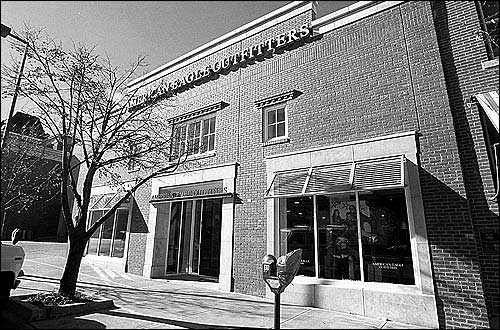
American Eagle Outfitters Inc. has a store in downtown Lawrence, but built its distribution warehouse in Ottawa after a deal to get a tax abatement fell through in Lawrence.
But Mayor Mike Rundle recently said environmental and economic needs can be “symbiotic.”
“Jobs create income to support the community’s growth and the open space creates a quality of life that attracts employers,” he said in telling state legislators about the ECO2 initiative, created by the Lawrence Chamber of Commerce.
ECO2 stands for economic development and ecology. The task force’s mission is to seek ways to purchase land in Douglas County for industrial development and to preserve open space.
The group is seeking legislative approval to place before county voters a proposal to raise the county’s sales tax rate by one-quarter of a cent.
The legislation is needed because the county has reached its maximum 1 percent for a countywide sales tax. To raise the tax rate more requires legislative approval. The sales tax question could be on the ballot as early as November.
“We need to continue to grow our property tax base to help pay the increasing costs of public services,” said Kelvin Heck, co-chairman of ECO2. “Investing in economic development and continually improving quality of life are the best ways to do this.”
The task force hasn’t finalized any proposals. But it has made headway, discussing the possibility of preserving natural corridors around Lone Star and Clinton lakes and the Kansas River and purchasing land for industrial development.
With financial support from the Lawrence City Commission and Douglas County Commission, the group has contracted with Fort Hays State University to undertake a comprehensive labor study to better understand the area’s work force.
And the group, in cooperation with city, county and Kansas University officials, has developed a mapping system of land characteristics to help identify potential areas to develop and preserve.
The task force was formed by the Lawrence Chamber of Commerce after a divisive fight in 2000 over whether to grant an 80 percent, 10-year tax abatement to American Eagle Outfitters Inc., which was considering building a $45 million distribution warehouse in the East Hills Business Park.
Some community activists said the tax breaks were too lucrative, the warehouse would have covered prime farmland and the jobs were low-wage. The deal collapsed under mounting public opposition when the company pulled the plug and located in Ottawa.
The task force includes representatives from developer and environmentalist camps.
It hasn’t been all smooth sailing for the group.
Arguments have erupted over how to divvy up the revenue from the proposed sales tax increase, with some saying a 50-50 split on the purchase of land for development and preservation doesn’t make sense because developable land costs more.
Some also have questioned whether it is wise to raise taxes now because the economy is sputtering.
City Government
Developer seeks incentive from City of Lawrence to build 131 units of housing near Wakarusa and Queens

Lawrence city leaders will consider whether to keep Community Building open, make 2 other rec centers free to access
A STAR Bond application raises questions for city leaders about Costco and housing west of the SLT
Soccer gear honoring Lawrence history’s all-star team is now on sale as part of city’s public art exhibition
To honor public servants, Lawrence’s July 4 celebration will have a whole gallery of their photos on display; submissions open now