How financially healthy are Lawrence residents? New report produces a muddled picture
Residents pay their bills on time, but housing, credit card and student loan debt is high

photo by: AdobeStock
A stack of credit cards is pictured.
I can attest that there was a time in Lawrence where “money management skills” meant figuring out how to pay for seven cover charges and still have enough money left for a week’s worth of Ramen.
Apparently, Lawrence’a management prowess has evolved since then because the community recently was ranked as an above-average city for is its money management skills. The financial services company WalletHub recently ranked Lawrence residents in the 68th percentile in the country when it comes to managing their money. That means we are better than 68 percent of everybody else.
I consider 68 a pretty solid number, just as I did during the days of 7 cover charges a week. (On college transcripts, I always touted it as “degree adjacent.”) But in this case, that number is probably not the most important nor interesting from this WalletHub study. Rather, what interested me about the report is that it provides us financial data about the community that we don’t often see, certainly not from the Census Bureau and other such sources. WalletHub has a business partnership with the credit bureau TransUnion, which means it has access to high-quality data related to credit scores, late payments, mortgage debt and other such metrics.
Let’s take a look at how Lawrence ranks against other Kansas communities in some of those key areas.
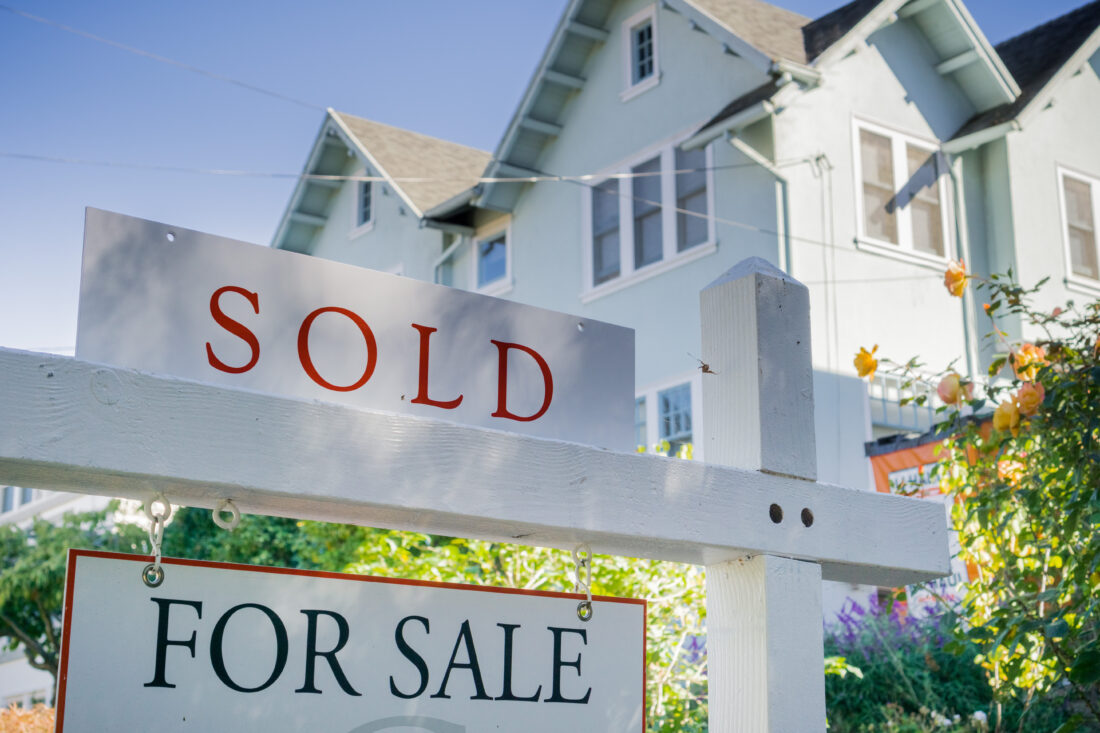
photo by: AdobeStock
A listed neighborhood home is pictured.
Let’s start with the category that measures the amount of mortgage debt a person has versus their income. As you know, Lawrence leaders are talking about a housing affordability crisis in the community, so what do these numbers reflect on that front?
Mortgage debt to income ratio
Hutchinson: 185.6%
Emporia: 215.07%
Topeka: 230.16%
Dodge City: 235.32%
Liberal: 237.19%
Leawood: 237.56%
Salina: 241.86%
Pittsburg: 251.96%
Wichita: 252.29%
Kansas City, Kan.: 265.73%
Derby: 269.26%
Olathe: 280.8%
Garden City: 282.48%
Shawnee: 282.93%
Overland Park: 289.28%
Leavenworth: 292.19%
Lawrence: 318.19%
Junction City: 351.71%
Manhattan: 355.6%
Yes, a high number is a bad number in this case, and Lawrence has one of the highest in the state. So, the numbers generally back up the impression that Lawrence has an affordability problem. These numbers aren’t a perfect measurement, though. One reason Lawrence has a high number likely is related to the transient nature of Lawrence. A good number of new people are coming to town every year, and thus they have had less time to build up equity. Someone who has owned their home for five years versus someone who has owned their home for 25 years, is most likely going to have a lot more mortgage debt. That might be a reason why some communities — like Hutchinson — have much lower levels of debt. Yes, home prices are less in Hutchinson, but the number of new people moving to that community is as well.

photo by: AdobeStock
A credit card transaction is pictured.
What would a story about finances be without a look at credit cards? This metric measures how much credit card debt a person has compared to their income.
Credit card debt to income ratio
Dodge City: 3.41%
Leawood: 4.05%
Overland Park: 4.52%
Emporia: 4.53%
Garden City: 4.58%
Hutchinson: 4.58%
Olathe: 4.64%
Kansas City, Kan.: 4.72%
Salina: 4.79%
Topeka: 4.92%
Derby: 5.05%
Wichita: 5.27%
Liberal: 5.44%
Shawnee: 5.44%
Lawrence: 5.58%
Pittsburg: 5.58%
Leavenworth: 5.75%
Manhattan: 5.81%
Junction City: 6.13%
At this point, it is a little hard to see how Lawrence ranks as an above-average community in terms of money management because — just like with the mortgage measurement — Lawrence ranks near the bottom in this category too. Note that just like the mortgage ranking, Manhattan is also near the bottom of this category. Lawrence and Manhattan are generally two of the youngest communities in the state due to their college populations. That likely plays a role here, but figuring out exactly how so may involve more thought than expected. The first thought that comes to mind is younger people often earn less money, so their amount of debt compared to their income is likely to be high. But our next category creates some questions about that theory.
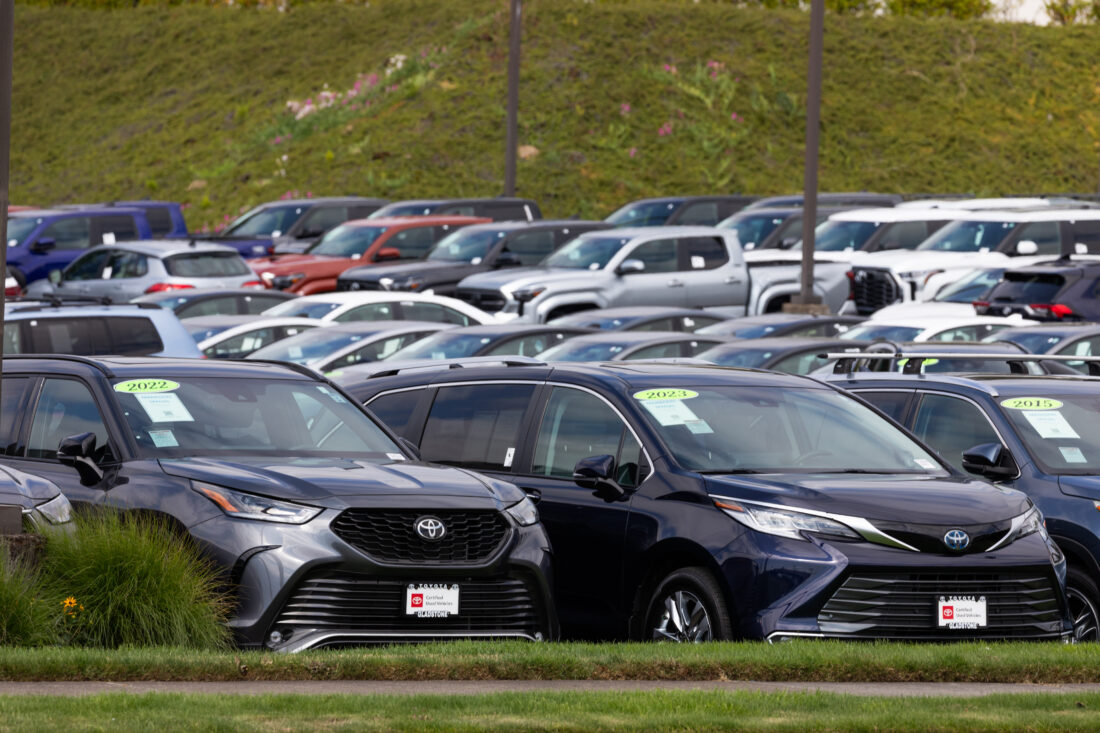
photo by: AdobeStock
A car dealership lot is pictured.
The report also looks at the amount of vehicle debt versus a person’s income. Here, Lawrence — despite its young, lower income residents — ranks among the best in the state.
Car loan debt to income ratio
Leawood: 16.67%
Overland Park: 23.82%
Olathe: 26.61%
Shawnee: 27.67%
Lawrence: 30.58%
Topeka: 35.18%
Wichita: 36.83%
Manhattan: 37.13%
Hutchinson: 37.51%
Derby: 37.73%
Kansas City, Kan.: 37.9%
Dodge City: 39.09%
Salina: 39.91%
Leavenworth: 39.95%
Garden City: 40.45%
Emporia: 45.46%
Liberal: 45.91%
Pittsburg: 46.38%
Junction City: 49.83%
Unlike housing prices, vehicle prices are pretty much the same wherever you go, so that a difference. But if Lawrence’s credit card debt ratio is particularly high due to a propensity of young, lower earners, why doesn’t the same hold true for the vehicle debt ratio. Are we just a town full of crud cars? I know my 2004 Ford Ranger is doing its part to hold up the average, but maybe others aren’t. Notice the five communities that have debt ratios above 40%. All are pretty rural. Is that because their incomes are low? Or is it because rural residents put a lot more miles on their vehicles? I grew up in a place where the grocery store was far enough away that we bought extra bags of chips to put in the freezer. For many of my friends who live there today, it is nothing to travel more than 50 miles one way to work. Vehicles are a special type of lifeline in rural America.

photo by: AdobeStock
A small graduation cap is pictured on assorted cash.
If you have a framed degree hanging on your wall, you likely know that student loan debt is a major part of financial management these days. If you have just the frame and no degree, it can really be a management chore, as student loan debt doesn’t care whether you actually completed your degree.
Student loan debt to income ratio
Leawood: 17.86%
Dodge City: 25.74%
Overland Park: 29.61%
Liberal: 30.02%
Olathe: 30.37%
Garden City: 30.96%
Hutchinson: 33.61%
Emporia: 35.23%
Derby: 35.27%
Shawnee: 35.98%
Salina: 36.39%
Wichita: 36.75%
Junction City: 39.73%
Leavenworth: 39.92%
Topeka: 40.2%
Lawrence: 40.62%
Kansas City, Kan.: 41.54%
Manhattan: 47.93%
Pittsburg: 52.05%
Not a shock that Lawrence ranks near the bottom in this category. Is it simply because Lawrence has a high percentage of young graduates who haven’t hit their prime earning years? Maybe. But it also is worth noting that Lawrence’s and Topeka’s numbers are pretty much the same. What do those two communities have in common? Government jobs dominate their economies. Maybe a reason Lawrence’s student debt ratio is so high is because even graduates who are in their prime earning years most often are employed in a government job that pays less than a private sector job. I know that is not true for all government jobs, but figuring out the impact of Lawrence’s paucity of private sector jobs probably is a worthy topic of study someday.

photo by: AdobeStock
A photo showing past due bills.
Late payments are often a sign of financial strain or an indication that you don’t know how to set a reminder on your iPhone calendar. Whatever the case, Lawrence does really well in this metric.
Average number of late payments
Leawood: 1.24
Overland Park: 2.34
Olathe: 2.67
Lawrence: 2.74
Shawnee: 2.78
Manhattan: 3.03
Dodge City: 3.22
Garden City: 3.43
Liberal: 3.48
Salina: 3.65
Hutchinson: 3.65
Topeka: 3.67
Emporia: 3.79
Derby: 4.11
Pittsburg: 4.29
Wichita: 4.43
Kansas City, Kan.: 4.65
Leavenworth: 4.69
Junction City: 5.7
This probably was the biggest surprise in the data to me. Only three Kansas communities rank better than Lawrence, and those communities generally are considered the richest communities in the state. Does that mean Lawrence should be considered the fourth richest? I don’t think so, but it may well be a sign that there is more financial stability here than some would believe.
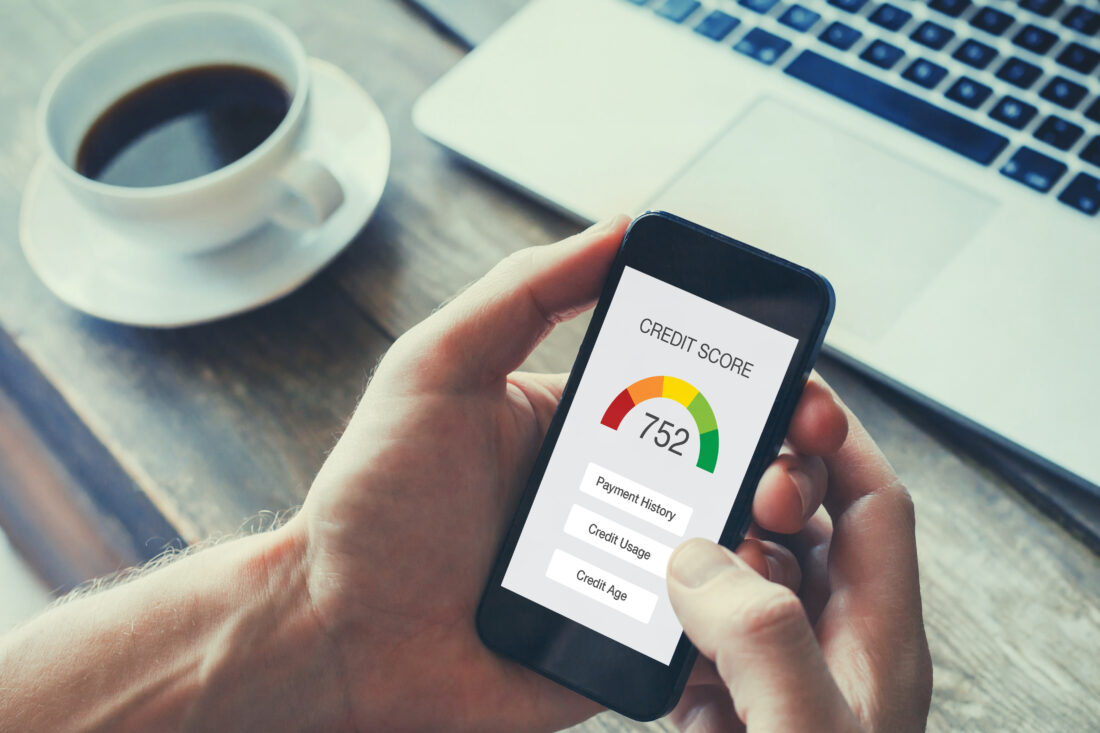
photo by: AdobeStock
A credit score is shown on a mobile phone.
The report also ranks communities based on the average credit scores of their residents.
Median credit score
Leawood: 784
Overland Park: 758
Shawnee: 752
Olathe: 751
Derby: 737
Manhattan: 732
Lawrence: 728
Hutchinson: 707
Emporia: 707
Topeka: 705
Salina: 697
Wichita: 690
Leavenworth: 688
Pittsburg: 682
Liberal: 675
Garden City: 678
Dodge City: 675
Junction City: 666
Kansas City, Kan.: 663
If you truly understand how credit scores are calculated, your deck of tarot cards must be better than mine.
photo by: AdobeStock
The Park Place development in Leawood is pictured.
Lastly, WalletHub did use all of those metrics to rank more than 2,500 cities across the country. The rankings below are what percentile a community landed in, thus, the higher the number, the better the ranking.
Leawood: 99
Overland Park: 87
Olathe: 82
Hutchinson: 77
Dodge City: 76
Shawnee: 76
Liberal: 70
Emporia: 69
Lawrence: 68
Manhattan: 61
Topeka: 56
Garden City: 56
Salina: 53
Wichita: 52
Pittsburg: 50
Derby: 49
Kansas City, Kan.: 42
Leavenworth: 27
Junction City: 11
Leawood — whose top money management question is: Where are we going to store it all? — is among the top 1% in all the country, according to this report. That puts it on par with with a host of Silicon Valley communities like Palo Alto and Cupertino, California, Washington, D.C. suburbs like Chevy Chase and Potomac, Maryland, and Amazon hometown Bellevue, Washington.
I found the bottom of Kansas’ list interesting too, though. Junction City and Leavenworth were by far the lowest ranked communities. Their commonality is that they are the two largest military communities in the state. Look up to the fourth-lowest ranked community, and you will find Derby. That is generally considered the main community for McConnell Air Force Base.
These rankings probably won’t show up in many military recruiting brochures.
As for Lawrence, painting a picture with this data is challenging. However, my best effort would be: Responsible people driving around in subpar cars, shaking their heads in amazement about how much they are paying for their homes, thankful that Visa is accepted everywhere, and hoping that their college degrees were worth it.
Town Talk column
How financially healthy are Lawrence residents? New report produces a muddled picture
Lawrence CPA firm agrees to sell portion of its business to national wealth management group
One of Lawrence’s largest accounting and wealth management firms has sold a part of its business to an ...
Olive Garden sets early-February opening date, plus some signs of other restaurants locating in KU Crossing development

North Lawrence mower, ATV, tractor dealership seeking to double its space; Dillons planning for west Lawrence store remodel
Lawrence single family home construction hits new low in 2025; activity falls by more than 35% from a year ago