Israel marks the return of the final hostage’s remains

People watch the moment a clock showing the time elapsed since the Hamas attack at Hostages Square stopped in Tel Aviv, Israel, Tuesday, Jan. 27, 2026, one day after the remains of Ran Gvili, the final hostage held in Gaza, were returned. (AP Photo/Ohad Zwigenberg)
JERUSALEM — For more than two years, Israelis wore yellow ribbons to remember the hostages abducted during the deadliest day in the country’s history. On Tuesday, they finally could remove those ribbons and shut down a haunting clock in Tel Aviv’s Hostages Square, marking the end of a painful chapter.
The return of Ran Gvili, a 24-year-old police officer killed while fighting Hamas militants during the Oct. 7, 2023, attack on Israel, fulfilled nationwide hopes to return all the hostages, living or dead.
Forensic teams combed a cemetery in northern Gaza, working to locate, exhume and identify Gvili’s remains as part of a broad effort involving search crews, intelligence officers and forensic dentists.
Now, with Gvili’s remains back in Israel, attention has turned toward what comes next in Gaza.
Prime Minister Benjamin Netanyahu said Tuesday that Israel will reopen Gaza’s border crossing with Egypt in both directions, allowing Palestinians to enter and leave the territory after nearly two years of closure.
Netanyahu did not say when the crossing in Gaza’s southernmost city, Rafah, would open, but did say it would be limited to foot traffic and not be used for cargo, adding Israel won’t “prevent anyone from leaving.”
Netanyahu said his focus was now on disarming Hamas and destroying its remaining tunnels, saying there would be no reconstruction in Gaza without demilitarization.
“As I agreed with President Trump, there are only two possibilities: either it will be done the easy way or it will be done the hard way,” he said at a news conference. “In any case, it will happen.”
Netanyahu reiterated his stance that Turkish and Qatari soldiers will not be allowed to participate in an international security force in Gaza and his opposition to a Palestinian state. He vowed that Israel would retain permanent security control from the Jordan border to the Mediterranean Sea
Cheering in Israel’s Hostages Square
Thousands of people in Tel Aviv’s Hostages Square watched and some cheered Tuesday as the clock flashing the number of days since the 2023 attack stopped at 843 days, 12 hours, 5 minutes and 59 seconds — a bittersweet ending in a place that became the focal point for the campaign to release the hostages.
“It’s like we have been released from this huge rock hanging from our heart,” said Ofra Ophir, a retired nursery schoolteacher from Ra’anana, north of Tel Aviv.
Sharone Lifschitz, whose parents were kidnapped from their home in Kibbutz Nir Oz on Oct. 7, 2023, said while it was “miraculous” all the hostages are now home, there was still a lot of healing ahead.
Her mother, Yocheved, then 83, was released after two weeks, while her father Oded, 85, died in captivity.
“I don’t feel the hostage saga is over, but the return of the hostages is over,” Lifschitz said. “I’m really grateful we have no more hostages, but all of them could have been back much earlier, all of them could have been saved.”
Residents waiting for Gaza border crossing to open
Israeli President Isaac Herzog, who will deliver a eulogy at Gvili’s funeral on Wednesday, said returning the remains has “closed the circle” for Israel.” But in Gaza, families living in tents without heat said today felt much like yesterday.
In Khan Younis, they questioned whether their lives would improve as the ceasefire agreement moves toward a second phase and remained eager for Israel to open the Rafah crossing, Gaza’s lifeline to the outside world.
“The crossing is supposed to open now after the last soldier’s body was found,” said Ali Abu Al-Eish, a former resident of Rafah. “Why is it still closed? We have many sick people here.”
Gaza’s Health Ministry says about 20,000 Palestinians require medical evacuation from Gaza.
“Why are Hamas and Israel stalling?” said Ayda Abu Dheisha. “Let them reach an agreement and resolve this for us. We want to return to our land and our homes.”
Both are among roughly one million residents displaced from Rafah, which remains an Israeli military zone.
Netanyahu said Tuesday that Israel will run the crossing when it opens.
Ceasefire’s next steps remain unclear
The second phase of the ceasefire are expected to be more challenging. In addition to reopening Rafah, the upcoming steps include demilitarizing the strip after nearly two decades of Hamas rule.
President Donald Trump’s 20-point plan, published in October, left details vague and major questions unanswered about the ceasefire’s next phase, including when Israeli forces might withdraw from areas they currently control, allowing displaced Palestinians to return.
Also unknown is how any new governing arrangement would be enforced, and when large-scale reconstruction in Gaza could begin.
Gaza’s Health Ministry has recorded 488 people killed since the start of the ceasefire. The ministry, which is part of the Hamas-led government, maintains casualty records that are viewed as generally reliable by United Nations agencies and independent experts.
World News
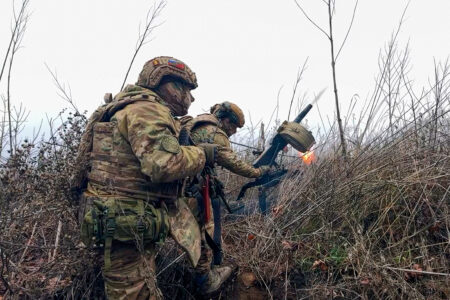
Russian aerial attacks kill 2 in Ukraine as Easter prisoner exchange planned

Iran fires on Israel, Gulf neighbors as Trump claims threat nearly eliminated

Trump addresses nation on Iran war

Trump lashes out at allies, says securing the Strait of Hormuz is ‘not for us’
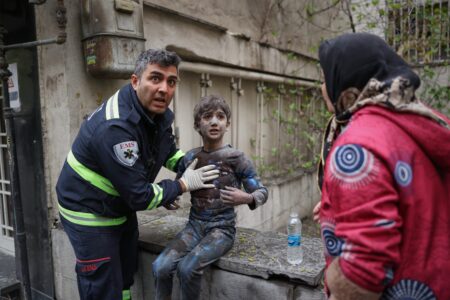
Iran-backed Houthis enter the monthlong war and could further threaten global shipping