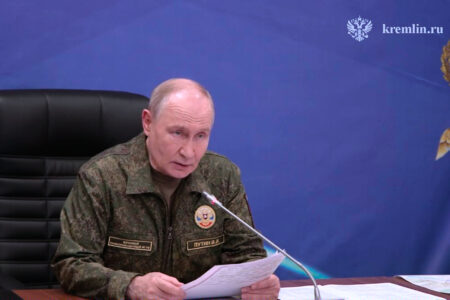
Kremlin: Russian police and National Guard will stay in Ukraine’s Donbas postwar
Also: EU indefinitely freezes Russian assets
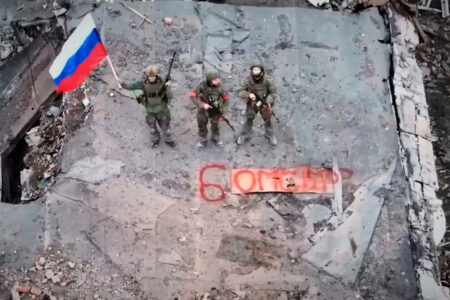
In this image made from video, provided by Russian Defense Ministry Press Service on Thursday, Dec. 11, 2025, Russian soldiers hold a Russian national flag in Siversk, a city in the Donetsk region, Ukraine. (Russian Defense Ministry Press Service via AP)
KYIV, Ukraine — A senior Kremlin official said Friday that Russian police and National Guard will stay on in eastern Ukraine’s Donbas and oversee the industry-rich region, even if a peace settlement ends Russia’s nearly four-year war in Ukraine.
The remarks by Kremlin adviser Yuri Ushakov underscore Moscow’s ambition to maintain its presence in Donbas post-war. Ukraine is likely to reject such a stance as U.S.-led negotiations drag on.
Meanwhile, Ukrainian President Volodymyr Zelenskyy said Ukrainian units have recaptured several settlements and neighborhoods near the city of Kupiansk in the northeastern Kharkiv region, following a monthslong operation aimed at reversing Russian advances there.
Kupiansk has in recent months been one of the most closely contested sectors of the around 600-mile front line, and the claimed Ukrainian progress of around 15 square miles would be a setback for Russia.
Obstacles in a push to peace
German Chancellor Friedrich Merz’s office said he would host Zelenskyy on Monday for talks as peace efforts gain momentum and European leaders seek to steer negotiations. Afterward, numerous European heads of state and government, as well as the leaders of the European Union and NATO, will join the meeting, a statement said.
Moscow will give its blessing to a ceasefire only after Ukraine’s forces have withdrawn from the front line, Ushakov also said in comments published Friday in Russian business daily Kommersant.
He told Kommersant “it’s entirely possible that there won’t be any troops (in the Donbas), either Russian or Ukrainian” in a postwar scenario. But he said that “there will be the National Guard, our police, everything necessary to maintain order and organize life.”
For months, American negotiators have tried to navigate the demands of each side as U.S. President Donald Trump presses for a swift end to Russia’s war and grows increasingly exasperated by delays. The search for possible compromises has run into a major obstacle over who keeps Ukrainian territory that Russian forces have occupied so far.
Since Moscow’s 2014 illegal annexation of Crimea and the seizure of territory in the east by Russia-backed separatists later that year, as well as land taken after the full-blown invasion was launched on Feb. 24, 2022, Russia has captured about 20% of its neighbor.
Ukraine says its constitution doesn’t allow it to surrender land. Russia, which illegally annexed Donetsk and three other regions in 2022, says the same. Ushakov said that “no matter what the outcome (of peace talks), this territory (the Donbas) is Russian Federation territory.”
On Thursday, Trump compared the negotiations to a very complex real estate deal. He said that he wants to see more progress in talks before sending envoys to possible meetings with European leaders over the weekend.
EU indefinitely freezes Russian assets
The European Union on Friday indefinitely froze Russia’s assets in Europe to ensure that Hungary and Slovakia, both with Moscow-friendly governments, can’t prevent the billions of euros from being used to support Ukraine.
Using a special procedure meant for economic emergencies, the EU blocked the assets until Russia gives up its war on Ukraine and compensates its neighbor for the heavy damage that it has inflicted for almost four years.
EU Council President António Costa said European leaders had committed in October “to keep Russian assets immobilized until Russia ends its war of aggression against Ukraine and compensates for the damage caused. Today we delivered on that commitment.”
It’s a key step that will allow EU leaders to work out at a summit next week how to use the tens of billions of euros in Russian Central Bank assets to underwrite a huge loan to help Ukraine meet its financial and military needs over the next two years.
The move also prevents the assets, estimated to total around $247 billion, from being used in any negotiations to end the war without European approval.
A 28-point plan drafted by U.S. and Russian envoys stipulated that the EU would release the frozen assets for use by Ukraine, Russia and the United States. That plan, which surfaced last month, was rejected by Ukraine and its backers in Europe.
French Foreign Minister Jean-Noël Barrot wrote on X that the EU decision means that “no one will decide in place of the Europeans the use of these funds.”
The vast majority of the funds are held in Euroclear, a Belgian financial clearing house.
The money was frozen under sanctions that the EU imposed on Russia over the war it launched on Feb. 24, 2022, but these sanctions must be renewed every six months with the approval of all 27 member countries.
Hungary and Slovakia oppose providing more support to Ukraine, but Friday’s decision prevents them from blocking the sanctions rollover and make it easier to use the assets.
Russia’s Central Bank, meanwhile, said on Friday that it has filed a lawsuit in Moscow against Euroclear for damages it says were caused when Moscow was barred from managing the assets. Euroclear declined to comment.
AP reporter Lorne Cook contributed to this report.
World News
Trump says US will give Ukraine license to produce Patriot defense systems
US carries out another round of strikes on Iran
DUBAI, United Arab Emirates (AP) — The U.S. carried out another round of strikes on Iran on Wednesday, hours ...
NATO unveils billions in arms deals to prove its firepower as Trump again demands Greenland
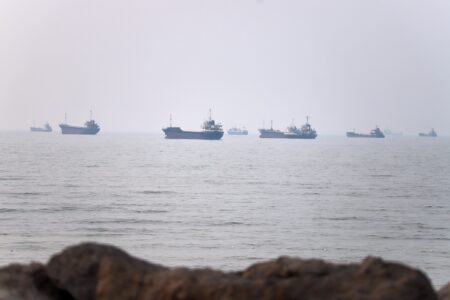
US launches new strikes against Iran after three ships were hit in Strait of Hormuz
Catholic group that defied pope and caused schism defends its actions and casts itself as the victim
ROME (AP) — The traditionalist Catholics who defied Pope Leo XIV and caused a schism defended their actions ...