At forum in Lawrence, U.S. Sen. Marshall expresses some support for vaccine mandates in general — but not for COVID-19
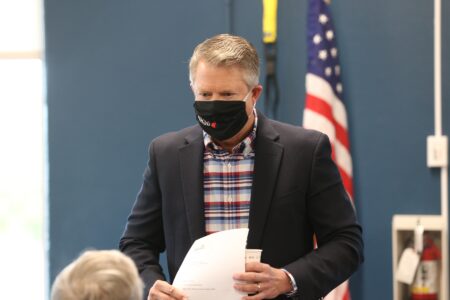
photo by: Chad Lawhorn
U.S. Sen. Roger Marshall addresses a crowd during a forum at Sports Pavilion Lawrence on Saturday, Oct. 2, 2021.
U.S. Sen. Roger Marshall in Lawrence on Saturday expressed some support for vaccine mandates in general — but not for COVID-19.
Marshall, R-Kansas, has emerged as one of the leading voices against President Joe Biden’s pending vaccine mandate for workers at companies with 100 or more employees. On Saturday, Marshall faced a sometimes cheering, sometimes jeering crowd as part of a public forum at Rock Chalk Park in northwest Lawrence where vaccine mandates were on the minds of several questioners.
In a brief interview with the Journal-World following the forum, Marshall said he supported vaccine mandates like the one Kansas has had for years that require K-12 students in order to attend school to get vaccinated against measles, mumps, rubella and several other viruses or diseases.
Marshall also said he suspects states have the legal authority to issue COVID-19 vaccine mandates to their residents, but he said even if it is legal, he doesn’t believes states — including those that are facing overflowing hospitals — should issue such mandates.
“I think the No. 1 thing that would keep the hospitals from filling up is to get seniors to take their booster,” Marshall said.
Marshall did not offer an explanation about why he views booster shots as the key strategy to stem hospital capacity problems. Booster shots are given to people who already have been vaccinated, but hospitals consistently have reported the majority of their COVID cases are coming from people who are unvaccinated.
In his town hall, which attracted a standing-room crowd of more than 100 people, Marshall said he thought Biden’s vaccine mandate violated the U.S. Constitution’s 10th Amendment, which generally says the federal government can’t impose regulations on the states unless the constitution specifically grants the federal government such powers.
As Marshall was leaving the forum, the Journal-World asked him whether he believes states have the right to issue vaccine mandates.
“I don’t disagree with that,” Marshall said. “And I think I would almost have to get a couple of constitutional opinions on it. But I would imagine they do.”
When the Journal-World then asked Marshall whether he was fine with the K-12 vaccine mandates that require students to get vaccinated against various conditions before they can attend school, he said he was fine with those vaccine mandates.
“I am,” Marshall said. “I think the difference is we never have asked kids to get vaccinated for something they already are immune to or against a virus that doesn’t hurt them.”
While the number of COVID deaths for children is far lower than other age categories, the CDC reports there have been about 500 COVID deaths in the 0-17 age range. At another point in the interview, Marshall said the COVID virus for children was “no worse than the common flu or influenza.” Again, while the number of influenza deaths for children is lower than for many other age groups, the CDC’s latest numbers show the number of COVID deaths in children 0 to 17 years old in 2020 and 2021 has been about 250% higher than the number of influenza deaths in children 0 to 17 years old.
When asked about his differences in opinion about the reasonableness of K-12 mumps, measles and other such vaccination requirements versus the reasonableness of COVID vaccination mandates, Marshall confined his answer only to children. He did not offer any explanation for why he believes it is appropriate to require a child to get a mumps vaccination, for example, before attending school but why it is unreasonable for a state to require a susceptible adult to get vaccinated before being allowed to go to work.
Inside the forum, he simply told the crowd that he believed it was an individual’s choice on whether to get vaccinated against COVID, while noting that he has been vaccinated.
He also said vaccine mandates were a “huge slap in the face” to people who already have gotten COVID, which Marshall said “it was well documented that natural immunity is better protection than the vaccine.”
When the crowd began to jeer and angrily ask him for his sources about that statement, Marshall, who is a physician, said he “didn’t even think there was any argument about” the claim that natural immunity is more effective than vaccination.
While there have been studies that suggest natural immunity is stronger than some vaccines in some instances, there has not been widespread acceptance in the medical community that is the case in all instances or that people who have contracted COVID should remain unvaccinated.
The CDC on its website continues to recommend that people who have had COVID receive a vaccination, although some people who have received certain types of COVID treatments should wait 90 days. The CDC website goes on to say “research has not yet shown how long you are protected from getting COVID-19 again after you recover from COVID-19.” It also says “vaccination helps protect you even if you’ve already had COVID-19.”
At one point during the back and forth on his statement about natural immunity providing better protection than vaccines, Marshall told the Lawrence crowd, “I’m just shocked at the lack of intellectual …” before the final words of the statement were drowned out by a mix of boos and applause from the crowd.
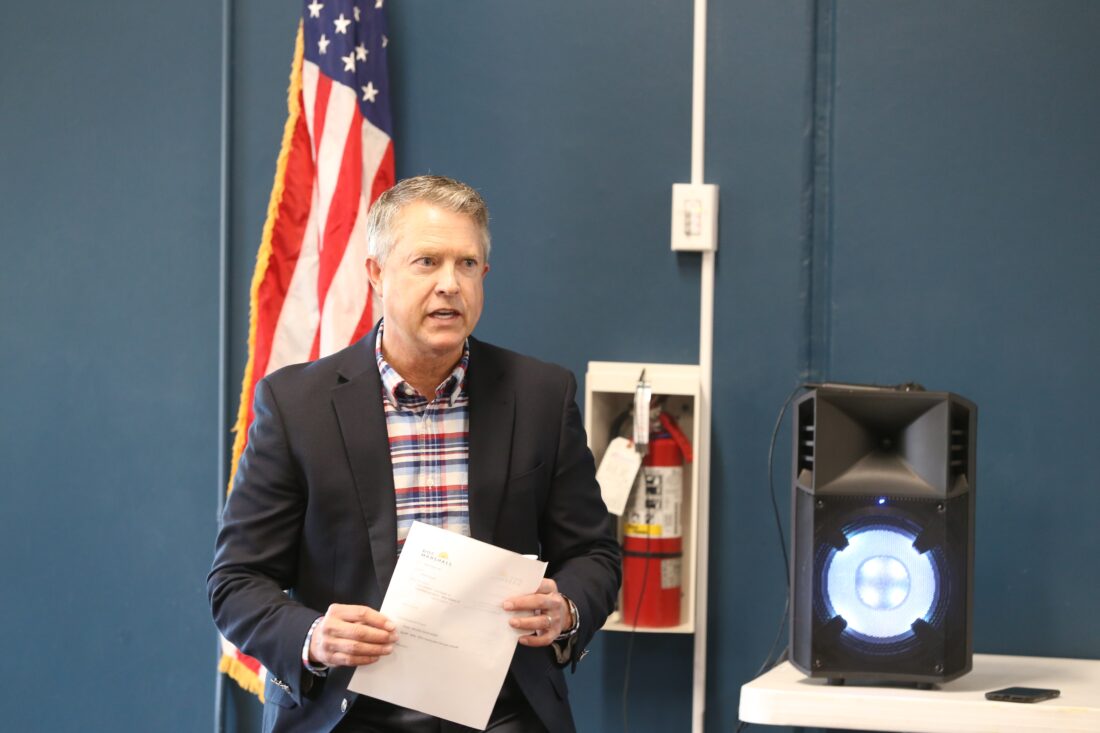
photo by: Chad Lawhorn
U.S. Sen. Roger Marshall addresses a crowd during a forum at Sports Pavilion Lawrence on Saturday, Oct. 2, 2021.
State and Region
Trump coming to Wichita for Roger Marshall campaign rally
Hays foundation pledges $1M in matching funds to help save Sternberg museum
TOPEKA — A private foundation offered to match contributions dollar-for-dollar up to $1 million for benefit of ...
Kansas Board of Regents adopts early warning rule for college athletics deals with private equity
TOPEKA — The Kansas Board of Regents amended policy to require officials at the six state universities to notify ...
Kansas State president departs school to become new leader of Virginia Tech
General Election Voter’s Guide