Parents discuss fears and hopes as district strives to address school safety concerns

photo by: Ashley Hocking
Billy Mills Middle School, 2734 Louisiana St., is pictured on Nov. 3, 2018.
Updated at 11:20 a.m. Friday
A TikTok challenge designed to incite violence at schools across the country caught the attention of the Kansas State Department of Education this week.
The online challenge, called “National Shoot Up Your School Day,” allegedly asked students to commit acts of violence on Dec. 17, just days after the ninth anniversary of the Sandy Hook Elementary School shooting in Newtown, Connecticut. Administrators at the Lawrence school district determined that the “vague threats of mass violence” posed no threat to students within the district.
“Our district has not received any reports of credible threats … against Lawrence students or schools,” district spokesperson Julie Boyle wrote in an email to parents. “We do, however, take all reports of threats seriously and work closely with our local law enforcement partners to investigate them fully. … KSDE also is working with the Kansas Bureau of Investigation to look into social media posts containing vague threats.”
Though the TikTok challenge lacked a tangible link to Lawrence students, it still scared Nikki Meisenheimer, when her eighth grader Brycen, who attends Billy Mills Middle School, discussed it with her.
“It really scared me considering how much activity we have been having at our school,” Meisenheimer said. “I have been terrified every day my son has been at school (recently). I have had conversations with my son about not trying to be a hero and to keep himself safe if a dangerous event occurs.”
On Friday, Dec. 10, Brycen was one of 195 students who stayed home from Billy Mills Middle School after a student allegedly made a threat against the school.
Meanwhile, other threats, later determined to be made up, were reported at other Lawrence middle schools in the district.
In a Dec. 1 email to Billy Mills families, Principal Andrew Taylor disclosed that school officials on Nov. 29 discovered that a student had brought several loose bullets to school.
“While the safety of our students was not threatened by this lapse in good judgment, clearly the potential for concern exists when poor choices like this are made,” Taylor wrote.
The district, citing student privacy, would not say whether this student had initiated a separate verbal threat.
Jamaica Larsen, a student support facilitator at Billy Mills, said threats of school violence — even nebulous, intangible ones — affect student educational outcomes and that the mere mention of a school shooting impacts how safe the staff, students and their families feel.
“We had students who were like, ‘I don’t feel safe here.’ We had staff who shared the same sentiment,” Larsen said. “I was not scared, but there were other people in the building who legitimately felt unsafe. … Retrospectively, the threat may have gone through the telephone game on social media, and was perceived as a threat and it wasn’t, but it was really smart for the police and the administration to investigate it so thoroughly, to err on the side of caution.”
Molly Adams kept her sixth-grader, Lotus, home from school on Dec. 10, too. Adams said her own elementary school when she was a kid shared a campus with a high school — Heath High School in Paducah, Kentucky — that became a site of a school shooting.
“I grew up surrounded by the reality of school shootings,” she said. “I did keep (my daughter) home, and I would do it again. For these situations, I need to feel certain she’ll be safe, and I didn’t feel that from the district. Initially, I worried that my mass-shooting childhood experience was causing me to overreact but, as I learned that almost 200 students were kept home that day, I realized that I am not the only parent experiencing this uncertainty.”
Leah Newton, whose daughter attends Billy Mills, said she worried about her sixth-grade daughter’s safety at school all the time.
“I’ve had a considerable amount of anxiety about (violence in school) ever since Sandy Hook,” she said. “Before I became a parent … I considered school a place where the worries should be centered around academic and social issues, not fear for their literal physical safety. There isn’t really a way to mitigate (the anxiety); it’s just something you learn to live with after carefully considering the alternatives, like, for example, my full-time job is essential to our financial security, so homeschooling isn’t an option.”
As a student-support facilitator, Larsen works with all grades at Billy Mills. Because of training she’s received, she said she was not afraid of school shootings, but had come to grips with the fact that she could experience one.
“As teachers we have come to the determination that a shooting could be a real possibility, and working for USD 497 and having access to ALICE training really gives you a way to think about what you would do if there was a shooting,” Larsen said.
A.L.I.C.E training — which stands for Alert, Lockdown, Inform, Counter, Evacuate — advocates a multi-option response, promoting strategies like listening for real-time information on the shooter’s location, barricading if it’s not safe to evacuate and creating noise as a last resort to distort the assailant’s chances of shooting accurately.
As an eighth grader, Brycen and his peers have crafted plans with their teacher on how to escape and defend themselves if a shooter were to infiltrate the school.
Upon enrolling at Billy Mills, students are shown the exits in case they need to evacuate for a fire or a school shooting; they’re told how to barricade a door, but they aren’t shown, nor do they practice, how to do it, Larsen said.
“These aren’t scary drills,” Larsen said.
Lotus, a sixth-grader, does not recall doing any shooter drills, however, and she does not feel adequately prepared to respond to a school shooting if one occurs.
“I don’t remember anything from drills we might have done,” she said.
Parents’ biggest hope is that administrators will remove any student who poses a threat to their children from the school before violence can occur.
Lawrence schools follow a tier system when students make verbal threats to student and staff safety. For the first offense, a student can be suspended for one to three days; a second offense results in a three- to five-day suspension, and a third threat can result in a 10-day suspension or expulsion.
In the recent Billy Mills incident, while noting that student disciplinary actions are confidential, the school said it had “initiated appropriate action” based on its student handbook and district policies.
Ethan Crumbley, the 15-year-old suspect in the recent Michigan shooting that left four dead and six wounded, had never been suspended for threatening the school. Though teachers had found his behavior concerning, he hadn’t made verbal threats meriting a disciplinary response. Because of this, Newton, the Billy Mills mother, is wary of the disciplinary tier-response system as a means to prevent school violence.
“I … know that these procedures have been vetted by professionals who have a lot more experience and expertise than I do,” she said. “I’m trying to trust that, but recent failures from school administration in Michigan to recognize a credible and imminent threat to student safety calls all of this into question. The communication from the schools is always the same: ‘We take this very seriously, we know what we’re doing, we followed the protocol, just trust us.’ Well, that’s just very difficult to do when mistakes are made, red flags are missed, that end up costing children their lives. There’s just too much at stake.”
K-12 Education
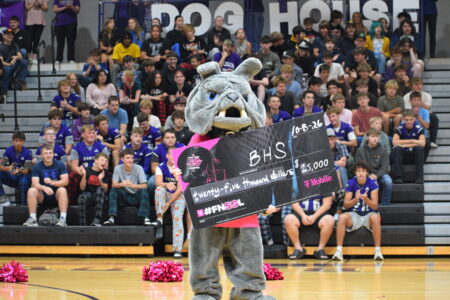
Baldwin High already has won $25K and is competing for $1M through national sports program
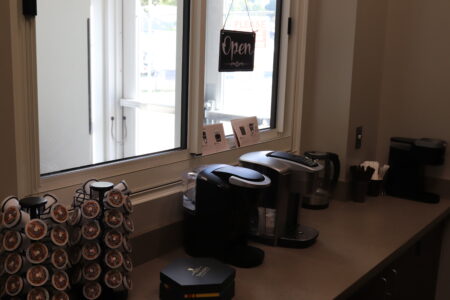
A student-run coffee shop will open at Community Connections at Pinckney next week
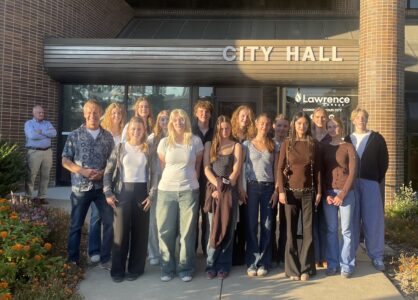
‘No day is like the other here’: Students from Lawrence’s German sister city discover football, new foods and new friends on exchange
Lawrence school district identifies $73.9 million in deferred maintenance and facilities needs

Lawrence school board to bring back public comment after 9-month hiatus