Man gets probation for shooting into step-grandfather’s house; victim approves of sentence
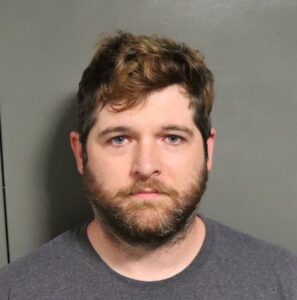
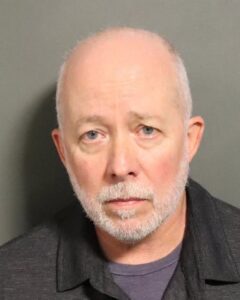
photo by: Douglas County Sheriff's Office
Douglas Speight
A man who was convicted of attempted voluntary manslaughter after trying to kill his step-grandfather last summer by firing multiple bullets into his Lawrence residence was sentenced on Tuesday to three years of probation – an outcome that the victim approved of.
The defendant, Douglas Speight, was originally charged with attempted first-degree murder in the June 3, 2025, incident, but pleaded no contest in April to attempted voluntary manslaughter with a firearm.
In previous court hearings, the victim had been identified as Speight’s grandfather, but on Tuesday the defense clarified that he was a step-grandfather.
As a factual basis for the April plea, prosecutor Eve Kemple told Judge Amy Hanley that Speight was angry at his grandfather that night and went to his Iowa Street residence “intending to kill him.” Kemple said Speight shot into the bedroom of the residence, believing his grandfather to be in that room. She didn’t specify why Speight was upset. At the time, police described Speight’s mood as “extreme anger.”
On Tuesday, however, Speight’s attorney, Branden Smith, told the court that Speight had suffered childhood trauma at the hands of the step-grandfather – trauma that had gone “unaddressed” for three decades and that had come to a head in that one “catastrophic night” in 2025 when Speight was in the throes of a mental breakdown.
The victim, when given an opportunity to speak, said that it grieved him that his grandson had so much animosity toward him and that he had always loved and been proud of him.
“Obsessing over a perceived wrong is a monster,” he said.
Speight, who has no criminal history, acknowledged that he “had no business” expressing his emotions with a firearm.
“I’d like to apologize both to the victim and to society,” he told Hanley as he asked for leniency so that he could continue on “the path of rebuilding my life.”
Kansas’ Special Rule 1 applied to Speight’s case. That rule states that when a person felony is committed with a firearm the sentence is presumptive prison.
However, in Speight’s case, both the state and the defense agreed that substantial and compelling reasons supported a probation sentence, including the fact that Speight had already spent more than 200 days in custody, that he has been getting treatment for his mental health and alcohol issues and that the victim was comfortable with a nonprison sentence in what Kemple called an “unusual” case.
Hanley, in departing to probation, cited her heavy reliance on the fact that the parties had recommended it. She said she found it “extremely compelling” that the victim had also been on board with that recommendation.
“You are very fortunate to have folks in your corner who care and want to see you rehabilitated,” she told Speight. Calling the victim’s support for the sentence an act of “grace,” she added, “This could have been so much worse.”
In addition to suspending the 32-month sentence to three years of probation, Hanley ordered Speight to continue mental health and alcohol treatment and to have no contact with the step-grandfather, among other conditions of probation. Speight must also register as a violent offender for 15 years, and he must pay $613 in various costs – money that will come from a wage he earned while working as an inmate at the Douglas County Jail.
Public Safety
In domestic violence case, Lawrence woman is acquitted of 5 of 6 charges; jury finds her guilty of one misdemeanor
Man ordered to stand trial after friend testifies that night of drinking ended with a rape

24-year-old ordered to stand trial in connection with Lawrence mother’s drug death
Former LHS teacher admitted having sex with a sophomore 26 years ago, but a lot turns on whether she was 15 or 16 at the time

23-year-old man charged with second-degree murder in downtown Lawrence homicide