Attorneys say some Kansas sex-crime laws are unconstitutional because they don’t require criminal intent and don’t define ‘consent’
They want new trial for defendant convicted in rape by 'fear' case
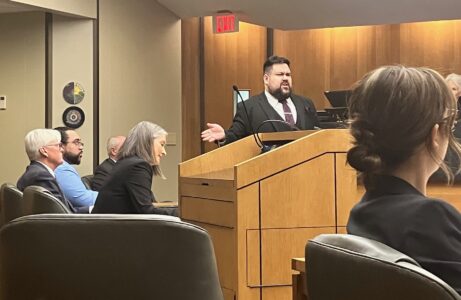
photo by: Kim Callahan/Journal-World
Senior Assistant District Attorney Ricardo Leal points to defendant Miquel Brown during his closing argument on Wednesday, Nov. 5, 2025, in Douglas County District Court. From left are attorney Gart West, Brown, attorney Jessica Glendening and Leal. Assistant DA Britt Welch is at right foreground.
Attorneys with the Douglas County Public Defender’s Office are seeking a new trial for a man who was convicted of rape last fall. In their supporting motion, they are asking a judge to find that some of Kansas’ rape and sodomy statutes are unconstitutional because they allow for conviction without proof of criminal intent and also fail to define “consent.”
The case involves 33-year-old defendant Miquel Brown, who had sexual relations with an 18-year-old on his living room sofa in October of 2024. Brown told police that the activity was consensual, but the woman said that it was not.
At trial she told a jury that she never said no to the sexual activity, which began with Brown massaging her lower legs and progressed to sexual touching. She said that Brown never pressured or threatened her or used any kind of force; that she never asked him to stop; and that she never tried to leave; rather, she told jurors that she felt overcome by fear.
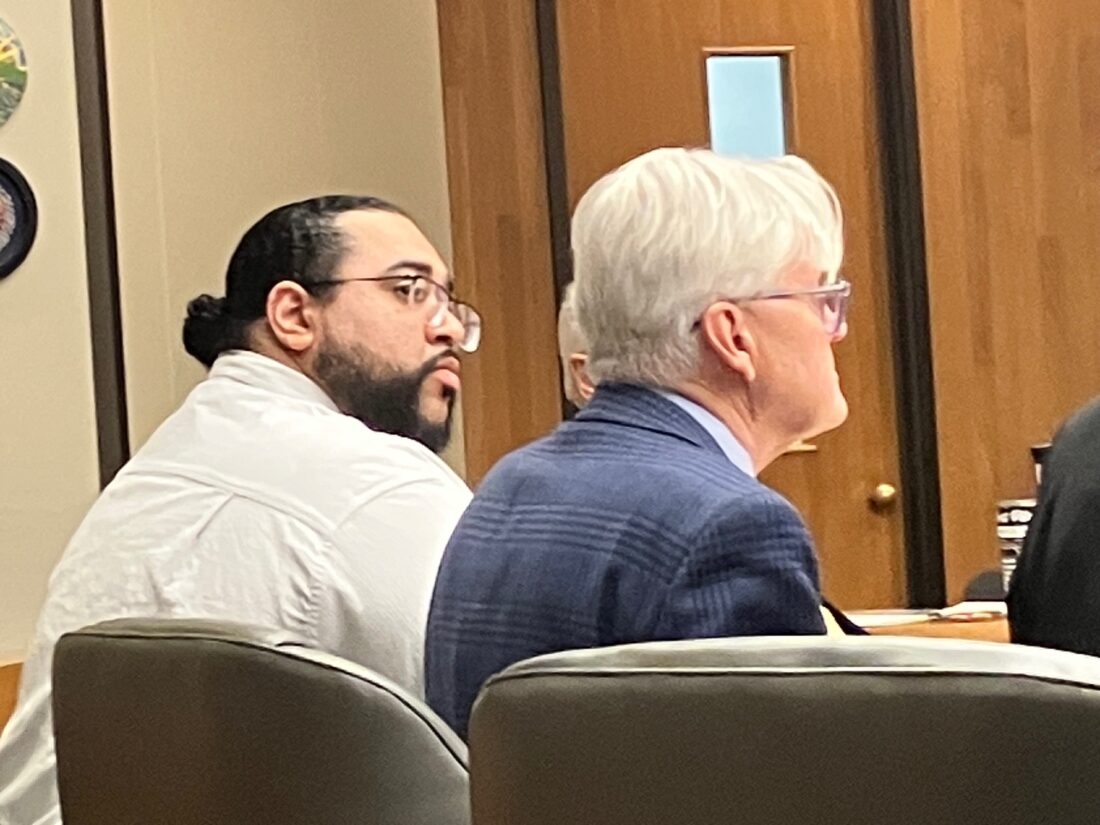
Defendant Miquel Brown, left, appears Tuesday, Nov. 4, 2025, in Douglas County District Court. Defense attorney Gary West is at right.
Brown was prosecuted under rape and criminal sodomy statutes that require the victim to have been “overcome by force or fear,” but the state readily acknowledged that Brown’s case did not involve force — only fear.
At trial, defense attorneys asked the woman to articulate what made her fearful. She said that Brown’s size relative to her own had made her so. But she also acknowledged that the two had had a close sibling-like relationship for most of her life and that he had never been violent toward her.
Because her “internal fear” was not communicated to Brown, he could reasonably, if mistakenly, believe that she had agreed to the encounter, the defense argued.
But state statute, as jurors were instructed, says otherwise.
Jurors were told that under Kansas law Brown could not use as a defense the fact that he did not know or have reason to know that the young woman did not consent.
The jury found Brown guilty of rape and aggravated criminal sodomy. Each conviction carries a minimum penalty of more than 12 years in jail — possibly decades more depending on Brown’s criminal history score.
Defense attorneys Jessica Glendening and Gary West promptly requested a new trial. In their supporting motion, filed Friday, they claim that the statutory language — “it shall not be a defense that the offender did not know or have reason to know that the victim did not consent” — impermissibly created a strict liability offense.
A strict liability offense is one in which you can be liable for committing an action, regardless of your intent or mental state.
Strict liability offenses, except in certain public-welfare contexts (and perhaps most notably in statutory rape cases), have not been “favored” historically, the attorneys wrote, and violate due process as applied in Brown’s case.
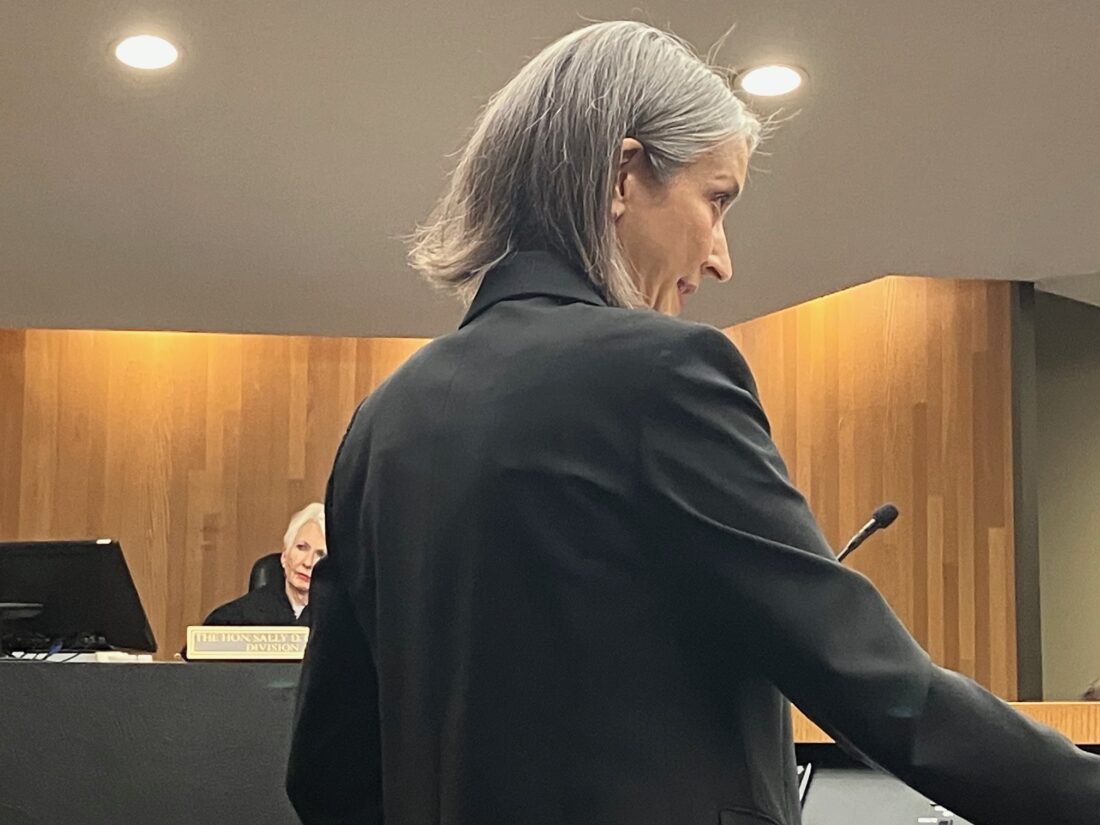
photo by: Kim Callahan/Journal-World
Public defender Jessica Glendening questions a witness during the trial of Miquel Brown on Tuesday, Nov. 4, 2025, in Douglas County District Court. Judge Sally Pokorny is pictured at left.
“When a jury cannot even functionally consider the fact that the accused reasonably believed that the person consented, their conduct of engaging in what is otherwise innocent, legal conduct [sex between adults] is transformed into an illegal act at a lesser burden to the state,” the attorneys argue.
Brown did not testify at his trial. His version of events was largely conveyed to the jury through videos of his police interviews and through arguments by his counsel.
In addition to violating due process, his attorneys argue that the sex-crime statutes in question are unconstitutionally vague because they fail to define consent, leaving the jury little to go on and the defendant too vulnerable to accusations: “The vague language allows for any person to say after having sex that they didn’t consent but didn’t say anything because they felt fear (fear for any reason, reasonable or not).”
Kansas law, they argued at trial, does not require affirmative verbal consent — that is, specifically saying yes — and in their motion for a new trial they say that “the Court cannot read that requirement into the law.”
“It is possible to believe that (the woman) didn’t want to consent because she felt afraid,” they acknowledged in the motion, “but if consent is physical acquiescence, and can occur by behavior, then she may have manifested consent.”
Judge Sally Pokorny is scheduled to hear the motion for a new trial and to sentence Brown on Jan. 28. The state had not filed its response to the defense’s motion as of Monday afternoon.
Public Safety

Lawrence’s Municipal Court judge to retire in March
Attorneys say some Kansas sex-crime laws are unconstitutional because they don’t require criminal intent and don’t define ‘consent’
Hundreds gather in downtown Lawrence to protest ICE violence, killing of Renee Good
Judge sentences violent sex offender to nearly a quarter of a century in prison for abuse of Lawrence girl
Attorney for drug dealer accused in woman’s overdose death says she’s ‘very happy’ with her plea deal