Teen who took and shared nude photo of special needs student at Free State High found guilty of misdemeanor in plea deal
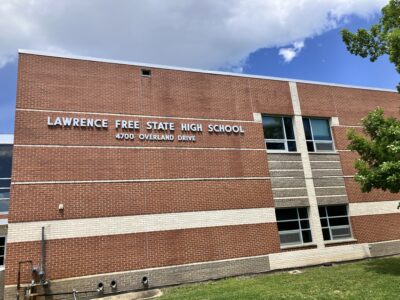
photo by: Kim Callahan/Journal-World
Free State High School, 4700 Overland Drive, is pictured in May 2025.
A Free State High School student who will graduate next month was convicted on Thursday of taking and sharing a nude photo of a special needs student at the school last year.
In a deal with the state, the teen pleaded no contest in Douglas County District Court to the Class A misdemeanor of unlawful transmission of a visual depiction of a child. He had originally been charged with an “aggravated” form of the same offense, which is a felony.
At Thursday’s plea hearing the parties agreed that sentencing — to take place on May 6 — would be “open,” with the state arguing for probation and the defense arguing for a “time served” disposition. A term of probation would involve a number of conditions placed on the teen’s liberty. No offender registration would be required for either outcome.
As the Journal-World reported, the teen, who was a junior at the time, used his cellphone to photograph a younger boy who was in a state of undress in a bathroom at the school. He then shared the image on the social media platform SnapChat, which police discovered via a search warrant.
The victim, Shawn Danger Collier, then 15, has TAR Syndrome, a rare congenital disorder that affects his heart, immune system and platelet production. Its most noticeable characteristic, though, is the absence of radius bones in the arms, leaving Shawn’s limbs shortened and bent.
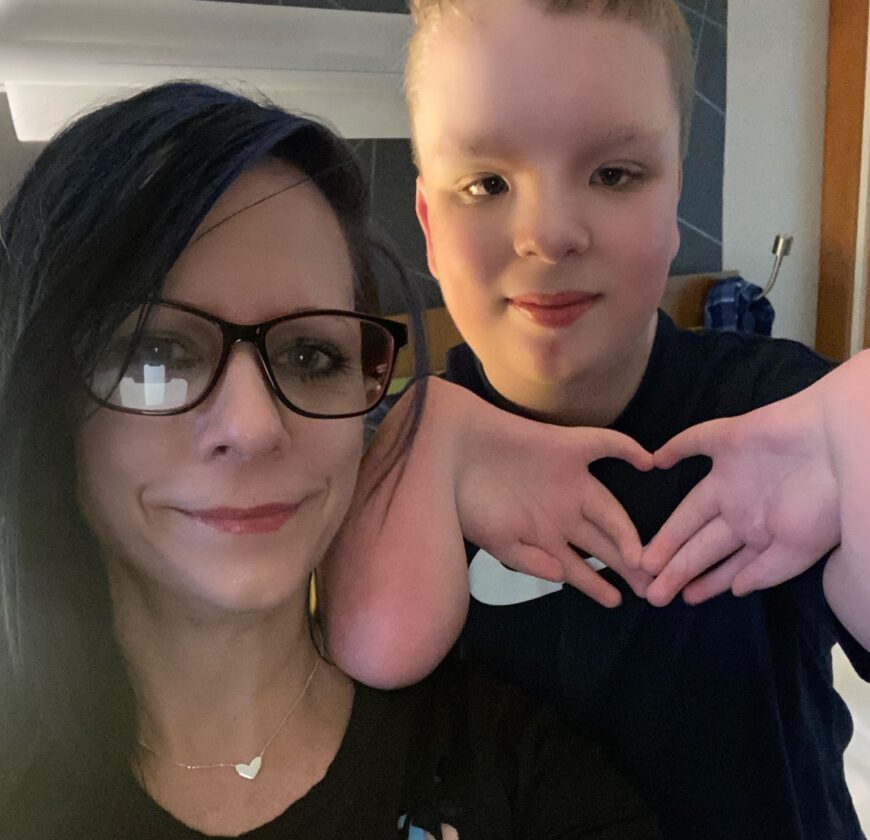
photo by: Contributed
Michele Collier is pictured with her son, Shawn Danger Collier. The Collier family chose to use their names and photos with this story.
At the time of the offense, Shawn’s mother, Michele Collier, and her husband, Jerry Collier, requested that their family be identified in the newspaper to underline that they are real people — “people you may know” — not nameless individuals with anonymous complaints.
The couple, who did not attend Thursday’s plea hearing, said the incident had a traumatic effect on their son, who had been bullied at school because of his disability and who had been shown the nude photo of himself by other students. Shawn is now home-schooled.
The school district had initially downplayed the incident, the couple said. Nearly two weeks after it had taken place, a school administrator described it to them as “a mistake,” and the boy was made to write a brief apology, which the Collier family found forced and insincere. The apology, Michelle said, did not even mention Shawn.
Jerry Collier said that law enforcement personnel tied to the school district behaved as if this sort of incident, especially as it involved teen boys, “happened all the time” and that it was probably best to just let it go.
The Colliers requested a police investigation not to “go after” the boy who took the photo, but to get to the bottom of what had happened, including the status of the shared photo, and to ensure accountability and that such incidents are taken seriously and handled accordingly.
A school resource officer initially had told the Collier family that pursuing an investigation could result in Shawn himself being charged with battery because one of the older boys in the bathroom at the time said that Shawn had punched his backpack — a claim that struck Shawn’s family as “unreal” given the condition of Shawn’s arms.
Police Chief Rich Lockhart, in an Aug. 4, 2025, letter to the family, acknowledged that the school resource officer’s handling of the case violated department policy.
The teen’s attorney on Thursday told Judge Paul Klepper that the teen had taken part in a restorative justice process with Building Peace Inc. but that the Collier family had declined to participate. She asked that Lyle Seger, a longtime minister with Building Peace, be allowed to testify at the teen’s sentencing next month.
Last month, Gov. Laura Kelly signed into law a bill that will ban student cellphones in K-12 classrooms statewide, beginning this coming fall. The law, a bipartisan effort, will require students to store their phones in a secure, inaccessible location until school is dismissed.
Public Safety
Teen who took and shared nude photo of special needs student at Free State High found guilty of misdemeanor in plea deal
Hundreds of residents urging Douglas County sheriff to oppose ICE bill; Armbrister says law would not boost ICE locally
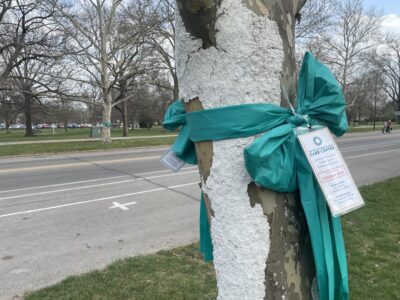
Nonprofit plans a full slate of events for Sexual Assault Awareness Month, including trivia, art auction, vigil for survivors

Local law enforcement leaders to answer questions about ICE, traffic stops, other issues at NAACP event

Douglas County judge opts to seal rather than redact more arrest affidavits, keeping them entirely from public