Douglas County judge weighing whether law regarding living wills and pregnant women violates Kansas Constitution
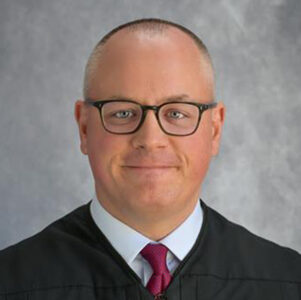
photo by: Contributed
Douglas County Judge Mark Simpson
Updated at 12:19 p.m. Tuesday, Dec. 9
A Douglas County judge is considering whether a Kansas law that nullifies the rights of terminally ill, incapacitated pregnant women is constitutional.
Three women and two doctors filed the civil lawsuit in May challenging the 46-year-old state statute known as the Kansas Natural Death Act.
Judge Mark Simpson on Monday heard oral arguments in the state’s motion to dismiss the lawsuit, but he did not immediately issue a ruling.
The Kansas Natural Death Act, which became law in 1979, allows adults to make a written directive, or “living will,” to decline life-sustaining medical care in the event that they have a terminal condition and can’t communicate their wishes. The law contains a pregnancy exclusion, however, which denies this right to terminally ill, incapacitated pregnant women for the duration of the pregnancy. In other words, the written directive of such a woman can be legally ignored.
The plaintiffs are challenging this pregnancy exclusion as a violation of the Kansas Constitution, claiming that it infringes upon their fundamental right of liberty and personal autonomy to control decisions about their own bodies and the health care they accept or decline. Additionally, they say the law invades their fundamental right of privacy; violates their right to free speech; subjects them to unequal and demeaning treatment, denying them equal protection under the law; and deprives them of liberty interests without due process.
Emma Vernon, a Lawrence resident who is one of the named plaintiffs and who was pregnant when the suit was filed six months ago, told Compassion & Choices, the organization that filed the suit, that the Kansas law deprived her of “the peace of mind a living will is meant to provide.”
“I shouldn’t have to fear that my pregnancy could cost me my dignity and autonomy,” she said in May. “I have already outlined the medical care I want if I am facing the end of my life, but my living will is not effective just because I’m pregnant. If something were to happen to me during this pregnancy I would have no control over the end-of-life care I receive. I am no less capable of planning my medical care simply because I am pregnant. I know what is best for me.”
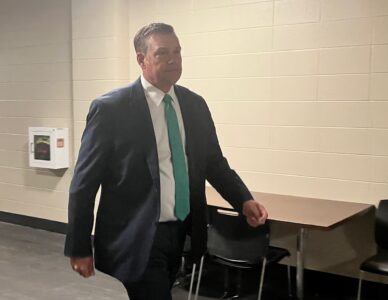
The named defendants in the lawsuit are Kansas Attorney General Kris Kobach; Richard Bradbury, the president of the Kansas State Board of Healing Arts; and Dakota Loomis, the district attorney of Douglas County.
On Monday, attorneys from the attorney general’s office urged Simpson to throw out the lawsuit, arguing, among other things, that “there is no live dispute” and that the plaintiffs lack standing. The pregnancy exclusion provision only applies to women who are simultaneously terminally ill, incapacitated and pregnant, they noted, and none of the plaintiffs, they argued, meet those criteria.
The state attorneys additionally argued that the state has a compelling interest in “protecting unborn life,” which they said may outweigh a person’s right in her health-care directive. Any burden on the dying woman would be “minimal or even trivial,” they said, because it would be temporary and would never exceed nine months.
Simpson, who told the parties that he had previously reviewed all written motions and responses in the case, said little during the brief oral arguments Monday. He did, however, observe that under the state’s theory of the case it would be “almost impossible for anyone to ever have standing” to file a suit because they would by definition be incapacitated.
Simpson did not indicate when he would rule on the state’s motion.
Monday’s hearing was the second time in recent weeks that state attorneys have been in Lawrence to defend challenged statutes. In November, Kobach personally appeared in Douglas County District Court to defend Senate Bill 63, which the Kansas Legislature passed earlier this year to ban gender-affirming care such as puberty blockers, hormone therapies or surgeries for minors.
In both lawsuits plaintiffs have relied on the argument that the Kansas Constitution protects a broader category of substantive rights than the federal constitution, including the “inalienable natural right of liberty, as well as the unenumerated rights of personal autonomy and privacy.”
In his November arguments on SB 63, Kobach argued to Douglas County Judge Carl Folsom III that the Kansas Constitution is “co-extensive” with the U.S. Constitution and does not confer an additional right.
In the Dobbs case in 2022, the U.S. Supreme Court found that the U.S. Constitution does not contain a right to abortion. In 2019, though, the Kansas Supreme Court, in the Hodes decision, came to a different conclusion regarding the Kansas Constitution, declaring that its right to personal autonomy “allows a woman to make her own decisions regarding her body, health, family formation, and family life — decisions that can include whether to continue a pregnancy.”
In the living-will case, plaintiffs on Monday urged Simpson to consider Hodes in his decision while the state argued that Hodes has no application beyond matters of abortion.
State Government
Ahead of Kansas Legislature’s 2026 session, Douglas County lawmakers will meet with local organizations to get ‘on the same page’

Former DCCCA worker picked to lead Office of Early Childhood
Governor to focus on budget, water and children in 2026
TOPEKA — Gov. Laura Kelly approached the final year of her second term with a familiar plea that the Kansas ...

A look at what new, anti-DEI legislation in Kansas might stop KU, other universities from requiring

Kansas City Chiefs announce they will leave Arrowhead and relocate across the Kansas-Missouri border