Lawrence police chief tells department there is no ‘hands off’ policy with homeless; memo spells out issues related to camping, trespassing
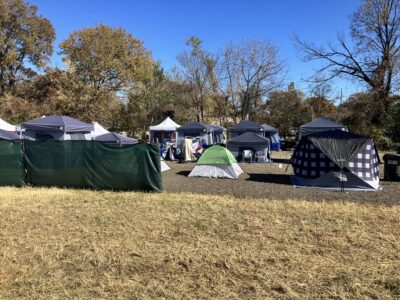
photo by: Kim Callahan/Journal-World
The city-run campsite for people experiencing homelessness is pictured on Oct. 29, 2022. The temporary campsite is just north of the Kansas River near downtown Lawrence.
Lawrence’s police chief has sent out a department memo making it clear that police officers aren’t expected to have a “hands off” approach with the homeless, and he provided guidelines on when to issue citations or make arrests.
The issue has gained new attention as business owners and others have raised concerns about illegal camping and aggressive behavior by some members of the homeless community — and as some police officers reportedly have said they were instructed to be largely hands off with many incidents.
“The current City Commission has not given us a ‘hands off’ mandate as it relates to these issues,” Lawrence Police Chief Rich Lockhart said in a memo delivered to LPD personnel. “The City Commission has been clear in their discussions with me they have not issued nor do they expect us to take a hands-off approach to these problems.”
In the memo, Lockhart describes situations where people who are homeless could be subject to citations for illegal camping or could be subject to arrest in some egregious situations involving repeated trespass or other similar offenses.

photo by: Contributed
Lawrence Police Chief Rich Lockhart
But Lockhart also said the city wants to use arrests “as a last resort,” and that the community expects officers to be understanding of the hardships many homeless people are facing.
“We do not want to criminalize poverty,” Lockhart said in the memo.
Lockhart provided several guidelines related to the city-operated camp for the homeless, located along the Kansas River near North Lawrence’s Johnny’s Tavern. Lockhart told officers and other LPD staff that all occupants of the campsite are required to agree to a code of conduct that requires campers to keep their area clean and to agree to not bring weapons or drugs to the campsite.
The memo spells out that at least five city officials — ranging from the city manager to members of the city’s homeless outreach team — have been authorized to file trespass complaints against people who refuse to leave the city-operated campsite.
Lockhart directed officers to respond to trespass calls at the campsite similar to how they would respond to a trespass call at any other location in the community.
“Only one trespass warning, provided by the authorized person, is required before a trespass citation or arrest becomes appropriate,” Lockhart said in the memo.
The memo also alerted officers that the city-operated campsite generally is unstaffed at night.
Lockhart also provided information on where people can choose to camp in the city, if they choose not to camp at the city-operated site. The memo highlighted how current city code does allow for people to camp overnight in a commercial district — like the downtown area — but does not allow for people to camp overnight in city parks.
“In short, generally no person may sleep in a city park at night,” Lockhart said in the memo.
He said most city parks close at 11:30 p.m., although Burcham Park closes an hour earlier. Lockhart confirmed to the Journal-World that a police officer can order an individual found camping overnight in a city park to leave and can issue a citation for illegal camping to that person.
“However, we would encourage them to move to an area where camping is permissible and only issue a citation as a last resort,” Lockhart said.
The memo highlights several areas where camping is allowed, and several of those are on public property in downtown Lawrence, one of the city’s busiest commercial districts. Lockhart’s memo specifically mentions the surface-level parking lots at 711 New Hampshire and 920 Vermont streets as permissible areas for camping, if the city determines there are no available beds at recognized homeless shelters in the city. The memo also says that people can legally camp in the pedestrian cut-through areas, such as the one in the 800 block of Massachusetts Street, if there are no beds available at a shelter.
But Lockhart said there are important distinctions for officers to be aware of when determining whether an area is permissible for camping. He said individuals are allowed to camp on public property, but not on public rights of way. In general, that would mean that any camping activity could not be in a place that disrupts the flow of traffic or other such public services.
“Therefore, no person under any circumstances — even if shelters are full — can camp in the street or on the sidewalks downtown,” Lockhart said in the memo.
Some downtown business owners and community members have expressed concern about why the city is allowing camping in a busy commercial district but does not allow camping in other locations that have fewer people and less commercial activity. The Journal-World asked Lockhart for any understanding he had about why the city, for instance, felt it appropriate for people to camp in a commercial district but not in a city park. Lockhart said that is not a policy decision the police department has made, but rather the distinction is spelled out in city ordinances.
“Camping in limited CD (commercial district) areas is permissible under our current code and camping in the parks is not permitted,” Lockhart told the Journal-World via email.
Lockhart’s memo also provided more direction on how police officers are to determine whether beds are available at shelters in the community. The issue is important because officers can cite an individual for illegal camping in the downtown area if an officer determines that a bed is available in a recognized shelter in the city. Lockhart said officers can ask an emergency dispatcher to call shelters in the community to confirm whether a bed is available.
However, the memo makes clear that the city-operated campsite is not considered a shelter under the city’s own definition. In other words, a person camping in the downtown area could not be ordered to disband their downtown camp and move to the city-operated camp in North Lawrence “due to the fact that it is a temporary solution that, while providing a number of resources to houseless individuals, likely does not qualify as an adequate alternative to sleeping outside,” Lockhart said in the memo.
The memo also highlights one other time when police officers aren’t authorized to order an individual to disband a downtown camp. Lockhart said there may be instances where a shelter has an available bed, but the person in question has been refused entry to that particular shelter due to their own conduct. In that instance, officers are instructed to consider that there is no available shelter for that particular person, and thus, the person cannot be ordered to disband a camp in the downtown area.
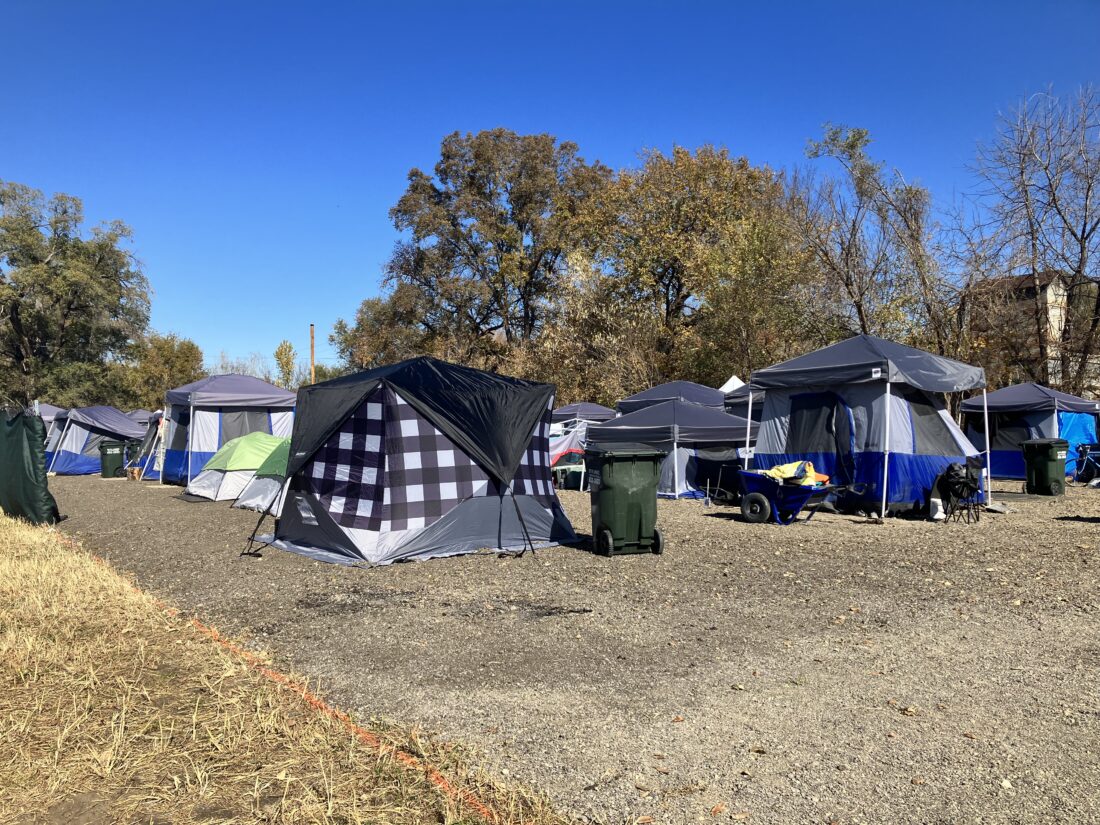
photo by: Kim Callahan/Journal-World
The city-run campsite for people experiencing homelessness is pictured on Oct. 29, 2022. The temporary campsite is just north of the Kansas River near downtown Lawrence.
That opens the possibility that individuals who refuse to comply with shelter rules related to drugs, alcohol or other behavior would be allowed to camp in the downtown area not because more secure space is unavailable but rather because the individual won’t consent to a certain set of rules.
Lockhart in the memo urged officers and others to become familiar with the applicable ordinances in play with issues surrounding the homeless, and to be sure to use available resources in the community.
“All of you are expert problem solvers and these problems will give you an opportunity to use those skills,” the chief said in the memo. “The city has a Homeless Intervention Team and Bert Nash has a Homeless Outreach Team. We should be using both resources as we work to create collaborative problem solving.”
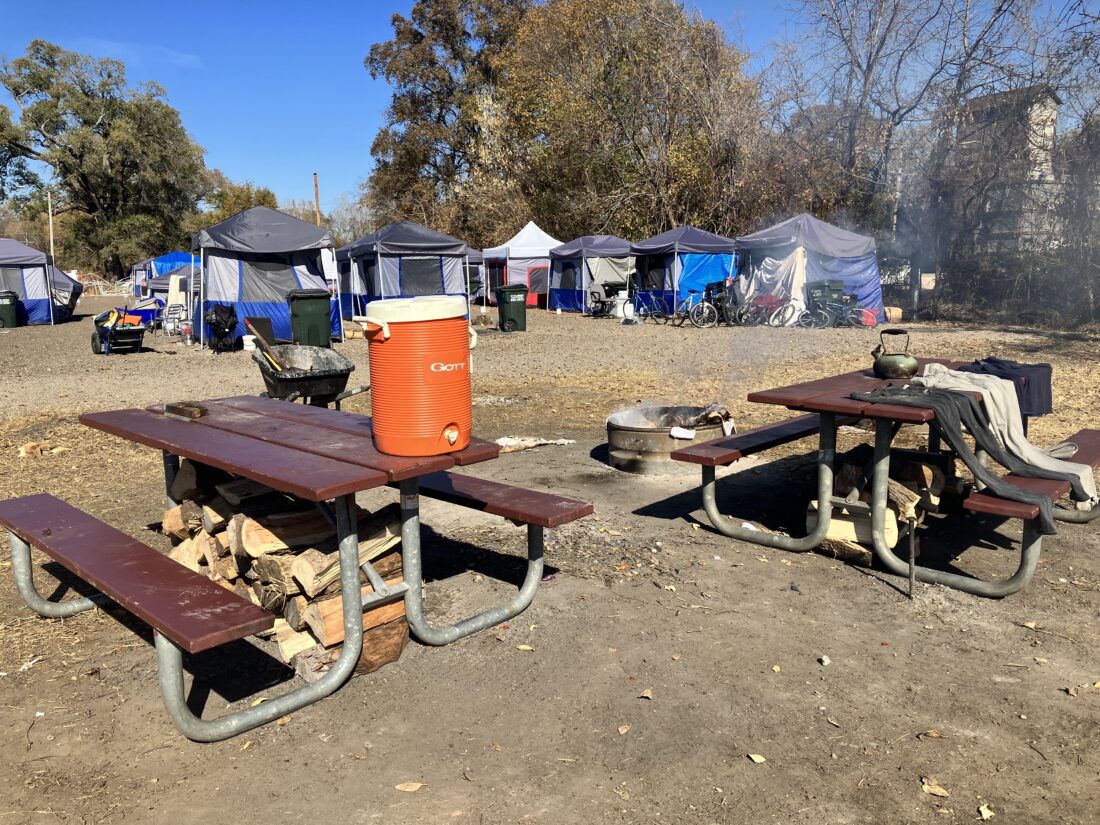
photo by: Kim Callahan/Journal-World
The city-run campsite for people experiencing homelessness is pictured on Oct. 29, 2022. The temporary campsite is just north of the Kansas River near downtown Lawrence.
Public Safety
Former Lawrence paraprofessional pleads not guilty to child sex crimes; attorney intends to file motion to suppress evidence

Repeat felon originally charged with gun crime gets probation and ‘no gun’ finding

Man who admitted stealing nearly $50K from Dillons signs diversion with DA’s Office; charge will be dropped if he completes its terms

Man accused of selling wristbands to enable minors to drink at time of Hawk shootings is sentenced to probation

36-year-old Lawrence man confessed to raping 13-year-old girl, affidavit says