KU’s Girod receives 2.5% raise, boosting salary to $1.025 million for the upcoming school year
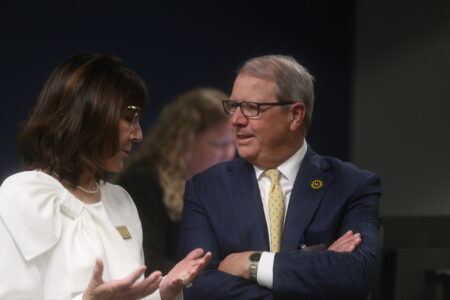
photo by: Chad Lawhorn/Journal-World
University of Kansas Chancellor Doug Girod, right, is pictured June 17, 2026 at Kansas Board of Regents meeting in Topeka.
The number of the day at the Kansas Board of Regents was $25,000.
University of Kansas Chancellor Douglas Girod, along with the presidents of Kansas State and Wichita State, each received a $25,000 raise from the Regents ahead of the upcoming school year.
Girod’s increase was the smallest on a percentage basis, but the boost put the KU leader in rarified air nonetheless. The raise pushed Girod’s total compensation over the $1 million mark, by far the largest of any of the leaders in the Kansas higher education system.
Girod’s new salary will total $1.025 million, when both public and private funds are taken into account, the Regents announced at a special board meeting Thursday. That amounted to a 2.5% increase for Girod.
Girod — who has been KU’s chancellor since 2017 –is the longest serving CEO of any of the state’s six Regents universities, and oversees the largest enrollment in the state, the only public medical school in the state, and the largest university research portfolio in the state.
Over the years, his salary has outpaced those of the state’s two other other Division I university presidents. With the latest raise, Girod now makes a quarter-million dollars more than K-State’s president and $365,000 more than the leader of Wichita State, which has become one of the fastest growing research universities in the country.
Here’s a look at the salaries unanimously approved by the Regents on Thursday, and how those salaries compare to compensation a year ago. Regents announced the salary figures at Thursday’s meeting, but not the percentage increases. The Journal-World calculated those figures based on salary totals that were announced a year ago.
• Richard Linton, Kansas State: $775,000, up from $750,000, up 3.3%
• Richard Muma, Wichita State: $660,000, up from $635,000, up 3.9%
• Tisa Mason, Fort Hays State: $405,000, up from $355,000 up 14%
• Thomas Newsom, Pittsburg State: $380,000, completing first year
• Matt Baker, Emporia State: $315,000, completing first year
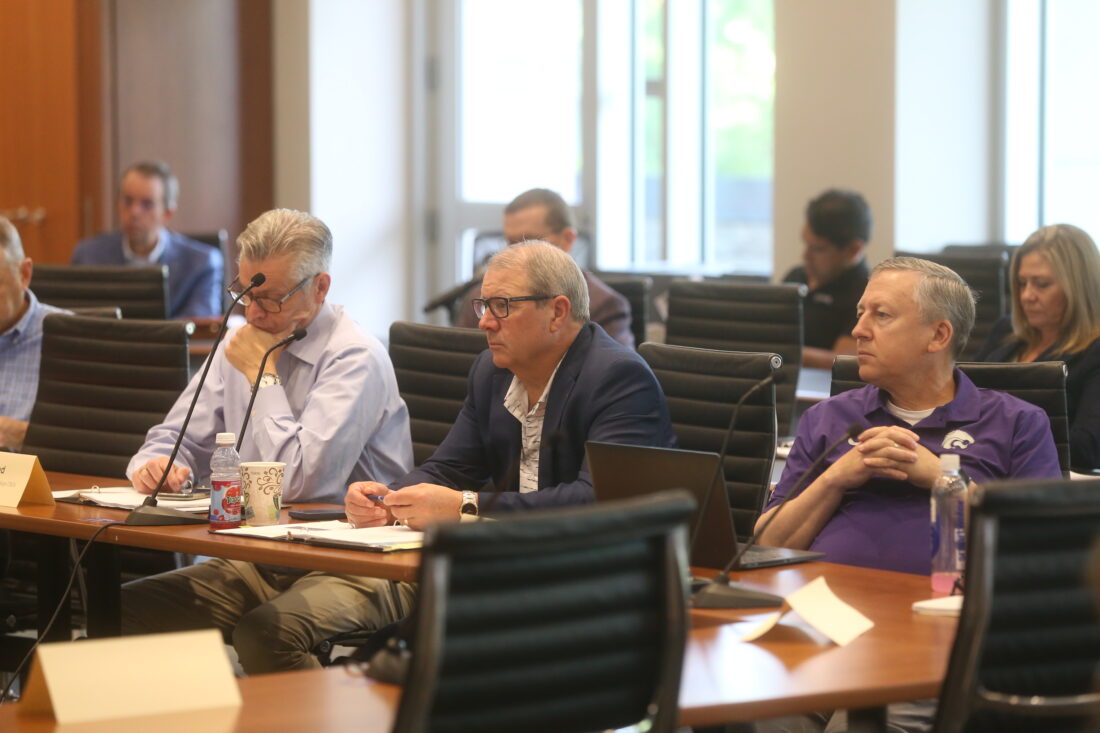
photo by: Chad Lawhorn/Journal-World
University of Kansas Chancellor Douglas Girod, center, is pictured with Wichita State President Richard Muma, left, and K-State President Richard Linton, right, on July 30, 2025 at the Kansas Board of Regents’ annual retreat.
Mason, at Fort Hays State, is second-longest serving CEO in the Regents system, starting just a few months after Girod in 2017. ESU’s Baker is the newest president, and a first-time president, starting at Emporia State in March after having been a vice president at Northwest Missouri State. Newsom is set to begin his second year leading Pittsburg State, but he previously had served as president of Southeastern Oklahoma State University.
Linton has been leading Kansas State since early 2022, after having served as the dean of the College of Agriculture and Life Sciences at North Carolina State. Muma has been servings as president at Wichita State since 2021, where he has been on the faculty and held various roles for about 30 years.
Girod’s 2.5% pay increase is much different than the 12% pay increase Regents awarded him a year ago. While last year’s increase was significantly larger than what most university employees received, this year’s raise may be less on a percentage basis than many employees, especially those on the faculty.
KU has moved away from across-the-board pay increases, and instead is using a merit based system in which raises will vary based on an employee’s performance. That makes it difficult to say how much of an increase employees are receiving at the university, however, a new contract between KU and its faculty union provides some information.
When the parties announced agreement on the contract in March, all faculty members were guaranteed at least a 1% increase in compensation. However, KU said it expected many employees to receive a much greater increase due to a program where the university is using a wage study to determine what positions are below market averages. Both the union and KU have estimated that “several hundred workers on the lower end of the pay scale” received a median wage increase of 13% via the agreement.
The Regents rarely comment on how they reached the specific compensation totals for each university CEO, and that was the case on Thursday. Regents approved the increase at a brief special meeting in Coffeyville — which was the site of the board’s annual retreat — after discussing the wage issues in a closed-door executive session.
Linton and Muma also received smaller percentage increases than a year ago, when they received a 5% and 4% raise, respectively.
The lower raises come after the Kansas Legislature cut back on some state funding, and also come as enrollment questions are expected to grow at the universities. While KU has recently set records for freshmen and overall enrollment, university leaders have stopped short of predicting that type of growth for the upcoming school year. Universities across the country are expected to start feeling the impacts of a “demographic cliff.” Birthrates began dropping following the 2008 Great Recession, and now those lower birthrates are producing smaller high school graduating classes for universities to recruit.
State Government

In debate, Marshall says the Ukraine war, not the Iran war, has caused high diesel prices
Candidates lean on their prominent supporters in District 2 race
TOPEKA — Democrat Don Coover and Republican Derek Schmidt stood with partisan allies as their congressional race ...
Funding for new Chiefs stadium moves forward, setting sales tax revenue district
TOPEKA — State officials answered a key question this week underpinning the complex financing of the Kansas City ...
Voters Guide: A look at the candidates seeking to become Kansas Insurance Commissioner
The Kansas Department of Insurance regulates insurance companies that sell policies in Kansas. Voters will decide ...
Voters Guide: A look at the candidates seeking the job of Kansas State Treasurer
In the Nov. 3 election, Republican Kansas Treasurer Steven Johnson faces two challengers for his job as the chief ...