

Girod hopeful of naming new KU provost by March 1; finalists likely to give public presentations in January
Chancellor says new provost will play key role in staff reorganization initiative
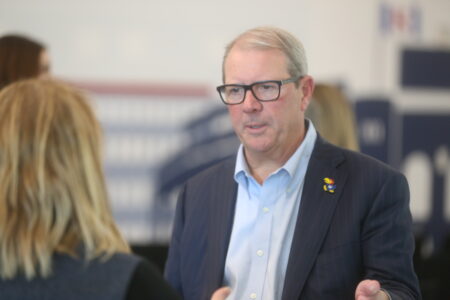
photo by: Chad Lawhorn/Journal-World
University of Kansas Chancellor Douglas Girod visits with a member of the crowd following his State of the University address on Oct. 16, 2025.
KU won’t have a new provost in place when the spring semester begins next month, but it likely will by mid-February or the beginning of March, Chancellor Douglas Girod recently told the Journal-World
As reported, University of Kansas Provost Barbara Bichelmeyer announced that she would leave her job as the university’s chief academic officer, but remain in the post until the university found her replacement. At one point, Girod said that could happen by the time the spring semester started, but recently said it would take a few weeks longer.
“We’ve received a lot of input from units and faculty members and others,” Girod said.
But he said the search was going well, with a pool of finalists recently being identified. Interviews and presentations likely will begin near the start of the spring semester in January. Girod said the plan is for the finalists to give public presentations to the university community, similar to how dean candidates do at the university.
Look for those finalists to be familiar faces. As Girod announced earlier this year, the university is conducting an internal search for candidates. Girod has said it is important that the university find a provost who already is aware of many of the initiatives underway at KU.
“My thinking on the internal search is we want people who already know who we are, what we we are doing, and how we are doing it so that we don’t lose momentum,” Girod said in October.
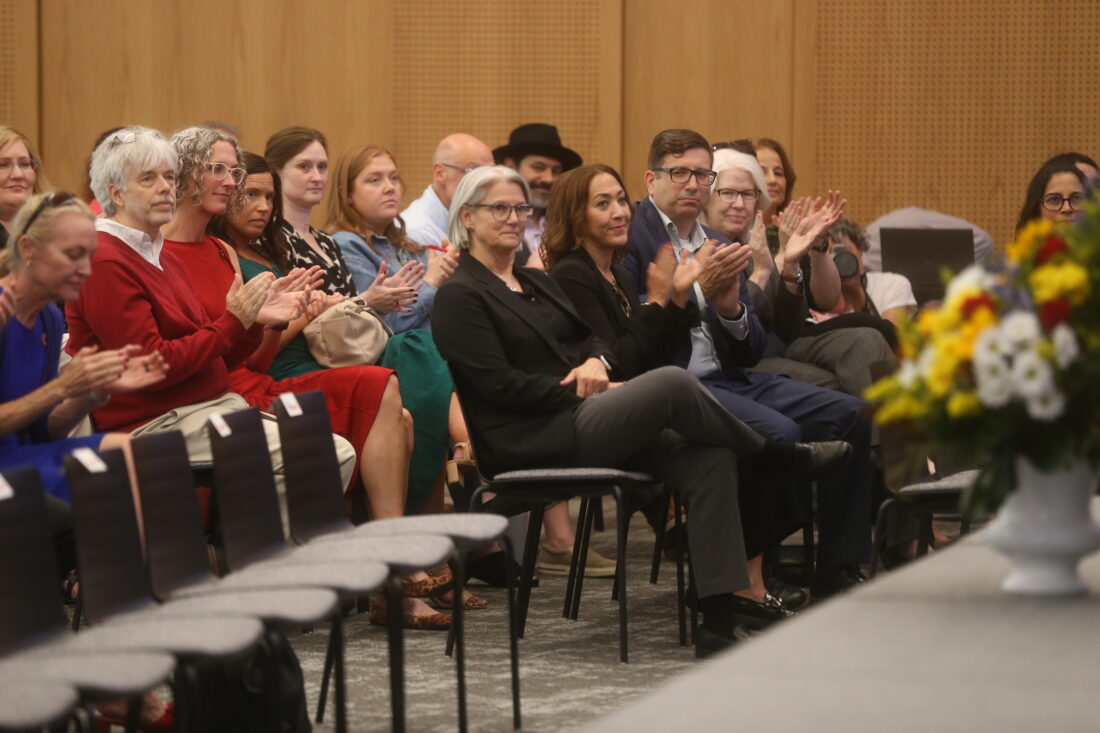
photo by: Chad Lawhorn/Journal-World
KU Provost Barbara Bichelmeyer, front, is recognized during KU’s State of the University address on Oct. 16, 2025.
This month, Girod told the Journal-World that it is a particularly important time for someone with university-wide knowledge because KU, as recently reported, is set to begin the next phase of implementing its One KU strategy.
The strategy focuses on breaking down administrative barriers that have historically separated KU’s main Lawrence campus and the medical school campus in Kansas City, Kansas. It also aims to eliminate some administrative barriers between the research enterprises of the university and the undergraduate teaching enterprises and other such functions.
As a result, Girod said he believes it will be important to find a candidate who can take a “holistic approach” to the provost position. For example, Girod said the One KU strategy likely will involve the provost having “much more involvement in academic activities at the Medical Center” than what historically has been the case.
Girod told the Journal-World that the One KU initiative is entering a critical phase. The strategy has been implemented at some of the highest levels of KU’s administration. For instance, KU previously had a chief financial officer for both the Lawrence campus and the Medical Center. Now, under the One KU strategy, KU has one chief financial officer for the entire university.
The next phase of the One KU initiative, as reported earlier this month, is to expand the strategy to the lower levels of the university’s administration, including at the school and department level.
Girod said he expects the next 12 months will be a pivotal one as KU learns much about how the university can streamline certain functions. That could have impact on employment totals and department structures at the university, Girod said.
“I think undoubtedly we can get to some efficiencies over time, but I don’t anticipate those efficiencies coming through layoffs and things like that, but more through attrition and resignation and reapplication of people from one area to another,” Girod said.
Girod, however, said he and his team have not set a target number of jobs that might be streamlined or altered through the One KU strategy. Rather, Girod said he thinks the next phase of the One KU implementation will reveal many best practices as departments, units and other entities in the university examine their structures.
“I think it all will start becoming more apparent in the next 12 months,” Girod said.
KU
KU Religious Studies to host public talk with Justice Matters about the group’s role in promoting community health

With prompts for tipping rising over the past few years, KU professor looks for ways to make it less stressful for all
KU’s lesser known powerhouse: A look at how the debate team wins against the best of the best
University of Maine leader named as a finalist for KU journalism dean position

Self announces he will continue as KU coach
