KU Cancer Center wins elite designation as Comprehensive Cancer Center, gets $30 million in new funding

photo by: Chad Lawhorn/Journal-World
Roy Jensen, director of the KU Cancer Center, salutes the crowd on July 7, 2022 as part of a ceremony announcing that the center has become one of the 53 top-designated cancer centers in the country. Also pictured, from left, are Executive Vice Chancellor for the KU Medical Center Robert Simari, KU Chancellor Douglas Girod and U.S. Sen. Jerry Moran.
Updated at 6:41 p.m. Thursday
Kansas City, Kansas — It easily was a $30 million day for the University of Kansas on Thursday.
The university on Thursday announced that the KU Cancer Center has completed a multiyear project to win designation as a Comprehensive Cancer Center from the National Cancer Institute.
KU becomes one of just 53 comprehensive cancer centers in the country. That’s the same designation as well-known cancer treatment campuses such as the Mayo Clinic in Rochester, Minnesota, and the MD Cancer Center in Houston, for example.
The designation came with a five-year, nearly $14 million grant from the National Cancer Institute. No sooner than the ink had dried on that announcement, KU also announced the cancer center had received a special $16 million federal appropriation secured by U.S. Sen. Jerry Moran, R-Kansas.
“Ladies and gentlemen, let’s be clear about this,” KU Chancellor Douglas Girod said to a crowd that included Moran and a large number of KU and Kansas City leaders. “Today is really among the most important, exciting and meaningful days for our university, for our region and for our students.”
While $30 million for cancer care and research is a lot of money, there was one number at Thursday’s celebration that may have even topped it: 25%.
Patients who are treated at a center designated by the National Cancer Institute have a 25% better survival rate than cancer patients treated elsewhere, Roy Jensen, director of the KU Cancer Center, told the crowd.
Jensen said the federal designation — and, yes, the grant money it produces — allows cancer centers to accumulate “a tremendous concentration of expertise.” Unlike other treatment locations, a designated cancer center is full of specialists who treat just one form of cancer, allowing them to understand the latest treatments and advances in care. Often, they also are researchers who are working on those advancements. But Jensen said beyond the doctors, there are other specialists in the building, noting that KU has a team of nurses who only provide care to breast cancer patients, for example.
The designated cancer centers also get more research dollars to sponsor more clinical trials, which greatly increases the likelihood that a patient at a designated cancer center can get access to cutting-edge treatments, he said.
Add it all up and the financial support and expertise gives the KU Cancer Center a chance to tackle a big goal, Jensen said.
“We aim to do nothing less at the University of Kansas Cancer Center than transform the entire cancer experience, so that our patients have access to the latest cutting-edge therapies and that we are leaders in developing those new therapies,” Jensen said.
KU’s center is the first in Kansas, and is the only comprehensive cancer center in a broader region that includes all of Oklahoma, Nebraska, South Dakota, North Dakota and Arkansas. Previously, the closest comprehensive cancer centers for Kansas residents were at Washington University in St. Louis and the University of Colorado in suburban Denver.
The cancer center designation has been about two decades in the making. University leaders announced in 2004 that achieving the cancer center designation was one of their goals. By 2012, KU had achieved one level of designation from the NCI, which is a division of the National Institutes of Health.
KU had been designated as a national cancer center, but not a comprehensive cancer center. The standard cancer center designation meant KU had expertise in one of three areas of cancer — treatment, prevention or research. KU’s new designation means it has expertise in all three areas, and the comprehensive designation is the highest the NCI offers.
KU applied for the comprehensive designation in 2017 but did not receive it. Girod said that required the university to regroup on several fronts to get the designation five years later. He equated the project to KU’s “moonshot” and said the new designation was KU’s lunar landing.
Girod — a cancer surgeon who started his KU career at the medical center 28 years ago — was emotional at Thursday’s announcement, with his voice cracking several times. He said the day was a good one to remember how far the university had come, both in providing better patient care and in the advancement of KU’s reputation to the point where it is now successfully recruiting physicians from all over the country.
“When I got here in 1994, your ability to recruit folks off the coasts to this institution was a challenge,” Girod said. “The growing stature of the cancer center and the growing impact of that research enterprise has really put us already on the national landscape.”
The new designation is expected to have a significant financial impact on the university. The cancer center already generates about $80 million a year in grant funding. KU leaders on Thursday didn’t announce a new goal for the center, but they said they expected a sizable increase and also highlighted plans to build a major new cancer center building on the KU Medical Center campus.
While much of the cancer center work takes place on the Kansas City, Kansas, medical center campus or in related facilities in Johnson County, Girod said the Lawrence campus would also benefit greatly. Basic research conducted at the Lawrence campus is a foundational part of the cancer center designation.
Beyond that, however, new research dollars flowing to the cancer center could be pivotal in KU’s efforts to remain a member of the prestigious Association of American Universities, which is generally regarded as the group of North America’s most accomplished research universities.
In April, Iowa State University had to withdraw from the group. The AAU doesn’t disclose in detail how it decides its membership — now totaling 65 schools — but Girod, who serves on the AAU’s board of directors, said the cancer center designation likely will bolster KU’s standing in the organization, as the AAU measures both total research dollars and the impact they have.
Thursday’s event included recognition of multiple people — ranging from past vice chancellors to state legislators and governors — who have had an impact on KU attaining the designation. Jensen gave special recognition to the late Robert Hemenway, who was KU’s chancellor in 2004 and made the cancer center designation a universitywide goal.
“He had the guts enough to do it,” Jensen said of Hemenway setting the goal. “I don’t know that he would have done it if I told him it might take 20 years. I think it says a lot about this institution. When I think about it, I don’t even know of a place that would decide on a priority and then be willing to spend two decades to make it happen.
“I mean, if I was a football coach, I would have been fired about 15 seasons ago.”
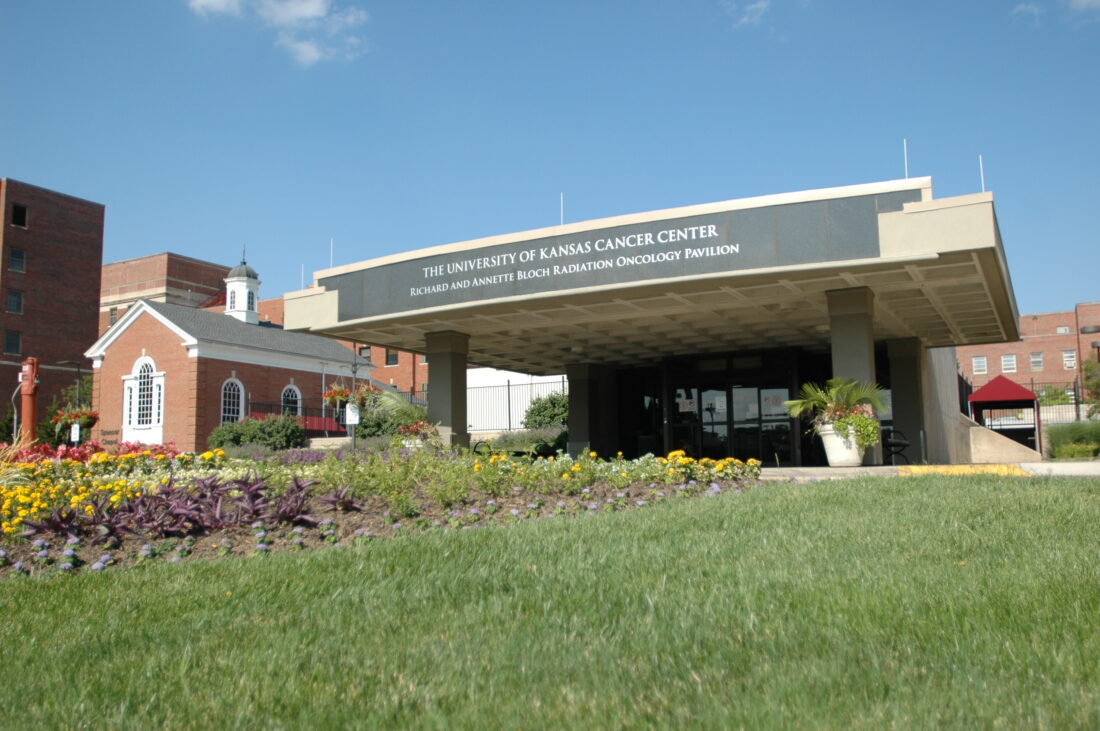
photo by: File
The University of Kansas Cancer Center’s Bloch Radiation Oncology Pavilion is pictured June 11, 2017. The facility is located on the KU Medical Center Campus, 3901 Rainbow Blvd. in Kansas City, Kan.

photo by: Chad Lawhorn/Journal-World
University of Kansas Chancellor Douglas Girod, pictured on July 7, 2022.
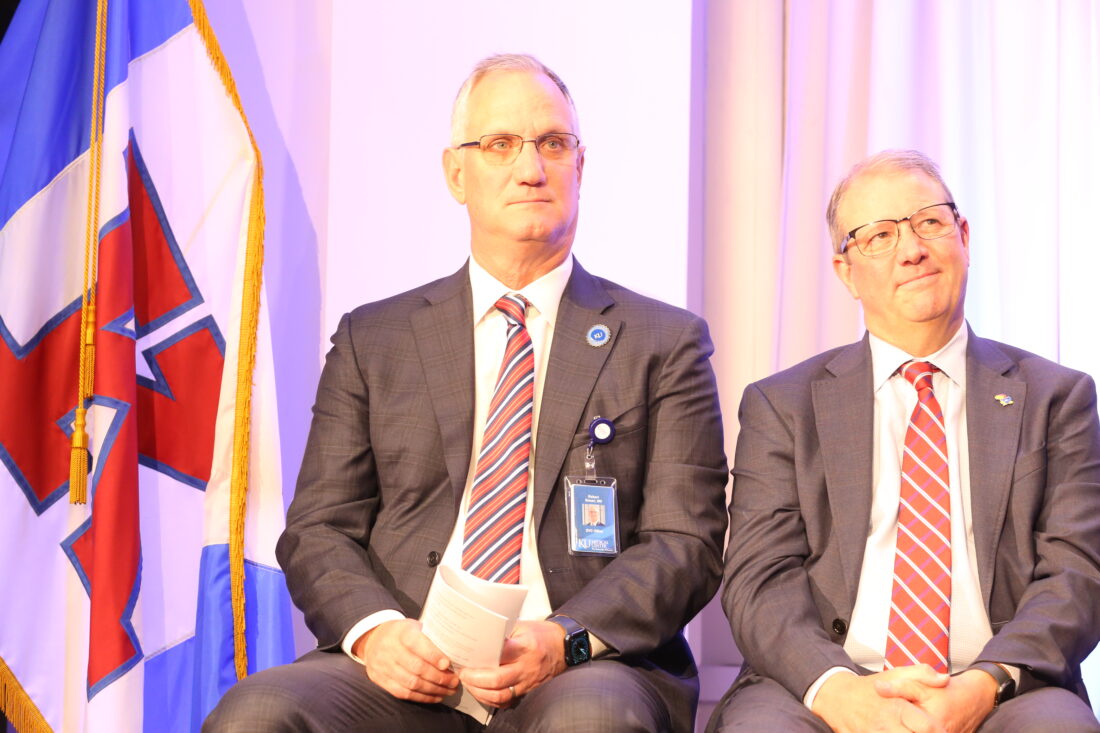
photo by: Chad Lawhorn/Journal-World
Executive Vice Chancellor for the KU Medical Center Robert Simari, left, and KU Chancellor Douglas Girod look on during announcement on July 7, 2022 that the KU Cancer Center had achieved the highest level of designation from the National Cancer Institute.
KU
Girod hopeful of naming new KU provost by March 1; finalists likely to give public presentations in January

‘A deeply personal weight’: Afghan KU alumnus sounds Taps for slain National Guard soldier
KU’s Religious Studies department wins grant to form new connections with health care providers
State budget committee puts university expenditures under the microscope; legislators question everything from golf carts to consulting fees

Kansas lawmakers still debating whether universities need to do more to limit diversity, equity, inclusion materials