50th anniversary exhibit highlights gems of KU’s Spencer Research Library
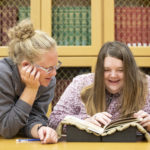
photo by: Nick Krug
University of Kansas students Marisa Haselhuhn, left, and Jerika Miller thumb through the pages of one of many versions of Aesop's Fables Thursday, Oct. 11, 2018, at the Spencer Research Library. The students along with the rest of their World Literature class spent part of the morning at the library, which is celebrating its 50th anniversary.
The work of William S. Burroughs, Kurt Cobain and King James of England don’t generally coincide, other than when exhibited side-by-side at the Kenneth Spencer Research Library.
Burroughs and Cobain’s 1992 collaboration “The ‘Priest’ They Called Him,” and the 1616 edition of “The Workes of the Most High And Mighty Prince, James,” are on view for the library’s 50th-anniversary exhibit.
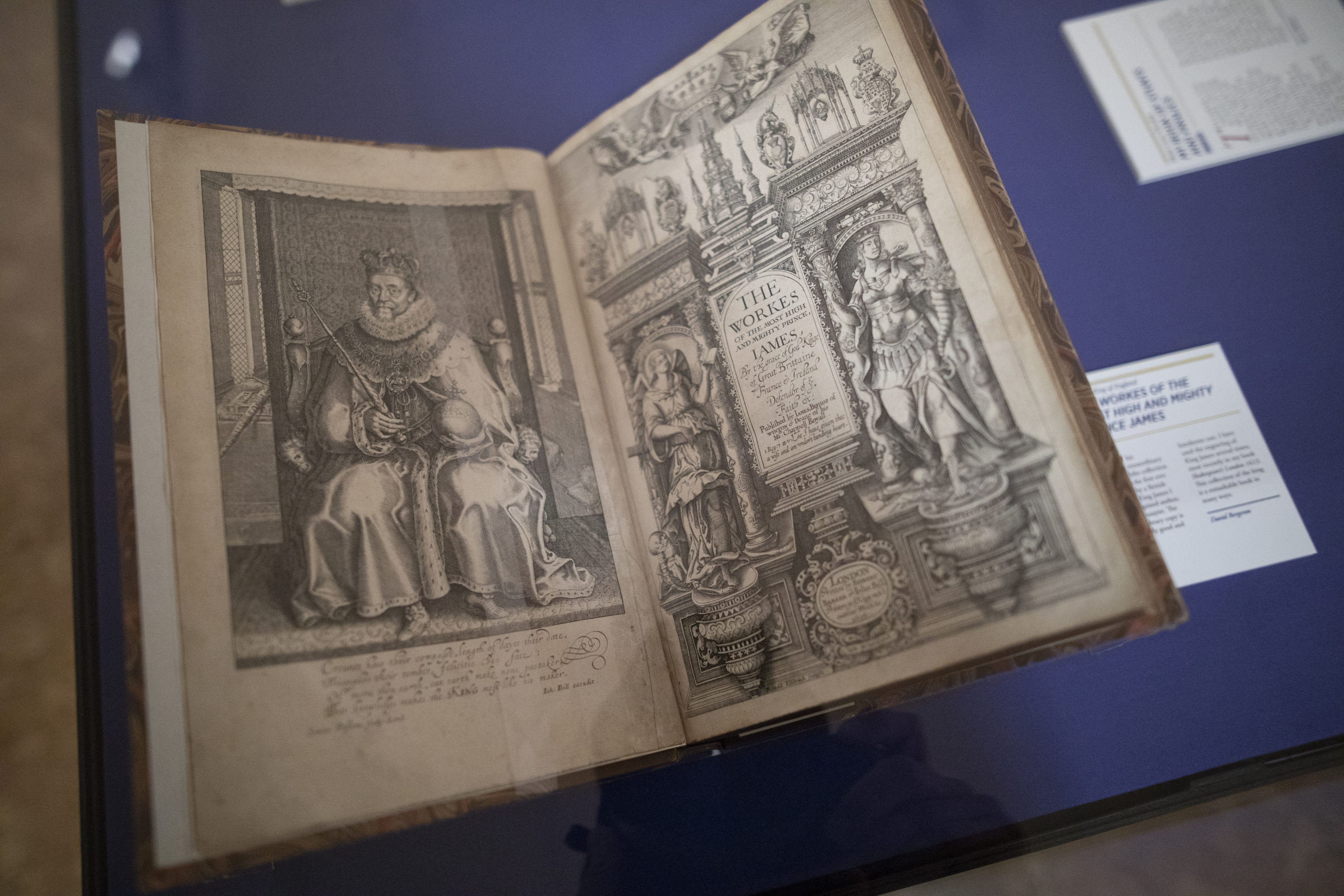
photo by: Nick Krug
“The Workes of the Most High and Mighty Prince, James,” which dates back to 1616, is one of the museum’s pieces selected for display in a current exhibit celebrating the museum’s 50th anniversary. The exhibit highlights noteworthy collections that have aided or grabbed the attention of faculty members, students and others.
In planning for the celebration, organizers asked researchers and staff to identify items in the collection that were especially important to them or that might have made an impact on their lives, said Beth Whittaker, associate dean of distinctive collections at the Spencer Research Library on the University of Kansas campus. They turned those items into the “50 by 50” exhibit, which officially opens Nov. 8. The library was dedicated on that day in 1968. It was built through the donation of the Kenneth A. and Helen F. Spencer Foundation.
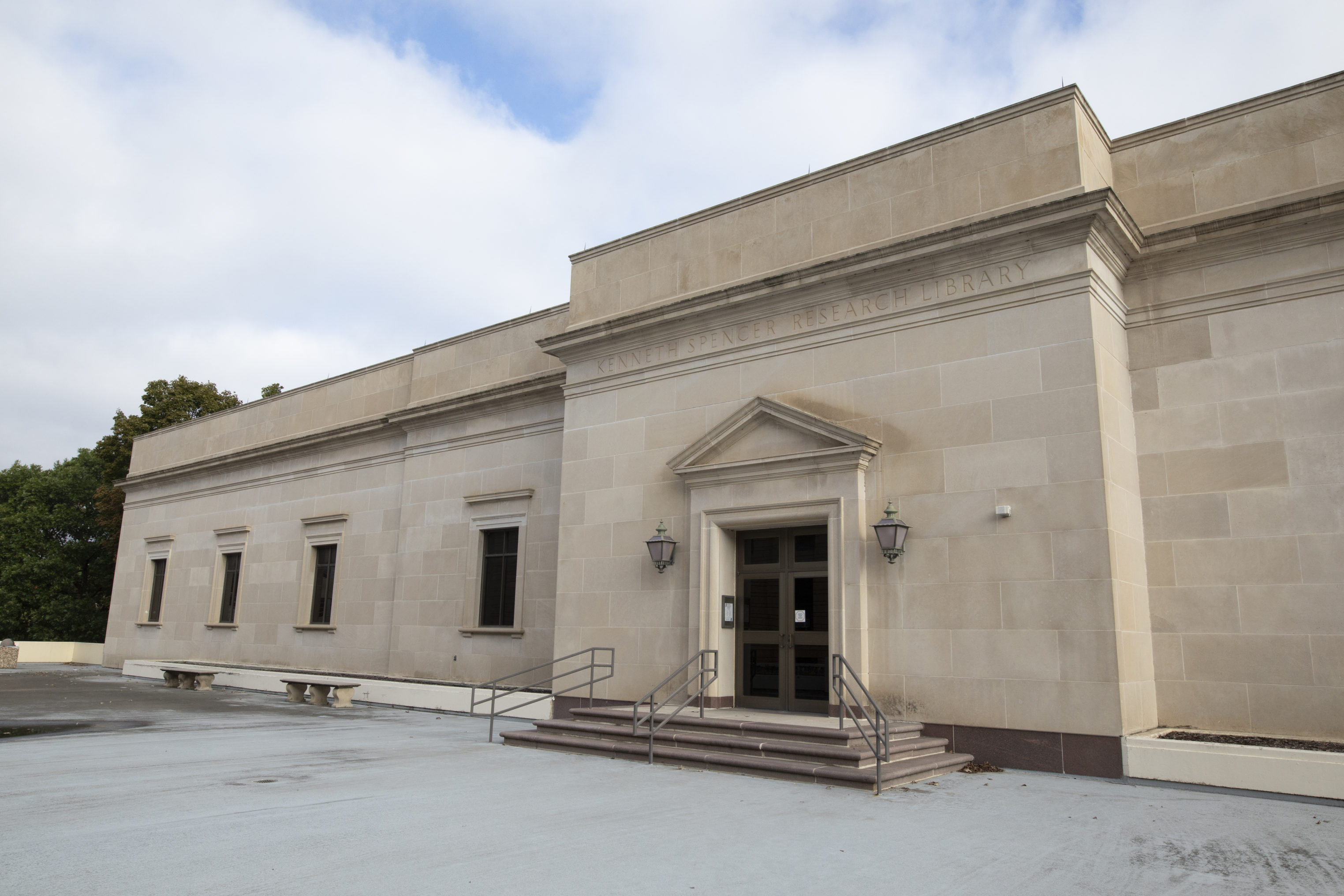
photo by: Nick Krug
The Kenneth Spencer Research Library is pictured on Thursday, Oct. 11, 2018.
While the first published work of a British monarch is valuable to the Spencer, so is the 1935 personal diary of Anna L. Johnson, a Kansas farmer’s wife. The book is displayed with the entry from the day her “mama” died.
“I went all to pieces,” Johnson wrote.
Although it wouldn’t surprise anyone that the special collections and rare books library contains the work of William Allen White and Langston Hughes, it might come as a surprise that a rare first edition of “Ulysses,” by James Joyce, is included in the collection on Irish literature.
Nearby is Kansas City Monarchs memorabilia, including a red baseball cap from the Negro Leagues and a picture of the 1934 team, from the Thomas Y. Baird collection.
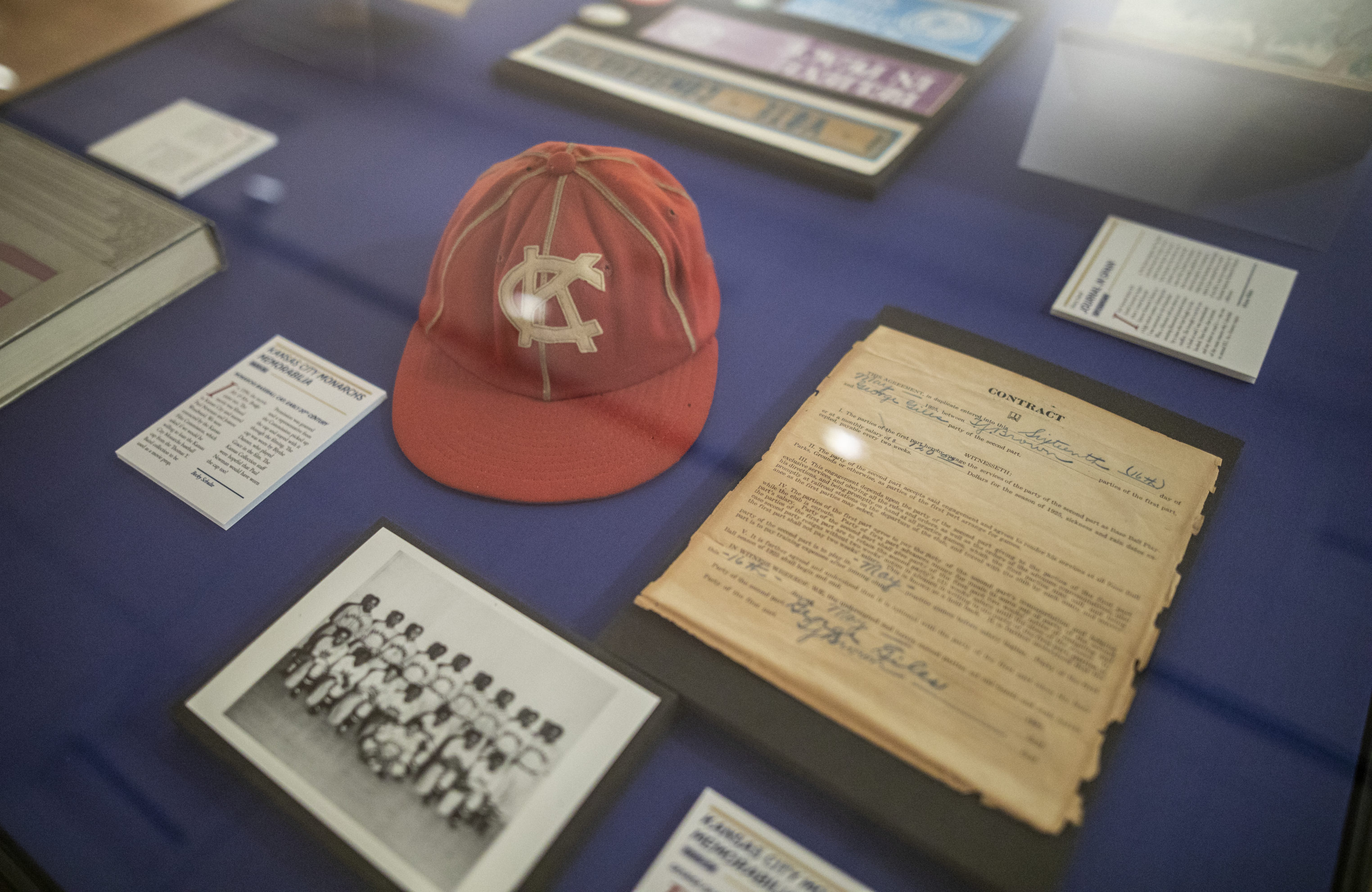
photo by: Nick Krug
Kansas City Monarchs memorabilia is on display Thursday, Oct. 11, 2018, at the Spencer Research Library.
“Make wine, not war” and “War is good business; invest your son” are phrases on political buttons that are included in the exhibit. The buttons, as well as bumper stickers, represent a variety of perspectives from the 1960s to 1990s, from the Wilcox Collection.
Plus there is the Cobain album that he collaborated on with Beat writer Burroughs during a visit to Lawrence in 1992. The flip side of the album has the autographs from both men stamped into the vinyl.
“We talk about special collections, but in a lot of ways the material we hold in Spencer is really the identity of our libraries,” said Kevin Smith, dean of libraries at KU. He considers that one of the strengths of the library.
“In the digital age, resources of all kinds are available to everybody. What we have in Spencer is unique; it’s distinctive,” Smith said.
Faculty, students, researchers and the general public all use the library. Classes from KU and other universities, as well as K-12 students, visit on a regular basis, Whittaker said.
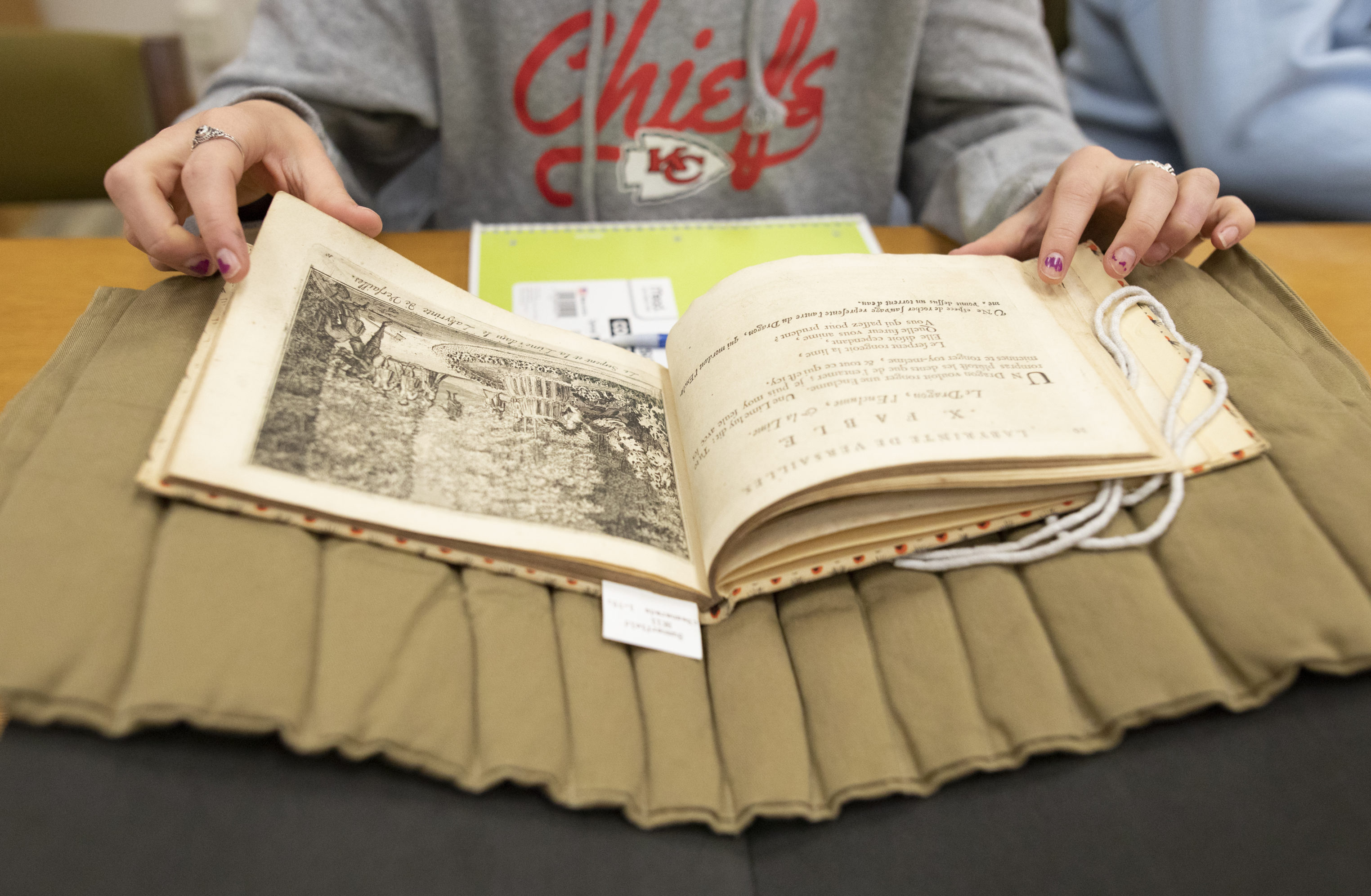
photo by: Nick Krug
A World Literature student flips through the pages of an older version of Aesop’s Fables on Thursday, Oct. 11, 2018, at the Spencer Research Library. The oldest version of the book the library owns dates back to 1517.
“During the first two quarters of 2018, we hosted 81 class visits with a total of 1,029 participants,” Whittaker said.
Smith points out that Spencer is different from other libraries, and that must be considered as it looks to the next 50 years.
“Public libraries think in terms of months and years. I recently talked with a librarian in Johnson County who said they didn’t keep anything on their shelf that is older than five years because that’s who their audience is,” Smith said.
“A research library has to think about 50 years, 100 years; what is somebody going to need to do their research in a particular area later? It means partly we don’t worry about circulation. If this book hasn’t been checked out in the last three years, so what? Somebody may need it in another 10,” he said.
“In tight budget times, it’s difficult,” Smith said. “But we have to think on several time horizons.”
KU
University of Maine leader named as a finalist for KU journalism dean position

Self announces he will continue as KU coach

KU faculty union ratifies first-ever labor contract with 92% voting yes; contract now needs Regents approval
KU researcher excited to bring prestigious NASA fellowship to university as way to mentor students, expand research opportunities
Local vendors can apply now for KU’s new monthly on-campus market, Jayhawk Fridays