

City proposes speed cushions on 3 streets as part of neighborhood traffic program
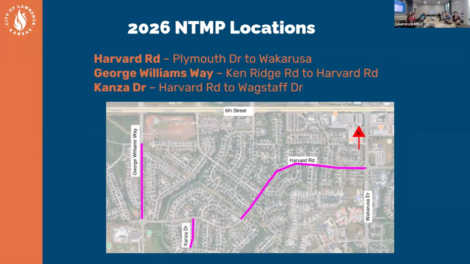
photo by: YouTube screenshot
The Neighborhood Traffic Management Program is planning to add speed cushions to Harvard Road, George Williams Way and Kanza Drive in 2026.
To enhance the safety of city streets, the City of Lawrence is hoping to add speed cushions to three roads in northwestern Lawrence to reduce speeding.
During the Connected City Advisory Board meeting on Monday, city staff presented three different road segments where they hope to add speed cushions – raised areas of pavement designed to slow down traffic without hindering emergency vehicles or buses: Harvard Road, from Plymouth Drive to Wakarusa Drive; George Williams Way, from Ken Ridge Road to Harvard Road; and Kanza Drive, from Harvard Road to Wagstaff Drive.
This effort is a part of the Neighborhood Traffic Management Program – an initiative to address traffic concerns in residential areas. The city is proposing to add five speed cushions on Harvard Road, two speed cushions on George Williams Way and one speed cushion on Kanza Drive.
According to the city’s website, recent traffic studies have shown that vehicles on George Williams Way are often going above 40 miles per hour, despite the speed limit being 35 miles per hour. Similar instances are happening on Harvard Road, where drivers are easily exceeding the 25 miles per hour speed limit.
Kanza Drive also scored highly under the city’s scoring criteria – which considers speeding, traffic volume, crashes, sidewalks, protected school crossings and nearby parks, schools or recreation centers.
Bailey Waters, a project engineer with the city, told advisory board members that since engaging with the public about a week and a half ago about the proposed projects, people have been in support of the locations selected.
Board member Hilary Carter said that many proposals submitted during the city’s 2024 call for projects came from neighborhoods with organized neighborhood associations. Carter questioned whether the city could find ways to reach neighborhoods that may need traffic-calming measures but lack an active neighborhood association.
Waters said the city may do another call for projects early next year, and if they do so, she’s prepared to collect speeds and vehicle counts at any street that doesn’t have any data.
“I’m making a list right now of all those locations that we need to go actively investigate, whether or not we can,” Waters said.
The Neighborhood Traffic Management Program was first started in 2018, as the Journal-World reported, and the city has since installed multiple traffic calming devices throughout the city, such as speed humps, chicanes and curb extensions.
The installation of the speed cushions is anticipated to cost about $167,000. In addition, the program is planning to spend $27,000 this year on speed and volume counters for roadways along with annual subscriptions for the program. The city will also use $6,000 for signage and community outreach.
The city is currently gathering public feedback on the proposed projects. To submit feedback for the project proposals, visit https://engage.lawrenceks.gov/2026-ntmp.
Other News
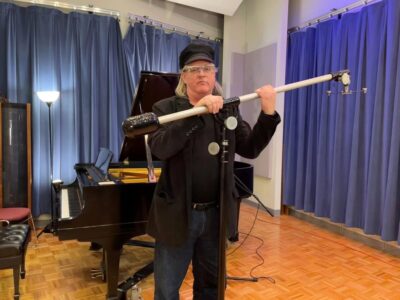
‘One of a kind’: Sale at the Lawrence Arts Center will find new homes for late musician’s unique custom guitars
Go, See, Do: KU homecoming, Halloween happenings and other events
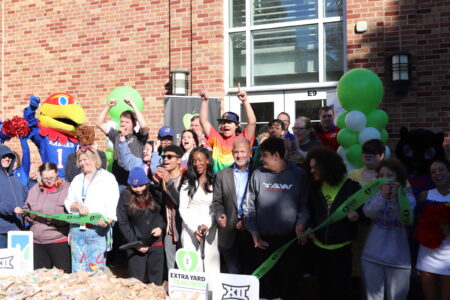
Student-run coffee shop opens at Community Connections at Pinckney, teacher receives surprise $1,000 award
‘This is for all of us’: Midco Prairie, an oasis of native plants in downtown Lawrence, opens to the public
Douglas County commissioners express interest in fireworks sales dates that include a weekend
