

State health officials warn of increased risk of rabies exposure, especially from bats
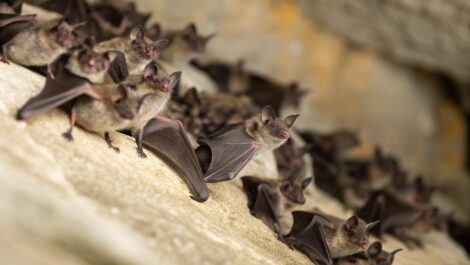
photo by: AdobeStock
Bats are pictured in this AdobeStock photo.
TOPEKA — State health authorities warned Kansans to be aware of an increase in encounters with animals that carry rabies, primarily bats.
The Kansas Department of Health and Environment issued an advisory Tuesday urging health care providers to be aware of the importance of administering a rabies risk assessment because of increases in rabid animals.
The Centers for Disease Control and Prevention issued a similar advisory last week because many areas nationwide are reporting increased exposures to rabid or possibly rabid animals.
“Several high-profile rabies outbreaks and mass rabies exposure events have highlighted the importance of performing careful rabies risk assessments and following evidence-based recommendations for administering (post-exposure prophylaxis),” CDC’s advisory said.
Treatment for people exposed to rabies is a series of shots administered when rabies is suspected or confirmed. Rabies is nearly 100% fatal if treatment isn’t administered, the CDC advisory said.
KDHE encouraged health departments to help by reminding clinicians about the importance of administering a risk assessment before starting treatment. The assessment considers the risk of rabies in the animal, the circumstances that led to the exposure, if the animal had any clinical signs consistent with rabies, and the type and severity of the wound, the CDC advisory said.
There have been no human rabies cases in Kansas this year, according to the KDHE Infectious Disease Dashboard.
“Each year, 1.4 million Americans receive healthcare for a possible rabies exposure, 100,000 receive post-exposure prophylaxis, and fewer than 10 die from rabies due to robust prevention efforts,” a CDC report said.
The CDC received 17% more rabies-related inquiries from July through August, than during the same period in 2025.
The agency also received reports from at least eight state health departments of increased rabies post-exposure assessments being used.
“According to weekly pharmacy data as of September 2, 2026, utilization for the two rabies vaccines and the two rabies immunoglobulins licensed in the United States has increased by an estimated 33% and 76%, respectively, compared with the same time period last year,” a CDC report said.
Most rabies cases occur after wild animal exposures. KDHE data, updated as of June, found nine positive rabies cases in Kansas, with six cases in skunks, one in a cow, one in a dog and one in a bat.
• Morgan Chilson is a reporter with the Topeka-based news service Kansas Reflector.
Health
Supreme Court rebuffs Trump administration restrictions on medical care for transgender inmates
WASHINGTON (AP) — The Supreme Court on Wednesday refused to allow the Trump administration to immediately enforce ...

Trump signs an order aimed at boosting women’s health research, a plan backed by the first lady
1st new sunscreen type in 25 years has hit US shelves
WASHINGTON (AP) — For the first time in more than a quarter-century, Americans have a new option when shopping ...

What to know about this year’s flu & COVID vaccines

KU’s center for eating disorders invites public for open house
Florida’s dengue outbreak is largest in a US state in decades
NEW YORK — Florida’s current dengue outbreak is the largest in several decades of any U.S. state. State ...