

Community workshop explores ways to help Douglas County families move from survival to stability
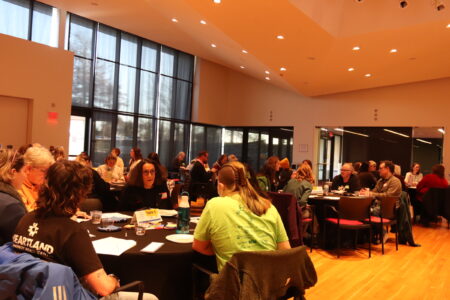
photo by: Josie Heimsoth/Journal-World
A several dozen people attend a workshop on how to improve support for low-income and single-parent families on Monday, Dec. 15, 2025.
Dozens of community members gathered to review data about low-income households and brainstorm ways to help Douglas County families move from survival to stability.
A packet was provided to participants at the event on Monday, and participants dove into data from a survey, “Our Tomorrows: Douglas County Thrives Survey,” in which 94 people submitted responses collected between Oct. 2 and Nov. 21. The goal was for people attending the workshop to take what they learned from the stories and the data and turn them into action planning and changes.
Those changes can help “move all families in Douglas County beyond ‘just surviving’ to ‘thriving,'” the packet said.
Providing more opportunities to serve low-income women with children is a specific focus area outlined in the anti-poverty work within the Community Health Improvement Plan, a five-year framework for health and well-being in the community, as the Journal-World reported.
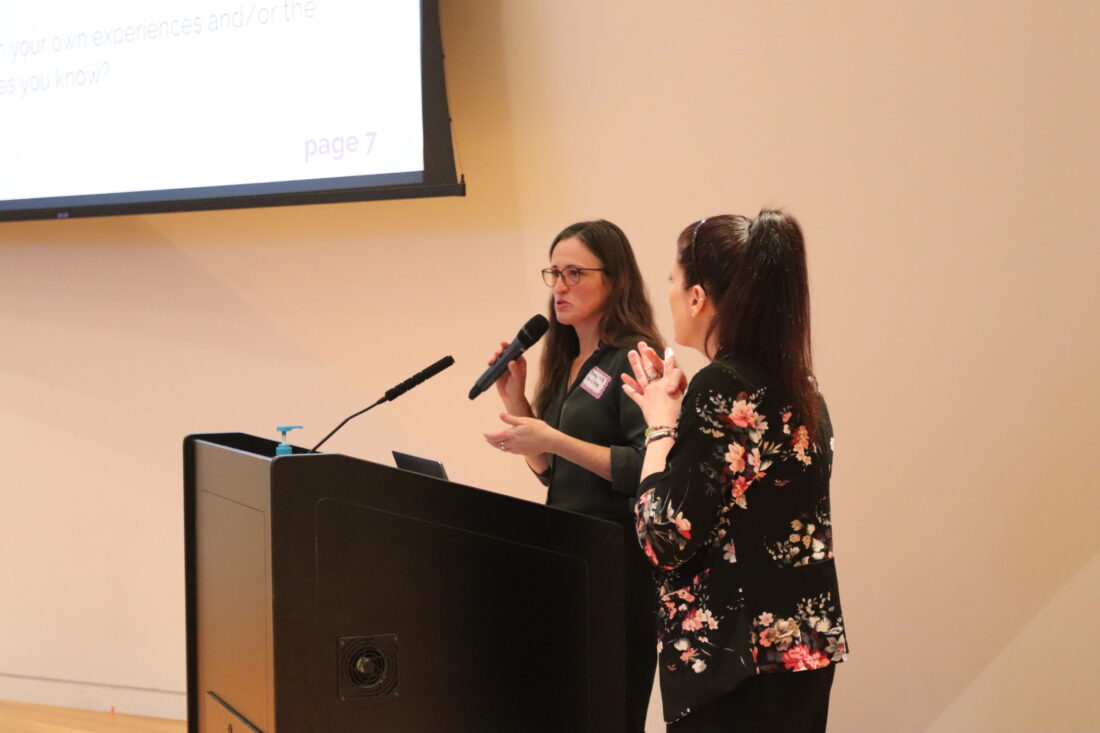
photo by: Josie Heimsoth/Journal-World
Jennifer Welch Buller and Jenny Flinders, research project managers at the University of Kansas, speak at a workshop on Monday, Dec. 15, 2025.
The plan’s poverty work group wanted to devote more resources to helping single mothers living below what’s called the “ALICE threshold,” which stands for Asset Limited, Income Constrained, Employed.
These households often are categorized as falling through the cracks of the system as they earn more than the federal poverty level but earn less than the basic cost of living. Local officials said the data shows 64% of all single female headed households in the county are below the ALICE threshold. The health plan has a goal of reducing that number to 50% in the coming years.
According to the packet handed out on Monday, when respondents to the survey were asked to choose between what Douglas County needed more of – services or program options, people to help/providers or resources given directly to families – a large number of single-headed households picked resources.
One of the people who completed the survey was a single mother, and she wrote that her family moved back to Douglas County after receiving a transitional housing voucher. While she was happy to finally find somewhere to stay, it ended up being a stressful situation and she felt she was being pressured to leave and not receiving the help she needed.
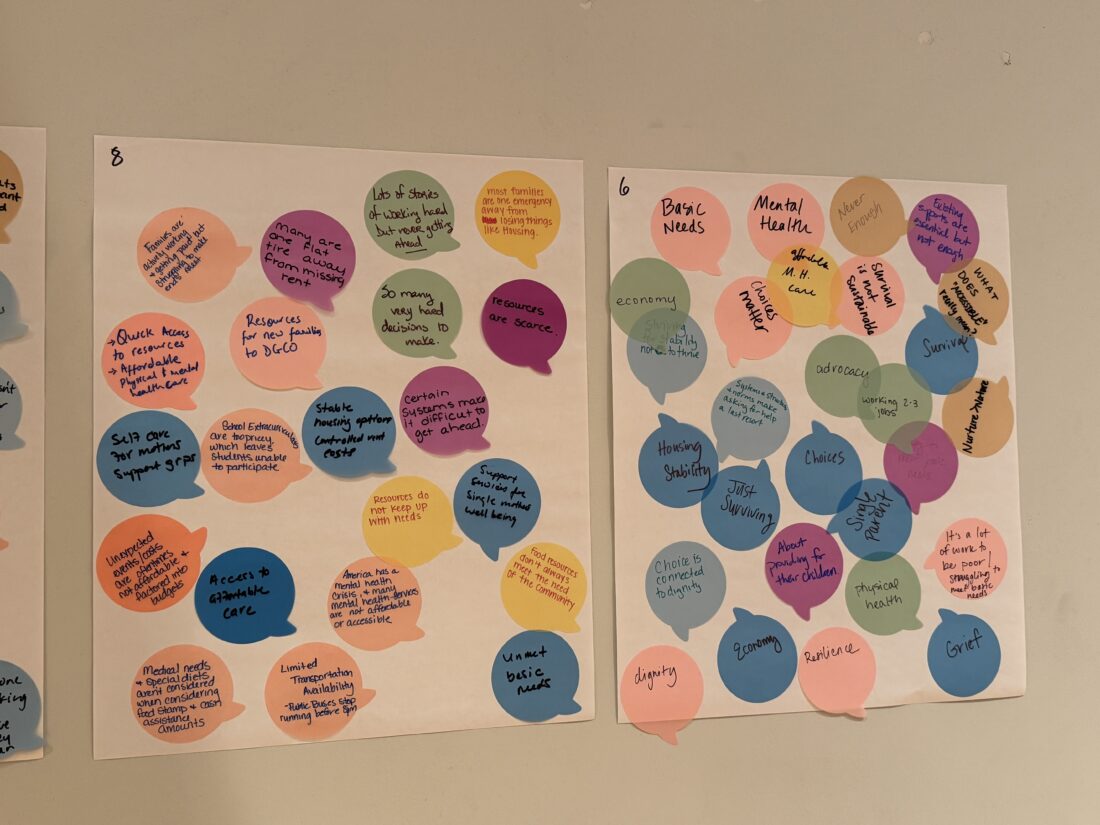
photo by: Josie Heimsoth/Journal-World
People wrote about their observations on data shared at a workshop on how to improve support for low-income and single-parent families on Monday, Dec. 15, 2025.
“The stress of the situation there and even contemplating having to move a third time in one year … was almost debilitating at times,” she wrote. “I did not find much support in advocating for being able to stay there (which would have been my preference.) Even agencies that are organized to help single parents like myself didn’t seem to have the knowledge or motivation to help.”
Another person who completed the survey said in the past year, they have been living in “survival mode.”
“When the rent structure changed and I lost my job, everything tightened overnight,” the person wrote. “Covering basic expenses became a constant balancing act – choosing which bills to pay first, stretching every dollar, and trying to stay afloat while managing my health.”
The person added that things haven’t been improving because every decision that is meant to create stability, like finding a new job or refinancing their vehicle to lower payments, ends up creating strain somewhere else.
“The rent structure is designed in a way that punishes progress – the moment income increases, rent goes up too, leaving no room to actually recover or get ahead,” the person continued. “It traps families in a cycle where working harder doesn’t lead to stability, it just changes which bills fall behind.”
Survey respondents were also asked to indicate on a sliding scale about what type of support they have needed during these difficult times. One side of the scale was immediate or emergency while the other was long-term or permanent, and a majority of single-parent respondents said it was for emergencies.
One respondent said they lost their job around the time of their daughter’s birthday, and they were behind on their bills.
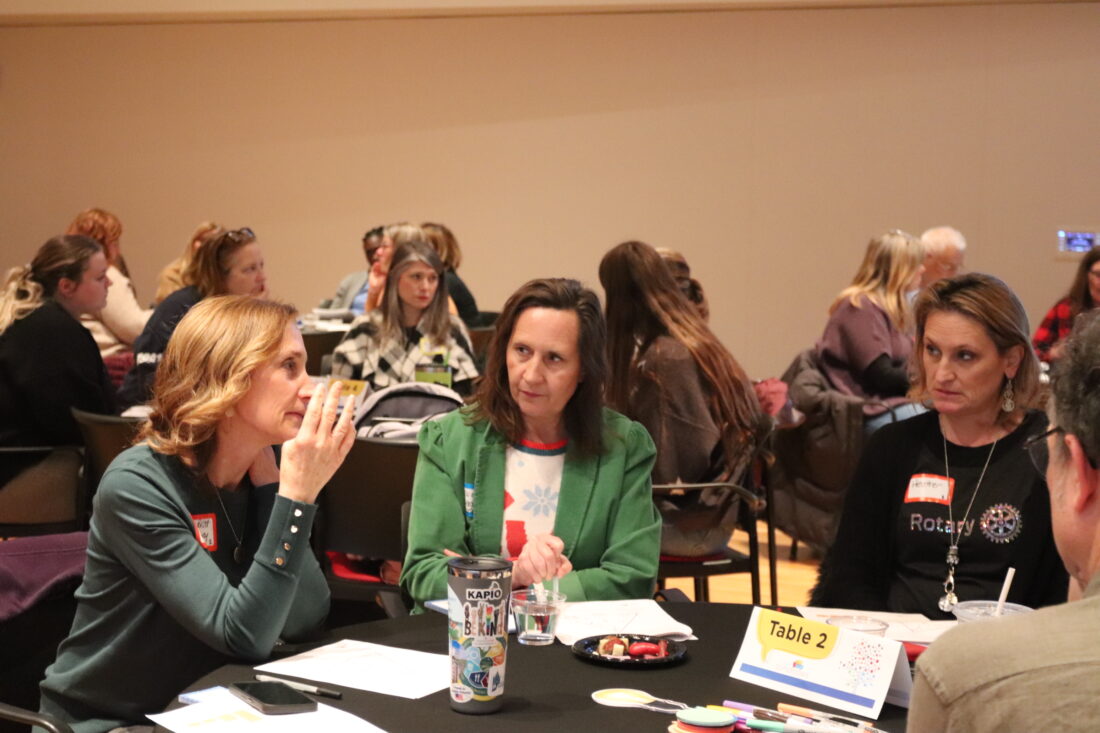
photo by: Josie Heimsoth/Journal-World
County Commissioner Erica Anderson attends a workshop on how to improve support for low-income and single-parent families on Monday, Dec. 15, 2025.
“I didn’t have no family to ask or run (to) for help,” they wrote. ” … I called resident services and I was able to get help with my bills, other places helped with little things I was able to go pick up for my daughter for her birthday.”
After reading numerous stories from different families, the workshop attendees on Monday wrote about their observations and trends they noticed in the data.
A few people wrote on sticky notes that there was a stigma attached to asking for help, while others highlighted that there needs to be systems in place that support families and don’t penalize advancements they might make. Others wrote about how specific medical needs or special diets are not being considered with food stamps or cash assistance amounts and the need for more affordable mental health services.
“Life is hard when you struggle every day,” one note read.
The attendees were also asked to write some action steps or things that could be implemented in the community within the next six months to a year and to also mention community partners that could lead in those efforts. The goal is to create proposals that could be shared with policy makers – like Douglas County commissioners – to help inform next steps in helping county residents thrive.
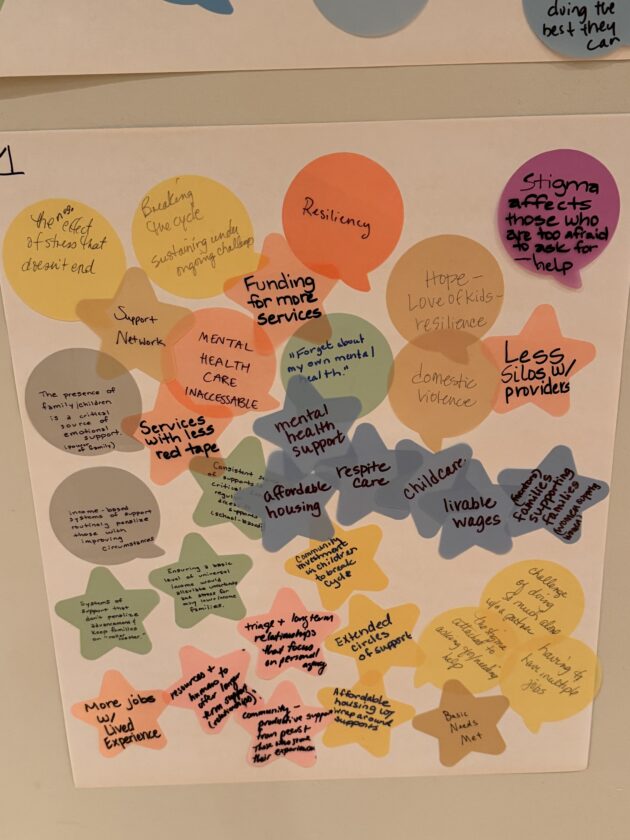
photo by: Josie Heimsoth/Journal-World
People wrote about their observations on data shared at a workshop on how to improve support for low-income and single-parent families on Monday, Dec. 15, 2025.
Some of the ideas were to increase the number of peer support opportunities for those in similar situations as well as finding a way to better connect people with others who need help. Another urged collaboration between agencies to build and strengthen wrap-around care for those in need.
One of the action steps someone shared was to create a guaranteed income pilot program in Douglas County. As the Journal-World reported, county commissioners approved using outside grant funds to explore a guaranteed income pilot for low-income single mothers in May. The funding will support the county’s effort to identify opportunities to help their economic well-being. County staff previously said they don’t plan to use tax money or the grant to implement the program, and the idea for the pilot was proposed in the CHIP last fall.
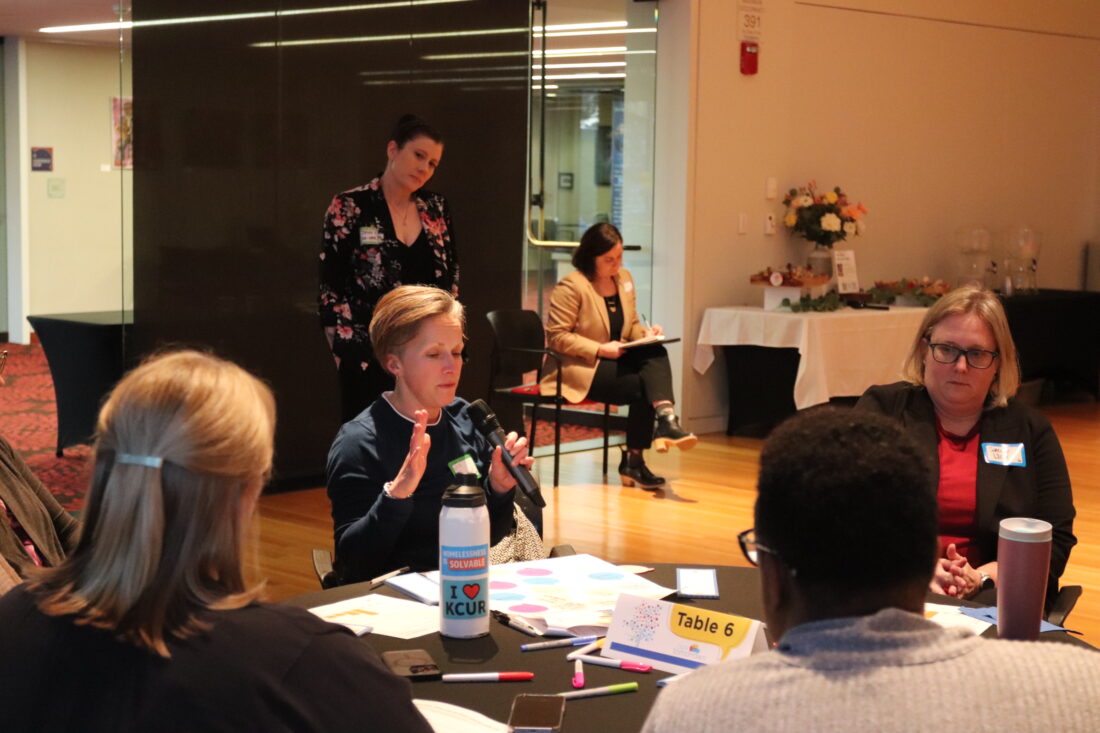
photo by: Josie Heimsoth/Journal-World
Assistant County Administrator Jill Jolicoeur speaks at a workshop on Monday, Dec. 15, 2025.

photo by: Josie Heimsoth/Journal-World
Attendees hang ideas at a workshop on how to improve support for low-income and single-parent families on Monday, Dec. 15, 2025.

photo by: Josie Heimsoth/Journal-World
Attendees hang ideas at a workshop on how to improve support for low-income and single-parent families on Monday, Dec. 15, 2025.
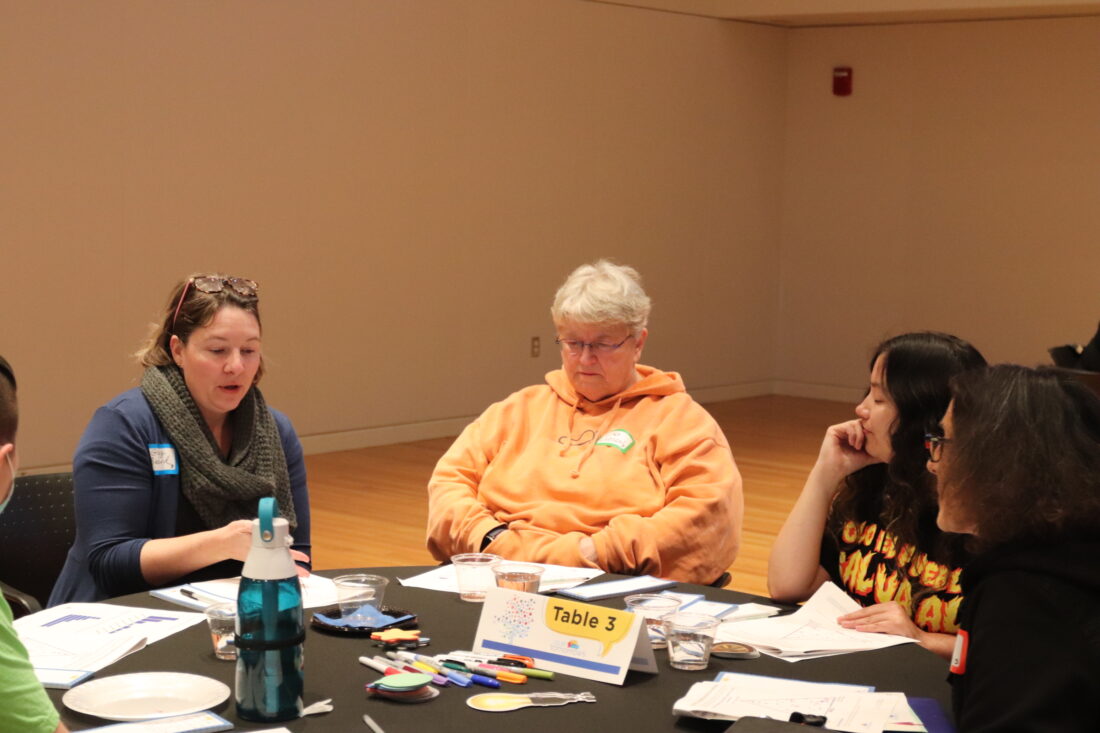
photo by: Josie Heimsoth/Journal-World
Former City Commissioner Lisa Larsen attends a workshop on Monday, Dec. 15, 2025.
Other News

Group dives into Municipal Stadium’s baseball history in hopes of being a hit with national registry

From classroom to big stage: A Eudora middle school student’s story to come alive at Theatre Lawrence

UPDATE: U.S. plans to ‘run’ Venezuela and tap its oil reserves, Trump says, after operation to remove its president

Here’s how many DUI arrests occurred during Douglas County’s holiday patrols

Johnson County to consider land exchange that would affect parks near Douglas County line
Farmers can now learn how much aid they will get from the Trump administration
OMAHA, Neb. — Farmers are now learning how much aid they can expect to receive from a $12 billion package that ...