Award-winning author who has explored crystal meth, homelessness and the drug crisis to give Lawrence speech

photo by: Chad Lawhorn/Journal-World
Copies of "The Least of Us" are shown on display at the Lawrence Public Library on April 26, 2024.
Award-winning author Sam Quinones might be an expert — although, perhaps, a controversial one — on tent cities across America.
After all, his latest book, “The Least of Us: True Tales of America and Hope in the Time of Fentanyl and Meth” has an entire chapter titled “Pimps & Tents.”
“Tents. They protect many homeless people from the elements,” Quinones writes in the book. “But they have another, far less benevolent role. Tents and the new meth seem made for each other. With a tent, the user could retreat not just mentally from the world but physically. Tents often became pods of exploitation where people used dope, sold dope or performed acts that allowed them to procure it.”
Those tents happened to be in Los Angeles, but as Lawrence residents can attest, tent cities can happen in cities of all sizes and shapes. Next month, Quinones, a longtime journalist, will speak to a Lawrence audience about the widely spreading world of synthetic drugs, homelessness and how the two perhaps intersect.
Quinones will provide a live address via video at 6:30 p.m. on May 8 at the Lawrence Public Library to discuss “The Least of Us,” and it will serve as prelude to an in-person panel discussion featuring law enforcement, drug treatment professionals and other stakeholders.
“It is hard to say you like a book like this because it is so disturbing,” Kathleen Morgan, deputy director at the library and one of the event’s organizers, said. “But it is very eye-opening. Things are different now with these drugs like meth and fentanyl.”
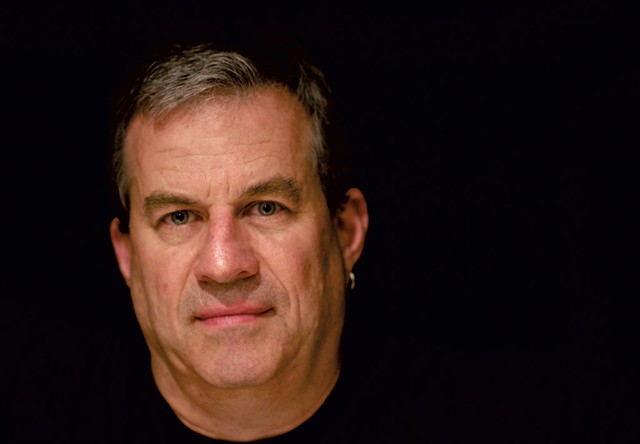
photo by: Image courtesy of Sam Quinones
Sam Quinones
Indeed, Quinones dives deep into the world of both fentanyl and meth. He examines how their production methods have changed, often allowing them to be produced much more cheaply and in larger quantities, using chemicals supplied by sophisticated scientific enterprises. One of Quinones’ turns of phrase about the changing drug world: Drug traffickers that act like multinational companies and multinational companies that act like drug dealers.
More than corporate attorneys have been known to raise an eyebrow about some of Quinones’ findings. Some homelessness prevention organizations have pushed back on how much Quinones attributes the spread of homelessness to the rise of a “new meth” — a more volatile version.
“This methamphetamine, meanwhile, prompted strange obsessions — with bicycles, with flashlights and with hoarding junk,” Quinones writes in “The Least of Us.” “In each of these places, it seemed mental illness was the problem. It was, but so much of it was induced by the new meth.”
Advocates for the homeless — like the Benioff Homelessness and Housing Initiative at the University of California San Francisco — push back on the role the new meth has played, and worry that it distracts important policy discussions about how to make housing more affordable.
In Lawrence, Morgan said the idea to present Quinones to a local audience wasn’t meant to take a side in the debate.
“I don’t know if it is a symptom or a cause, but it is definitely connected to the homeless problem,” Morgan said.
Given that, it makes sense to learn more about these synthetic drugs, and also to hear from Quinones on what he’s seen in other communities that have tackled the issue.
“The more we can help people get through their addiction and get help and get services they need to get better, the better off we are going to be,” Morgan said. “I think that is kind of a lovely message of the book, is that there is hope and there is help out there for people who need it.”
She said Quinones, who was a longtime journalist for many newspapers in the western U.S., does a good job of making the topic accessible and understandable for people who aren’t experts.
The book indeed has been acclaimed by many. Written in 2021, it was a finalist for that year’s National Book Critics Circle Award, and also was an Apple Best Book of the Year, among other honors.
Morgan said Quinones is expected to speak to the crowd for about a half-hour via videoconference. The program then will shift to an in-person panel of area professionals. Bruce Liese, clinical director for KU’s Cofrin Logan Center for Addiction Research and Treatment, will moderate the panel discussion.
The panel will include: Dr. Nana Dadson, chief medical officer at Bert Nash Community Mental Health Center; Chrissy Mayer, chief community-based services officer at DCCCA; Zijun Wang, assistant professor in KU’s pharmacology and toxicology department; Lt. Mark Mehrer of the Douglas County Sheriff’s Office; and David Hawley, owner of Lawrence-based Avalon Wellness and Recovery.
The library has purchased 40 copies of “The Least of Us” and is making them available on a seven-day loan. Look for them on a special display near the main checkout area of the library. The books can’t be put on hold. Morgan said they are being checked out briskly, but there are usually a handful available on any given day.
Morgan said she thinks the upcoming event is a good example of how the library can play a role in community education.
“If we learn more about it and understand where it is coming from, we can understand to be very careful,” she said. “What’s out there is just so dangerous.”
Public Safety
Former Lawrence paraprofessional pleads not guilty to child sex crimes; attorney intends to file motion to suppress evidence
Repeat felon originally charged with gun crime gets probation and ‘no gun’ finding
Man who admitted stealing nearly $50K from Dillons signs diversion with DA’s Office; charge will be dropped if he completes its terms
Man accused of selling wristbands to enable minors to drink at time of Hawk shootings is sentenced to probation

36-year-old Lawrence man confessed to raping 13-year-old girl, affidavit says