Watkins exhibit tells stories of Native American cultures and the history of Haskell
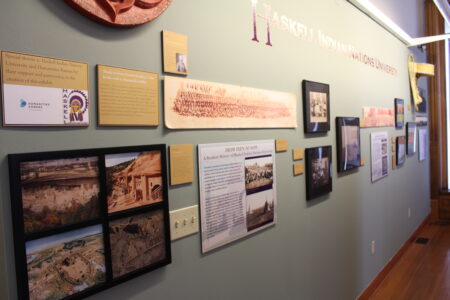
photo by: Austin Hornbostel/Journal-World
“From Then to Now: A Student History of Haskell Indian Nations University” is now on display at the Watkins Museum of History.
An exhibit now on display at Watkins Museum of History in downtown Lawrence aims to tell viewers the stories of Native American cultures and student life at Haskell Indian Nations University.
“From Then to Now: A Student History of Haskell Indian Nations University” went on display in mid-December and will stay up at the museum until the end of April. Brittany Keegan, Watkins’ curator of exhibitions and collections, told the Journal-World the collaboration with Haskell for the exhibit is something the museum has wanted to build for a while.
“We knew here at the Watkins that we wanted to build more of a partnership with Haskell,” Keegan said. “This is something that we kind of planned about a year out, knowing that we had the space we wanted to dedicate to it. We knew we wanted to talk about some aspect of Haskell’s history.”
Geoff Pate, who joined the museum as an intern after graduating from Haskell last year in May, designed the exhibit and coordinated which artifacts and other elements should be put on display as its guest curator. The majority of the items and photographs in the exhibit are on loan from the Haskell Cultural Center, and there’s also a video on display that shows Native American powwow dancing.
Keegan said Pate collaborated closely with Travis Campbell, who currently serves as the Haskell Cultural Center’s caretaker, in deciding what items should be showcased at Watkins. The working relationship with Haskell isn’t new; Keegan said the museums have borrowed and lent to one another before, a relationship she said Watkins hopes to continue to foster.
Pate said the exhibit details Haskell’s history starting in 1884, when the school was first founded as a residential boarding school for Native American children. The school remained a boarding school until 1970, known for most of that period as the Haskell Institute, and became a junior college for a brief period from 1970 to 1993. That’s when the university adopted its current name and began offering four-year degree programs in the years to follow.
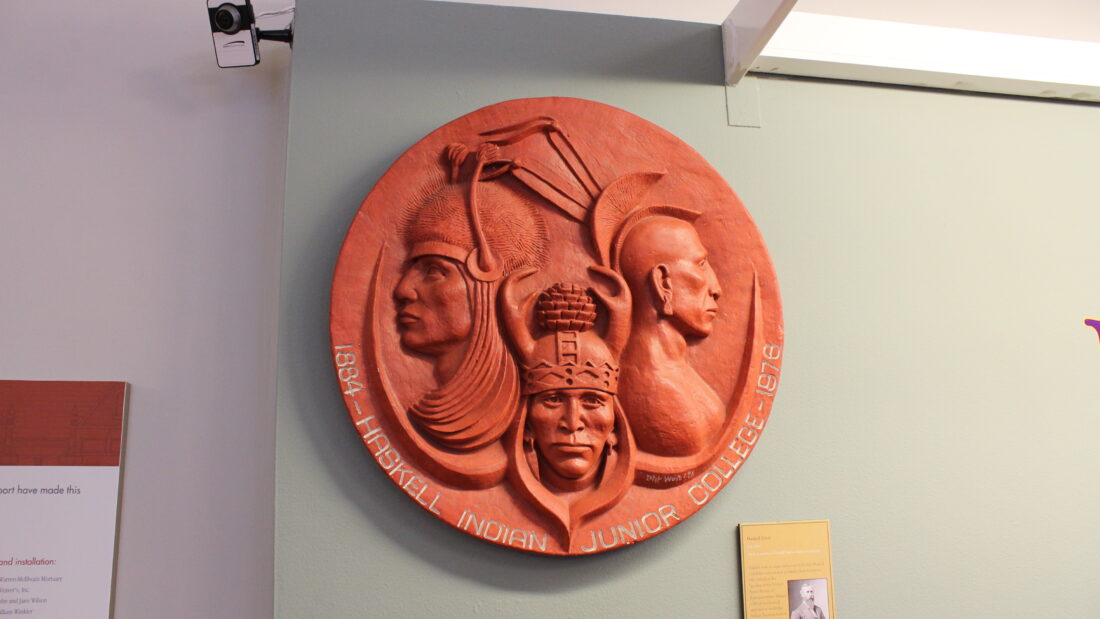
photo by: Austin Hornbostel/Journal-World
The original version of a Haskell crest created by one of the school’s former professors — a brass casting of which is today installed on the side of a campus building, Tommaney Library — is one of the first elements viewers will see at the beginning of the Watkins exhibit.
It’s a history that’s important to share, Keegan said, especially considering how Haskell has changed over the years.
“I think part of it is because the early foundings of Haskell were about pulling away of cultures, and now it’s very much about celebration of individual cultures,” Keegan said. “It’s using some of these artifacts to showcase the different traditions, different cultures and different nations.”
To that end, the exhibit shows how Haskell’s campus has changed over time, detailed through narratives about how campus buildings have been named and by display items like an old letterman’s jacket and marching band uniform.
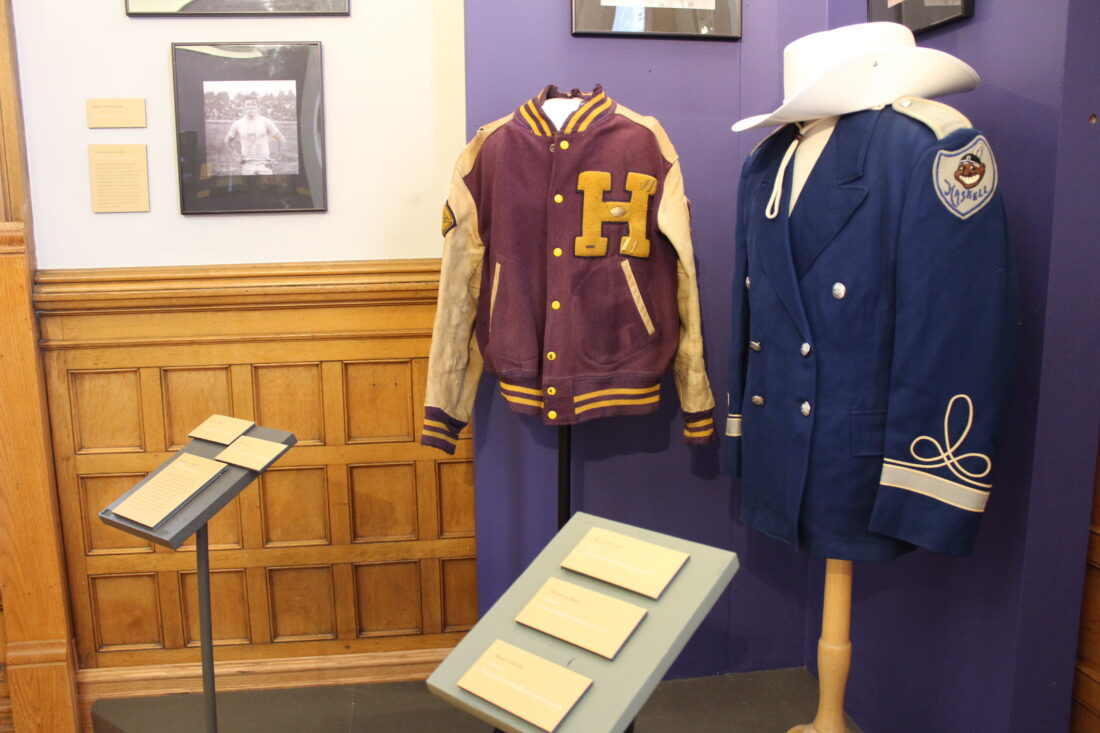
photo by: Austin Hornbostel/Journal-World
A Haskell band uniform from the mid-1900s and letterman’s jacket from the early 1900s are on loan at Watkins courtesy of the Haskell Cultural Center.
Though it hasn’t been long since the exhibit opened, Keegan said the museum’s received some good feedback about it so far. From here, they’re hoping to get the word out about it and get more folks in the door to see it.
Pate, a member of the Choctaw Nation of Oklahoma and non-enrolled member of the Chickasaw Nation and Rosebud Sioux Tribe, has some special connections to some of the items in the exhibit. On top of having attended Haskell himself, a pair of items including a Choctaw Nation war staff are on loan to the museum courtesy of Pate’s family. Pate has grown up in Lawrence, and his family has deep roots at Haskell.
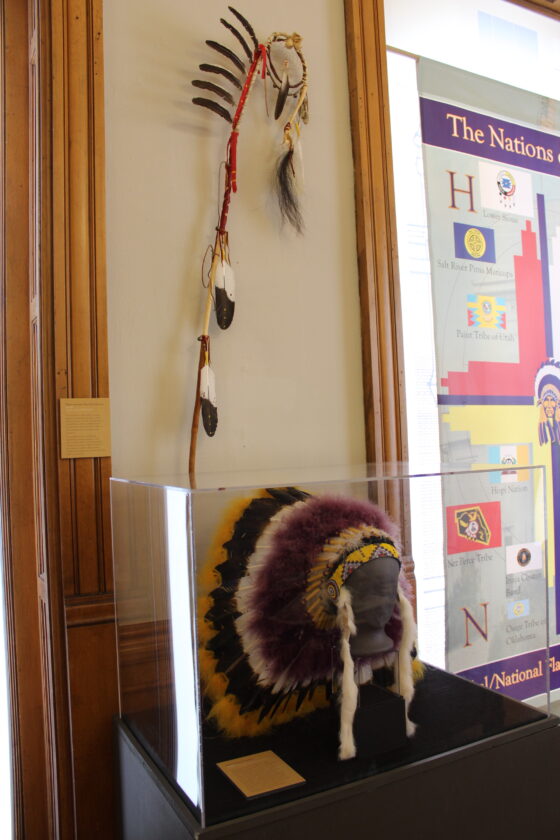
photo by: Austin Hornbostel/Journal-World
A couple items on display, such as the Choctaw Nation war staff hanging on the wall, are on loan to Watkins for the exhibit courtesy of guest curator Geoff Pate’s family. Pate graduated from Haskell Indian Nations University last year, and his family has deep roots at the university.
“People don’t realize that there’s a second college (besides the University of Kansas),” Pate said. “…My dad attended Haskell when it was a junior college, and my grandma went there when it was a boarding school. My sister goes there now. I’m also from Lawrence, so I’ve kind of always had a background and a history with it.”
That people might be less aware of Haskell shouldn’t be the case, he said, when famous figures like Jim Thorpe, who earned two gold medals at the 1912 Olympic Games, and the highest-ranking Native American in U.S. Military history, General Clarence Tinker, attended or graduated from Haskell throughout its history.
“I always think there’s a lot of interesting, important people who went to Haskell, and by association they lived here in Lawrence and everything,” Pate said.
Other News
U.S. Sen. Roger Marshall faces Democratic, Libertarian challengers in general election

Incumbent Douglas County commissioner and newcomer challenger face off for District 5 seat

Primary winner faces incumbent’s write-in campaign in Douglas County Commission District 4
A student-run coffee shop will open at Community Connections at Pinckney next week
Douglas County commissioners to discuss proposed changes to funding agreements with community partners