

More than 2 million migration tags later, Lawrence’s Monarch Watch program celebrates 30th anniversary
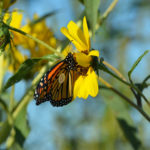
photo by: Ashley Hocking
A monarch butterfly pollinates a flower at the Baker Wetlands Discovery Center on Saturday, Sept., 22, 2018.
In the three decades since Monarch Watch was established, the butterfly program has truly taken flight — and along the way it has created countless “citizen scientists” who’ve become invested in the fate of the royally named orange and black insects.
An affiliate with the Kansas Biological Survey, Monarch Watch is devoted to the study of the annual North American migration of the monarch butterfly.
Since its founding in 1992, Monarch Watch — with an army of volunteers nationwide, many of them eager children — has helped tag and track more than 2.2 million monarch butterflies as they migrate across North America from north to south each year. The program involves more than 2,000 schools, nature centers and other organizations throughout the United States and Canada, but its home base is here in Lawrence on the University of Kansas campus. This year marks the program’s 30th anniversary.
“It’s one of the largest citizen science programs in the country,” Monarch Watch communications coordinator Angie Babbit told the Journal-World Thursday.
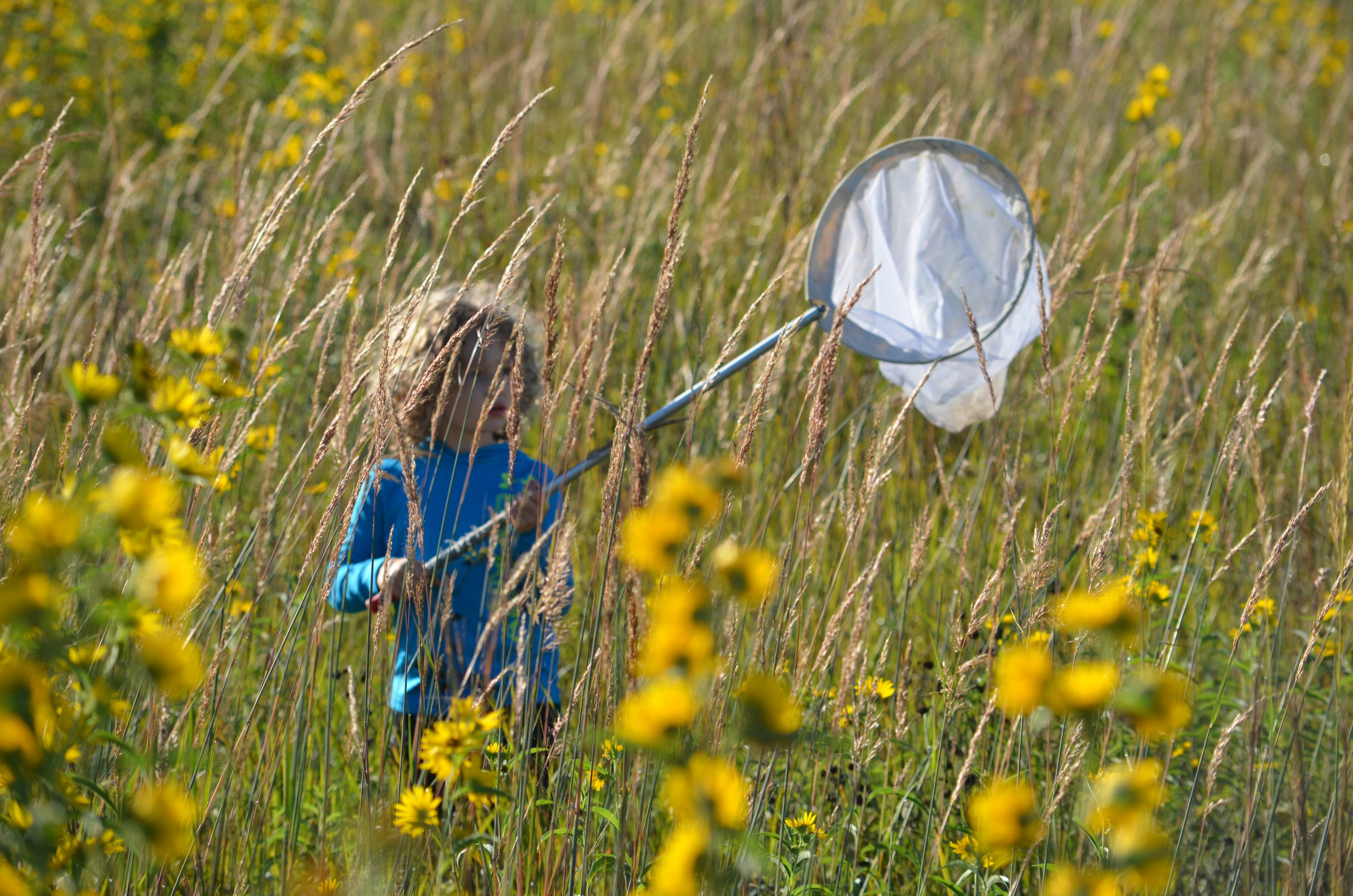
photo by: Ashley Hocking
Samuel Clifford searches for monarch butterfly to catch and tag at the Baker Wetlands on Saturday, Sept. 22, 2018.
The program has accomplished much in the past 30 years, Babbit said. For one, more than 19,000 of those tagged specimens have been recovered in Mexico at the end of their long migration, which has resulted in crucial data about the butterflies — an insect that Babbit said carries “a lot of mystery” due to its impressive journey of thousands of miles.
Babbit said the program has also done much to create habitat as the butterflies head south for the winter. She estimates that it has distributed milkweed plants — the monarch larvae’s food source — to more than 1,400 schools and nonprofits across the country in the last seven years. One of the program’s goals is to restore milkweed in natural landscapes and encourage its growth in gardens throughout the country.
The plant features prominently as a pollinator plant in “monarch waystations,” the habitats that Monarch Watch has encouraged supporters to create. There are now 36,000 of those habitats registered on the Monarch Watch website, a number that Babbit said has ballooned in the past five years or so as the monarch butterfly population has declined due largely to habitat destruction in Mexico and dwindling pollinator plants on the way, as has been widely reported.
Monarch Watch even helped launch monarch butterflies into space more than a decade ago, in order to observe their development in zero gravity.
“It’s been quite a journey,” Babbit said.

photo by: John Young
Chip Taylor, of Monarch Watch, demonstrates the proper way to hold and tag a butterfly during a Monarch Watch tagging event in September 2016 at the Baker Wetlands Discovery Center.
As for what the future holds, Babbit said Chip Taylor, the longtime director of the program, would be passing the leadership baton in the next few years, and plans are in the works for finding his successor.
More immediately, the program plans to roll out a new phone app in time for this year’s migration. Until now, volunteers have been writing down and mailing the tracking information they submit to Monarch Watch on paper. Some of that data has been digitized, Babbit said, but the hope is that the app will help streamline the process.
“My hope is that eventually we’ll be able to start giving people that instant gratification that they’re looking for when one of their tags might be found by someone else,” Babbit said. “Someone could register that information and they’d get phone notifications.”
The tags are little stickers affixed to the monarch’s wings — often by eager kids with nets.
The app will even be capable of reading the tag code on a butterfly from a photo and will be able to register it with Monarch Watch automatically, Babbit said.
Some plans for later this year to celebrate Monarch Watch’s 30th anniversary are still in the works, but there’s plenty on the calendar already, Babbit said.
First, the program, bouncing back from the coronavirus pandemic, plans to host its first in-person event in two years — a plant sale fundraiser set for 8 a.m. on May 7 on the KU campus, followed by an open house. The plant sale will also take place online at spring.monarchwatch.org. The website isn’t live yet, Babbit said, but sales will open there soon and will remain available up until a week prior to May 7. Then, patrons can pick up their orders in person the day of the event.
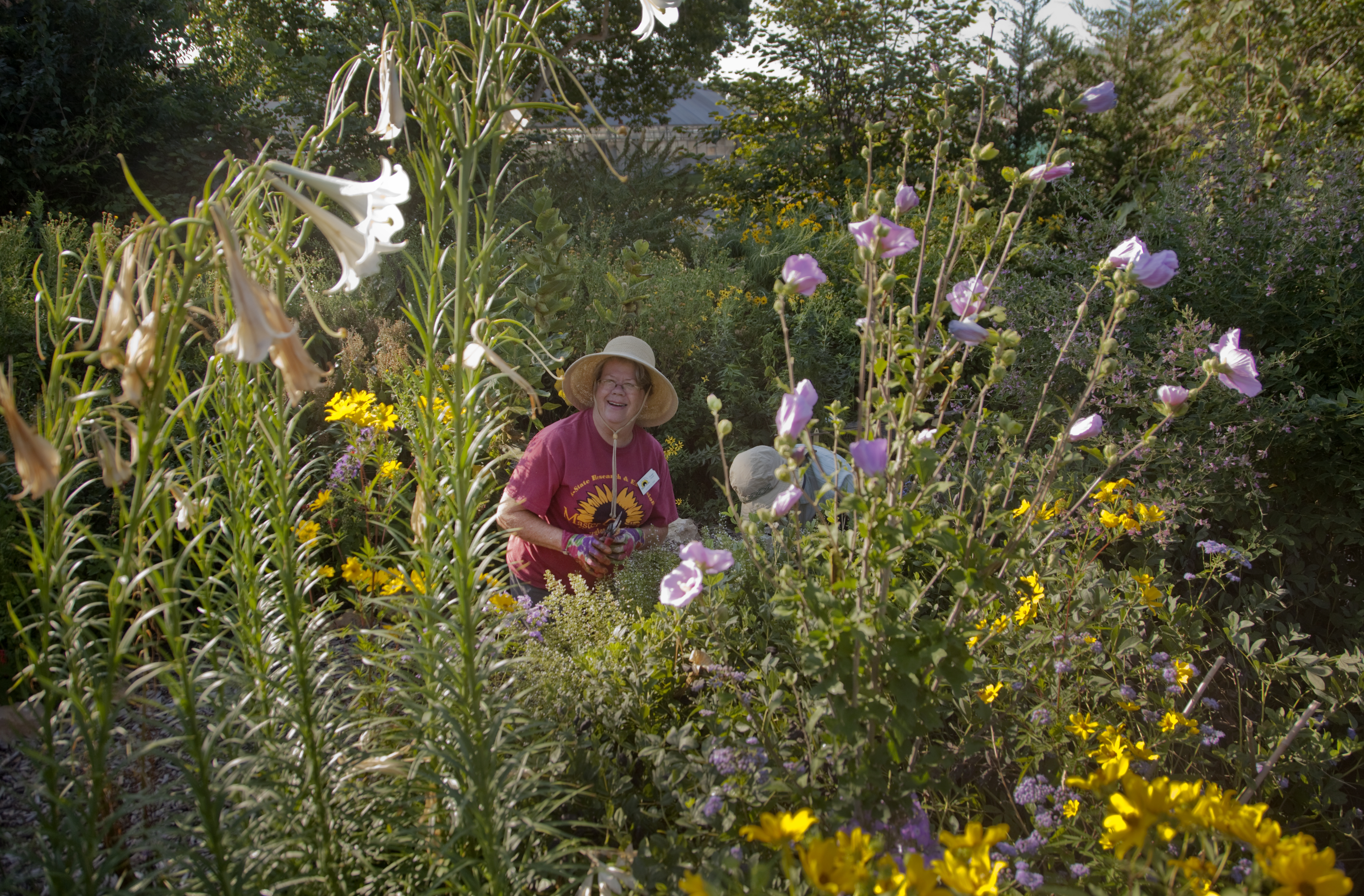
Master Gardener Karen Clark works in the garden in September 2013 at the Monarch Waystation No. 1 next to Foley Hall on KU’s West Campus.
The open house this year will take place entirely outdoors.
“We are excited to be able to do this because it’s an important part of our education component for local people,” Babbit said. “And sometimes people travel from out of state to come to this open house, but we’re also kind of still, like everyone else, scrambling to figure out how to do it safely and make sure everyone who attends maintains their health. That’s really important to us.”
In September, a number of events are scheduled, including the popular butterfly tagging event, which is scheduled for Sept. 17. Before that, another open house is set for Sept. 10, and a 30th anniversary banquet is slated for Sept. 15.
Babbit said Lawrence Mayor Courtney Shipley has already signed the National Wildlife Federation’s Mayor’s Monarch Pledge, which includes undertaking at least three action items related to educating the public about monarchs, integrating monarch conservation into local government planning or hosting programming related to the species. Babbit said volunteers with the program hoped that one of those actions would be a proclamation from the city designating September as the “Month of the Monarch Butterfly.”
Babbit hopes to build momentum throughout the community for celebrating monarchs.
“We’re focusing on that time (September) because that is when monarchs will be coming through Lawrence, Kansas, on their way to Mexico,” Babbit said. “So they’re moving from either north or starting their journey here, and moving down to about the same latitude as Mexico City. Some of them travel as far as 2,000 miles to get to their roosting sites in Mexico.”
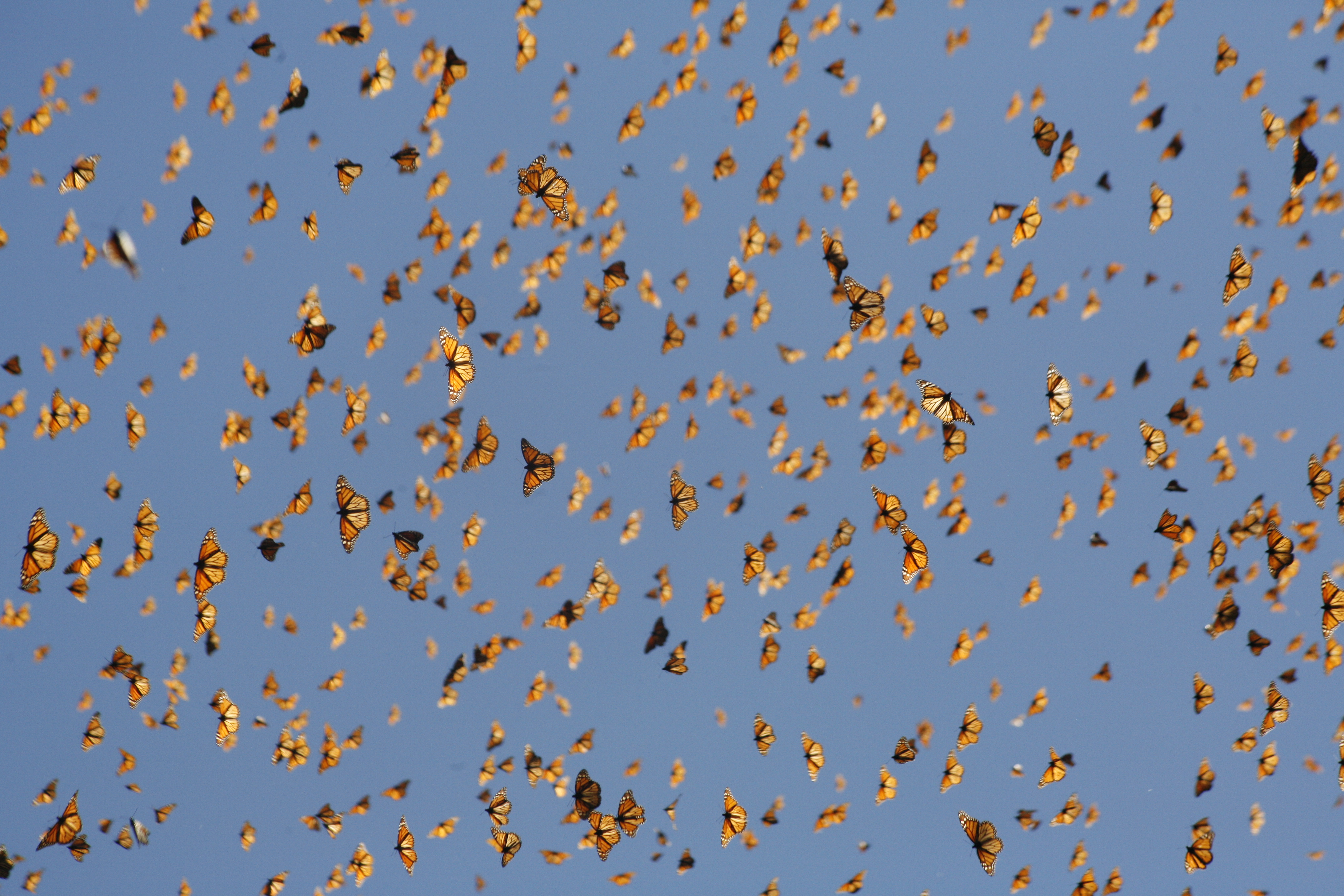
photo by: AP File
Monarch butterflies gather in Mexico during their winter migration in 2009.
Other News
KU’s lesser known powerhouse: A look at how the debate team wins against the best of the best

Law enforcement leaders criticize federal agents’ conduct, ask for understanding on reticence
PHOTOS: Easter Egg Roll with Dole

Public invited to resource fair highlighting how Lawrence is preparing for the FIFA World Cup

Lawrence-Douglas County Housing Authority leaders use special events like Easter Bunny visit to help create community for senior residents
