
Incumbent Douglas County commissioner and newcomer challenger face off for District 5 seat

photo by: Contrbuted
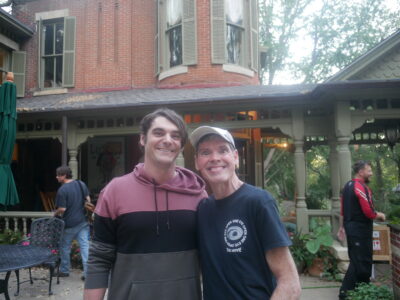
Erica Anderson and Kirsten Kuhn
An incumbent Douglas County commissioner will face off against a newcomer for the District 5 seat.
County Commissioner Erica Anderson – a Democrat and currently representing District 5 – is running against Kirsten Kuhn, a Libertarian. Whichever one wins will represent District 5, which includes south Lawrence, Baldwin City, Palmyra Township, and Wakarusa Township.
The Journal-World sent questionnaires to both candidates seeking information about issues tied to their campaigns and additional information about their backgrounds.
ERICA ANDERSON
Anderson has lived in Douglas County for more than 40 years and has worked at Lawrence-Douglas County Public Health, Humana, Tobacco Free Kansas and Kaiser Permanente. Her professional work has focused on the intersection of health, policy, population health and community systems.
Anderson said she tries to balance tax relief with maintaining county services by listening and learning from community partners, asking hard questions, and understanding which services are legally required and most relied on by residents.
“Public safety, roads, emergency services, mandated health and human services, mental health, and other core responsibilities must remain sustainable. Before asking taxpayers for additional revenue, we should identify efficiencies and make informed choices about priorities,” Anderson said. “The goal is disciplined stewardship: maintaining essential services, improving outcomes, and making transparent decisions about where taxpayer dollars provide the greatest public value.”
Douglas County has had multiple funds with fund balances in excess of what the fund balance policy allows, as the Journal-World reported. Anderson said the budget should distinguish restricted or committed funds from truly available fund balance.
“Reserves should protect essential services, not permanently fund recurring expenditures,” Anderson said. “In the end, we need to either enforce the existing policy or formally amend it through a transparent public process. Accountability applies to the county’s own fiscal decisions, not just those we impose on others.”
The Wakarusa River Valley has been the subject of longstanding debates over growth and conservation. Anderson said she envisions the valley as an economic and ecological asset where growth, conservation, agriculture, infrastructure, and recreation reinforce one another.
When it comes to data centers, Anderson said the county’s role is to set enforceable land use standards before development pressure arrives, not after. She said large-scale projects in the unincorporated area such as data centers, wind, and solar carry impacts on land, water, infrastructure, and ratepayers while removing prime farmland from production, sometimes permanently.
Anderson said currently, the county’s funding process includes information that is unnecessary for budget review and does not help commissioners understand what an organization will do with taxpayer dollars. To improve clarity and accountability, the county should provide a standardized one‑page project template that every nonprofit must complete prior to receiving county funding.
By the end of her term, Anderson said she hopes county residents can say she led with integrity, curiosity and accountability.
“I want people to know I didn’t simply vote yes. I did the work,” Anderson said. “I asked hard questions, challenged assumptions, and made decisions grounded in facts and community wellbeing, even when those decisions were difficult. Leadership means listening closely, looking honestly at the evidence, and choosing what serves residents over what is easy.”
KIRSTEN KUHN
Kuhn is a 15-year Douglas County resident, originally from Wisconsin. She is an entrepreneur and community activist as well as the president and founder of the Douglas County Community Bail Fund, which offers limited monetary assistance for misdemeanor bail requirements. She has served as the consumer representative on the Bert Nash Community Mental Health Center Governing Board for two terms, and been the chair of the unaffiliated Douglas County Libertarians for five years.
Kuhn said the focus of the government should be to fund core services while ensuring that citizens aren’t overburdened. With the county utilizing more of the behavioral health sales tax, it should be reducing allotments from the general fund.
“Additionally, the county needs to stop setting up new programs,” Kuhn said. “A great example of this is the recent truancy program. A community partner had been successfully operating one for years and the Commission decided to push ahead and spend (nearly) $188,000 on their own, because ‘staff spent a lot of time working on it.’ This kind of thing needs to stop.”
Kuhn said she thought the county keeps too much taxpayer money in reserves, and the county should keep all fund balances as limited as possible, while being able to respond to any issues that may arise.
Conservation of the county’s natural resources is something that affects everyone, Kuhn said. The new Wakarusa River Valley Vision Plan offers many potential opportunities that are noble, but Kuhn wants to make sure that the county doesn’t lock themselves into a long-term plan that would remove the ability to pivot if needed based on future conditions.
“I appreciate the gradual nature of the plan as it currently stands,” Kuhn said. “I also want to ensure that the county works closely with affected landowners, so I support the use of conservation easements and tax incentives to motivate engagement.”
For data centers, Kuhn said she is unsure that the existing infrastructure would be able to meet the demands of these developments. In addition, many people who live next door to one find themselves impacted by light and noise pollution.
“This is a direct injury to the native environments we’ve worked to cultivate, having impacts that ripple through the ecosystem,” Kuhn said. ” … Further, many of these projects look for tax abatements and other handouts, with the citizens picking up the tab. If a large project were to be proposed that had minimal impact on the surrounding area, would be a tax gain rather than a sink, and otherwise was able to be incorporated without major upgrades, I would be happy to support it.”
Kuhn said that while there are many outstanding organizations in the county, she wants to encourage nonprofits to secure funding through voluntary donations.
“There are several organizations, like the community health department, that have a reasonable claim to taxpayer money. Many other services can be funded through the behavioral health sales tax. Any organization receiving taxpayer funds should be required not to exceed certain limits of reserve funds, and provide detailed financial paperwork demonstrating fiscal responsibility and need.”
Kuhn said if elected, by the end of her term, she hopes residents can say that she reduced the tax burden while maintaining core services. In addition, Kuhn hopes they would appreciate her availability to people’s needs and concerns.
Other News
U.S. Sen. Roger Marshall faces Democratic, Libertarian challengers in general election
Incumbent Douglas County commissioner and newcomer challenger face off for District 5 seat
Primary winner faces incumbent’s write-in campaign in Douglas County Commission District 4
A student-run coffee shop will open at Community Connections at Pinckney next week
Douglas County commissioners to discuss proposed changes to funding agreements with community partners