Douglas County commissioners to decide addiction and alcohol fund allocations, consider application process changes
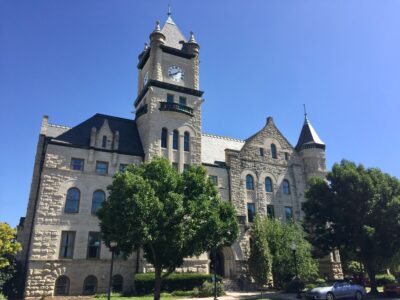
photo by: Journal-World
The west side of the Douglas County Courthouse, 1100 Massachusetts St.
Douglas County commissioners will consider how to allocate opioid-settlement and special alcohol tax funding on Wednesday – and whether to change the way those requests are handled in the future.
The county channels part of its opioid settlement funds to local programs through the Municipalities Fight Addiction Fund, which allocates 25% of the funds to participating cities and counties, with the remaining 75% going to the statewide Kansas Fights Addiction Fund. At the same time, the Special Alcohol Programs Fund, supported by state liquor taxes, funds programs focused on preventing and treating alcohol and drug abuse.
As the Journal-World reported, commissioners approved a set of procedures for evaluating and awarding funds from the Municipalities Fight Addiction Fund and the Special Alcohol Fund to community partners last October. The funding application process has two annual submission cycles: April 15 and December 15.
The April applications are evaluated for inclusion in the county’s annual budget, with decisions made by early June, while December applications are reviewed within 90 days for potential mid-year funding. Only agencies with an existing agreement with the county are eligible for the December cycle.
Last December, several county departments and community organizations submitted 12 eligible proposals during the application cycle seeking funding. The requests focused on housing, prevention, treatment, recovery support, and public-health responses tied to substance use.
Commissioners will determine which requests will be allocated funding on Wednesday. Each of the funding requests were evaluated by staff with a rating scale of “high, medium and low,” using criteria including organizational stability, whether expenses were one-time in nature, compliance with legal requirements and the ability to leverage additional funding.
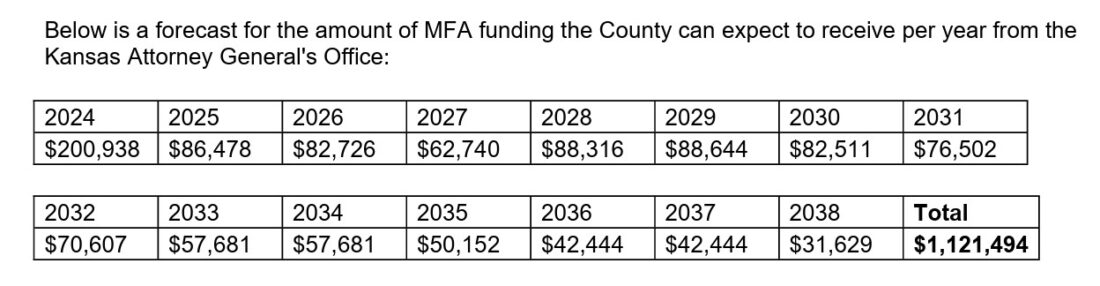
photo by: Screenshot
A forecast for the amount of Municipalities Fight Addiction Funding the county can expect to receive per year from the Kansas Attorney General’s Office.
Currently, the Municipalities Fight Addiction Fund has $577,870 and the Special Alcohol Programs Fund has $254,420. Both funds have a combined current balance of $832,290. The total of the funding requests being considered by commissioners amounts to $672,816. The requests rated as a “high” priority by county staff amount to $268,396. County staff recommend the requests commissioners choose to fund to be financed with the Municipalities Fight Addiction Fund.
Here are the requests the County Commission will consider funding on Wednesday and their ratings by county staff:
• Cardinal Housing Network – pay off debt on transitional housing property at 1046 New Hampshire Street: about $109,631 (rated high).
• Douglas County Sheriff’s Office & local police — mental-health wellness assessment for staff: about $49,765 (rated high).
• County Administration, Health and Human Services — consulting support for a potential supportive housing program for unhoused women and children: about $48,000 (rated high).
• Artists Helping the Homeless – new van and vehicle wrap: about $46,000 (rated high).
• Douglas County Sheriff’s Office & local police — opioid-misuse prevention media campaign: about $15,000 (rated high).
• Cardinal Housing Network – 11 months of salary support for two staff positions: about $101,538 (rated low, ongoing request).
• Lawrence-Douglas County Public Health – youth substance-use and suicide prevention needs assessment and planning: about $95,300 (rated low, noted as already funded through behavioral-health sales tax).
• LDCPH & Bert Nash – HIV and hepatitis testing for uninsured/underinsured residents at risk: about $50,000 (rated low).
• Heartland Community Health Center – additional community health worker: about $50,000 (rated low, ongoing program).
• DCCCA – school-based prevention efforts: about $35,000 (rated low, replaces expiring grant).
• DCCCA – transitional housing support services: about $37,290 (rated low).
• DCCCA – adolescent treatment services: about $35,292 (rated low, ongoing request).
After reviewing this year’s requests, county staff determined that maintaining two separate funding windows is “unnecessarily complex and creates avoidable administrative burden,” a memo to commissioners said. The memo said the December request cycle takes place outside the county’s main budget development process, which makes it harder for the commissioners to consider those requests alongside other county funding priorities.
On Wednesday, commissioners will also be considering having staff review all Municipalities Fight Addiction Fund and Special Alcohol Programs Fund requests as part of the county’s regular annual budget process and only have the April 15 submission cycle.
IN OTHER BUSINESS, COMISSIONERS WILL:
• Consider authorizing the county administrator to execute a memorandum of understanding between the county and the city regarding 2023 and 2024 Edward Byrne Memorial Justice Assistance Grants. These grants, totaling $75,654 across both years, provide federal funding for costly law enforcement technology that local budgets typically cannot cover.
Historically, the city and county have split these funds or alternated distribution based on needs. If the MOU is approved, the funds will be used collaboratively by the Lawrence Police Department and the Douglas County Sheriff’s Office to acquire, analyze, and securely store digital evidence related to criminal investigations.
The County Commission’s business meeting will begin at 5:30 p.m. on Wednesday in the Douglas County Commission meeting room at 1100 Massachusetts St. The meeting will also be available on Zoom.
Other News
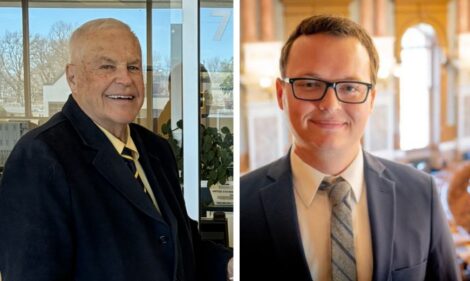
One incumbent and one newcomer have so far filed for a seat on the Douglas County Commission
Douglas County commissioners to decide addiction and alcohol fund allocations, consider application process changes
PHOTOS: Lawrence St. Patrick’s Day Parade of 2026
Superintendent says Lawrence school district will continue ‘streamlining,’ doesn’t say which positions will be affected or how many
Part of U.S. 59/Iowa Street to close for bridge work related to South Lawrence Trafficway expansion