Douglas County commissioners direct fire district, staff to plan replacement of a dozen high-risk district vehicles
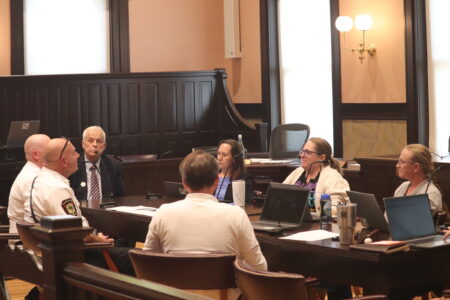
photo by: Josie Heimsoth/Journal-World
Douglas County commissioners met with fire chiefs of Consolidated Fire District No. 1 on Wednesday, April 8, 2026.
Commissioners directed both the county’s largest rural fire district and county staff to develop a proposal to address an urgent need in the district’s five-year capital plan – replacing a dozen trucks and vehicles in its fleet.
During a work session on Wednesday, county commissioners discussed Consolidated Fire District No. 1’s, or CFD1’s, Capital Improvement Plan, which outlines a structured approach for the department’s $11.6 million planned investment in vehicles, equipment, facilities and infrastructure for 2026-2031.
The fire district covers approximately 228 square miles of central and northern rural areas in Douglas County. The district operates 10 stations, 39 apparatus and is supported by a combination of nine full-time and over 50 volunteer personnel.
CFD1 is funded with a separate property tax rate – or mill levy – than Douglas County. As the Journal-World reported, the district’s 2026 budget totals approximately $2.5 million and county commissioners approved a half-mill increase from 2025, bringing the district’s total mill levy to 6 mills. The district had requested additional funds to hire more personnel, address rising maintenance expenses, and strengthen its financial reserves.
The district is now making an effort to address some of those issues. A significant portion of the CIP-identified needs for the fire district is tied to long-term station development, and that can be phased over time, a memo to commissioners said. However, there are more immediate operational priorities, such as the vehicle, or apparatus, and equipment replacements scaled out over the next several years.
A recent analysis on CFD1’s fleet showed 12 apparatus at or near critical failure risk, and five of these units are approaching 20 years of service. Many of these vehicles are expected to require repairs over time in order to maintain operations. District staff have already been working to tackle this issue by moving less-utilized apparatus around.
“We’ve already established some restructuring of where apparatus are placed, … like we can shuffle apparatus that are low use into a higher use role, but they have identified 12 units that have a critical failure risk based on call volume, maintenance costs, those types of things,” Assistant Fire Chief Clint Hornberger said.
Hornberger said the maintenance costs continue to rise each year and the district is often down apparatus when one or more are being repaired.
“We’ve had a couple instances where we’ve had some of those critical apparatus be out of service for a period of time and it’s affected our service delivery,” Hornberger said. “When we don’t have trucks to run calls, (the apparatus) have to come from further away. It’s a very critical need.”
A majority of commissioners at Wednesday’s meeting told staff they considered replacing the vehicles for CFD1 a priority, and directed staff to return with a formal purchase recommendation for how to approach replacing those 12 vehicles – one of them being a new fire engine.
The CIP also finds that many of the existing fire stations in the district are outdated and no longer meet operational requirements. Many of the stations lack sufficient space for apparatus, basic personnel facilities like restrooms and decontamination areas, and the capacity to support staffed operations. There are two stations that have been identified as “critically deficient.”
To address these issues, the plan outlines a long-term approach – estimated to cost $7.2 million, the largest chunk of the CIP – focused on evaluating the station locations, improving service coverage and response times and even replacing or constructing new facilities where it’s necessary.
Commissioner Karen Willey said that when staff reach this phase of the CIP and start evaluating fire stations, this may be an opportunity to retire some stations that aren’t needed and open new ones where there is a demand.
CFD1 currently maintains a CIP reserve balance of approximately $950,000, and the fund contributes $300,000 annually. Over the period of the CIP, this funding will provide around $2.75 million in baseline funding. While this will support near-term capital priorities like addressing apparatus replacements, a memo in the commissioners’ agenda said it will not fund everything in the CIP. CFD1 and county staff did not say on Wednesday what would likely fund improvements to the district’s stations.
“For the near-term, the funding is there,” Deputy County Administrator Sean Pederson said. “When we start to get out to some of these future thoughts and considerations about stations, that’s a long process to go through to identify locations, optimization, (and) what goes there. So part of this CIP is at least signaling that that’s where we’re thinking from a visionary standpoint, but a lot (needs) to be done to get there.”
A lot of what is outlined in the CIP was identified following the completion of a review by Emergency Services Consulting International, and a report of findings was presented to county commissioners last July, as the Journal-World reported. Some recommendations included increasing the number of full-time paid firefighters; reviewing fire trucks and equipment to make sure they are safe and reliable; and creating a plan to upgrade fire stations and facilities to keep up with future growth.
Pederson said the CIP only addresses some of the issues being tackled by the district, and he said there will be future conversations about how to improve staffing. Pederson added that following the session, staff would work to develop a funding strategy for the CIP as well as phase long-term station planning and investments.
Other News
Douglas County commissioners direct fire district, staff to plan replacement of a dozen high-risk district vehicles

Midco plans to convert vacant lot in downtown Lawrence to prairie ‘oasis’ with help from Native Lands Restoration Collective, other local partners

Lawrence Jewish Community Congregation to host Yiddish Poetry Night featuring readings from local poets

School board to consider a step toward boiler replacement at Lawrence High School
Friends, family and legal community pack historic courthouse to bid Judge Sally Pokorny farewell