

City leaders hope to be chosen for pilot project that rehabilitates abandoned and dilapidated homes
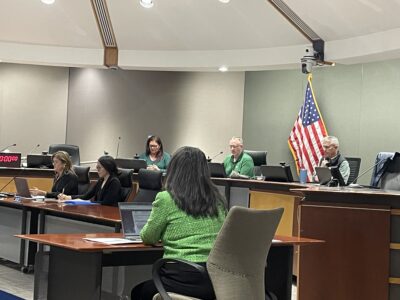
photo by: Sylas May/Journal-World
The Lawrence City Commission meets Tuesday, March 17, 2026, at Lawrence City Hall.
City leaders are hoping Lawrence will be chosen for a pilot project that uses a little-utilized state law to acquire and rehabilitate abandoned homes for affordable housing.
The project is by the nonprofit organization Neighborhood Legal Support of Kansas City, which put out a request for proposals for cities that want to be part of it. On Tuesday, the Lawrence City Commission voted to let staff submit a response. The vote was 3-0, with Mayor Brad Finkeldei and Commissioner Amber Sellers absent.
The vote doesn’t obligate the city to make any financial commitments, but it will give the city and its nonprofit partners – including Habitat for Humanity, Tenants to Homeowners and the Lawrence-Douglas County Housing Authority – a chance to be considered for the pilot.
In the request for proposals, Neighborhood Legal Support included more information about how the pilot works.
It would take advantage of a more than 30-year-old, infrequently used Kansas law known as the Abandoned Housing Act. The law allows nonprofits to petition a court to take over and rehabilitate abandoned and blighted properties that have been tax delinquent for at least two years. Missouri has had a similar law for almost as long as Kansas has, but it has been used more often and has helped rehabilitate over 1,000 properties in Kansas City, the request for proposals said.
For most of its affordable housing work, Neighborhood Legal Support has focused on the Missouri side of the Kansas City area. It spent eight years rehabilitating abandoned properties in the Lykins neighborhood on the east side of Kansas City, Missouri, but when it ran out of properties suitable for improvements there, it began looking for partnerships in Kansas communities. So far, it has established pilots in Kansas City, Kansas, and Leavenworth, and it hopes to add two to three new pilot projects this year.
The City Commission didn’t discuss the program much on Tuesday, because the city doesn’t even know whether it will be selected yet. But commissioners did want to address concerns that Barry Shalinsky, a former president of the East Lawrence Neighborhood Association, had raised in a letter to the commission.
Shalinsky wanted to pause the process to allow for more vetting and more discussion. He wanted neighborhood associations and preservation advocates to be included in conversations about the program, and he didn’t want action taken on it during the commission’s “spring break” at a meeting when only three commissioners would be present.
“The taking of private property for ‘public purposes’ is serious business, with need for proper guardrails,” Shalinsky wrote.
At Tuesday’s meeting, City Attorney Toni Wheeler said the properties involved in any such program wouldn’t be ordinary homes, but rather buildings that met the statutory definition of dilapidated. She said that property owners would be involved in any conversations as well.
The Kansas act does give owners the opportunity to pay their delinquent taxes and repair their properties themselves. They have at least a 90-day period in which to do that, which the court may extend for another 90 days if it sees “good cause.” If the owner takes care of these obligations within the time the court gives them, the nonprofit’s petition is dismissed.
Staff also said there will be much more time to discuss the program in detail if Lawrence is selected. Amy Miller, assistant director of planning and development services, told the commission that what they were voting on Tuesday was the “very small, very beginning stages.”
If the city is selected, the commission will have to vote on that at a future meeting, and there will be a chance then for more discussion. But the deadline to respond to the request for proposals is April 3, Miller said, and the commission won’t meet again until April 7.
Commissioner Kristine Polian said that the city had a “time crunch,” so she didn’t have any issues with approving this first step. She said she wanted to take part in the pilot program, but also wanted residents’ concerns to be heard.
“I support this 100%,” Polian said. “I also support making sure the community is involved.”
City Government
City leaders hope to be chosen for pilot project that rehabilitates abandoned and dilapidated homes
City staff opposes demolishing early 20th-century buildings in the Oread neighborhood for a super-dense apartment project

He’s photographed war zones, slums, disasters – and for the World Cup, he’s showing off ‘soccer everywhere’
Advisory board recommends city reclaim over half a million dollars after Bert Nash steps away from housing project
To help water customers ‘know what to expect,’ Lawrence will create a formal policy about shutoffs in cold weather
