Instead of repealing Lawrence’s clean energy ordinance, an adviser wants to give it more teeth

photo by: Contributed
S. Mohsen Fatemi
After Lawrence fell far short of a clean energy target it set for 2025, city staff wanted to repeal the ordinance that set the target. But now, a city adviser wants to not only keep that ordinance, but give it more teeth.
The ordinance is known as Ordinance 9744, and it was passed by the City Commission in 2020. It set goals of powering all city facilities with renewable energy by 2025, and of transitioning to 100% renewable energy citywide – including in private businesses and homes – by 2035. But currently, only about 3% of the energy powering the city’s facilities is clean, as the Journal-World reported, and city staff has proposed replacing the goals with a new target of achieving “climate neutrality” by 2050.
The adviser who’s pushing back on that idea is S. Mohsen Fatemi, a doctoral candidate in the University of Kansas’ School of Public Affairs and Administration who serves on the city’s Sustainability Advisory Board. He thinks the problem with the original ordinance is that it doesn’t have a clear plan for making progress toward the goals or consequences when the city fails to achieve them.
“Experience over the past five years indicates that the primary limitation of Ordinance 9744 was not its goals, but the absence of a clear institutional implementation framework — including defined responsibility, operational authority, and accountability mechanisms,” Fatemi wrote in a document outlining his views on the ordinance.
When the Sustainability Advisory Board meets on Thursday, it’s expected to discuss the next steps on the ordinance and to review Fatemi’s proposal for changing it.
Fatemi outlines a number of problems he sees with the ordinance. Among other things, it has no dedicated funding, he writes, no city office or department designated to oversee it, no accountability if the city fails, and no “mechanisms for the city to meaningfully influence” utilities, property owners, developers or regulators.
And, while he says the ordinance’s goals aren’t the primary problem, he also calls them “untethered from implementation realities.”
What Fatemi is proposing would be an amendment to the existing city ordinance. It would require the city to develop a “renewable energy implementation plan” that would have monitoring and reporting requirements. And it would mandate that the city take “corrective action” if it failed to reach its targets.
As currently outlined, Fatemi’s proposal doesn’t contain concrete details about what the timeline for acineving clean energy would be or what the “corrective action plans” would look like if the city failed to meet its targets. It does say there would be some sort of “independent review mechanism” if the city consistently misses its goals, and it also includes some details about how the reporting would work. Staff would have to report regularly to the Lawrence City Commission about its progress toward the clean energy goals, and there would have to be a “transparency dashboard” for sharing information with the public.
Though Fatemi identified a lack of funding as one of the ordinance’s weaknesses, his proposal doesn’t call for the city to provide any new funding or hire any new staff. He says it could be funded instead by grants or other outside funding sources and from “cost savings achieved through energy efficiency improvements.”
Fatemi’s proposal would differ greatly from the plan that city staff has been discussing. Staff wants the City Commission to completely repeal the ordinance and replace it with the “climate neutrality” goal.
Climate neutrality doesn’t mean the city would have to convert entirely to renewable energy. Instead, it would have to balance out its greenhouse gas emissions with removals or offsets so they would have no net impact on the climate system.
Previously, city sustainability director Kathy Richardson told the Journal-World she thought the goal of 100% renewable energy by 2035 was unrealistic. “I don’t know anybody in this field that would say that is in any way doable,” she said.
Fatemi, for his part, believes that the climate neutrality proposal would “sidestep” the city’s energy and climate challenges.
“Ordinance 9744 did not fail because its goals were unreasonable; it faltered because the city never built the governance capacity required to pursue them,” he wrote. “Replacing it with a less binding framework does not resolve that mismatch — it normalizes it.”
The Sustainability Advisory Board will meet at 6 p.m. Thursday at City Hall, 6 E. Sixth St.
City Government
Instead of repealing Lawrence’s clean energy ordinance, an adviser wants to give it more teeth
$74M in eco-friendly improvements to Kansas River wastewater treatment plant are nearly complete
Public works staffer says little details will help Lawrence put its ‘best foot forward’ for the World Cup
Leader of Lawrence’s Homeless Solutions Division feels like ‘nobody wants to hear the good news’
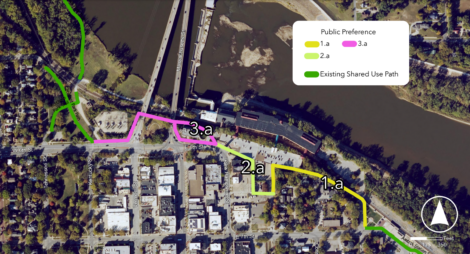
Lawrence Loop feedback is in: People prefer a downtown trail route near the river and away from traffic