Some leaders are now stating a new reason for why Lawrence’s utility rates are soaring: The city didn’t grow enough
The city built a $74M sewer plant, and then missed population growth projections by 60%
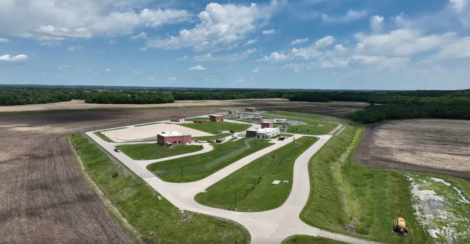
photo by: City of Lawrence
An aerial view of Lawrence's $74 million Wakarusa Wastewater Treatment plant is pictured.
It was a spring afternoon in June 2012, and Lawrence City Manager David Corliss was spinning a tale before city commissioners. It is a common one in city halls: If you want to follow the growth of a city, follow the sewers.
Hey, no one ever said City Hall tales are sexy. But, they are often expensive.
Sewers are especially so, and Lawrence city commissioners were learning that by the day. Corliss and his staff were convinced Lawrence needed a second sewage treatment plant. By the time construction would finish in 2018, the plant along the Wakarusa River would be a $74 million project.
This late spring day was still an early day for the sewer plant idea. Corliss was trying to get commissioners on board with the project, which would be one of the city’s largest capital improvement projects ever. For that task, he turned to the classic tale: If you want growth, you have to have sewers.
“If you don’t build enough capacity now, you are going to be challenged to build it quick enough when growth starts occurring,” the Journal-World quoted Corliss in June 2012 explaining the sewer plant need. “It might even put us in a situation where we have to inhibit growth, and we don’t want to do that.”
But Corliss’ pitch did come with an asterisk. There have been communities — Junction City was the prominent example of the day — that have built expensive infrastructure with the thought growth would come, only to be left with more debt than the current population could support. Corliss, though, assured commissioners that Lawrence was being “realistic” about its growth projections.
Fast-forward to today where Lawrence residents have seen water and sewer rates increase by an average of 9%, with increases hitting 11% in 2025. When commissioners moved forward on the new sewer plant, they were told rates would need to increase by 5% to 7%. But they also were told the city was going to grow much more than it has.
A Journal-World investigation reviewed the growth projections used to plan for the new sewer plant. The investigation found that during the last dozen years, the city’s growth projections have been off by about 60%, which puts the city on pace to have about 20,000 fewer residents to pay for the plant than the plan envisioned.
Specifically, the key sewer plant plan calls for Lawrence to have a 2030 population of 119,529 people. If Lawrence continues to grow at the same rate it has from 2012 to 2024 — which is the most recent year for census population totals — Lawrence will have about 100,200 people in 2030. If Lawrence’s growth rate remains at its 2012 to 2024 level — 0.6% per year — the city won’t reach the plan’s projected population of 119,529 people until the year 2057.
In other words, growth is on pace to be 27 years slower than utility planners expected when the decision to build the sewer plant was made.
Those numbers are subject to change as growth trends change, and there are City Hall officials who contend the growth slowdown hasn’t played a major role in rising utility rates. But indeed, some elected officials are starting to explain the city’s higher-than-expected water and sewer bills in a way that hasn’t been the norm the past few years: The city hasn’t grown enough.
“If we had grown more, the rates would be lower, absolutely,” Lawrence Mayor Brad Finkeldei recently told the Journal-World.
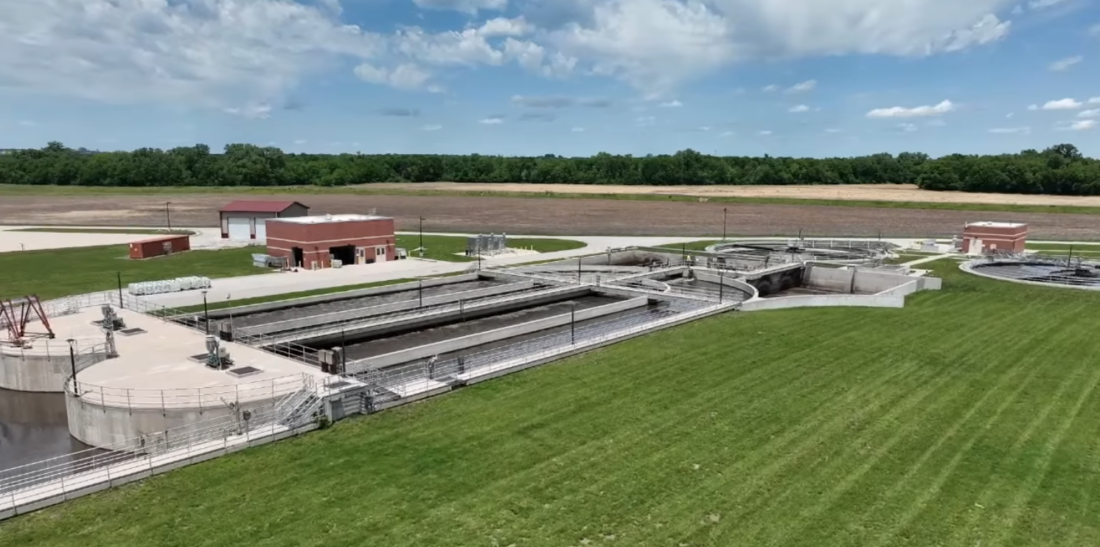
photo by: City of Lawrence
An aerial view of Lawrence’s $74 million Wakarusa Wastewater Treatment plant is pictured.
PLANT SOLD ON IDEA OF GROWTH
The idea that the city hasn’t grown enough is not often the narrative that City Hall leaders use to explain why customers are facing double-digit rate increases. Instead, the explanation usually centers on the idea that the city simply hasn’t been able to keep up with the maintenance needs of aging pipes, pumps and water towers built generations ago.
When presented with the details of the significant population misses, key city staff members pushed back on the notion that the smaller-than-expected population is leading to higher-than-expected rates for those residents who do live here.
“Staff does not agree utility rate increases over the last decade are primarily the result of growth-related infrastructure that was not yet needed,” city spokeswoman Cori Wallace said in an email response. “The majority of major utility projects were undertaken to meet regulatory requirements or improve reliability, even when additional capacity was an outcome.”
It is true the new sewer plant had a regulatory purpose when it was built. The process the city uses to treat sewage at its original plant on the Kansas River during heavy rain events was and is under heavy scrutiny by the Environmental Protection Agency.
A new sewage treatment plant, though, wasn’t the only way to address that issue. The historical record shows that a key reason why city officials chose the $74 million new plant option was growth. The message that Corliss delivered on that spring afternoon — that Lawrence risked missing out on growth if it didn’t proceed — was typical of the message leading up to the project’s approval.
The plans from the consultants hired to study the project also leaned into the growth angle. Their reports projected the city’s existing sewer capacity would be fully utilized by 2018, if the new sewage treatment plant was not constructed.
And, powerful political forces in the city also were advocating for the construction of the plant. Letters from the day show that the Lawrence Board of Realtors was willing to accept the projected rate increases of 5% to 7% in order to pay for the plant. They also were willing to see some other development fees increase to help pay for the plant. There was a sole reason why: Without the new plant, “our community won’t be adequately prepared to service new growth,” according to a January 2013 letter from the Realtors’ chief lobbyist to the City Commission.
Come to find out, concerns of running out of sewer capacity never materialized. The city had a population of 90,183 people in 2012, according to Census Bureau estimates. The city-hired consultants that year said the city’s sewer system — without a new treatment plant — could service an additional 13,000 people, meaning a population of about 103,000.
The years that followed included debates and formal challenges between the city and the Census Bureau over what the city’s actual population was, as the Census Bureau was showing slower growth than what the city expected. But when the 2020 census came out — which involved an actual counting of people, rather than an estimate — the city had a population of 94,939 people, far less than the city expected. Lawrence’s 2024 estimate — the latest available — is 97,271 people.
In other words, the city would still have available sewer capacity today, even if the plant hadn’t been built. But, of course, the plant was built, and residents have been paying for it during the last eight years.
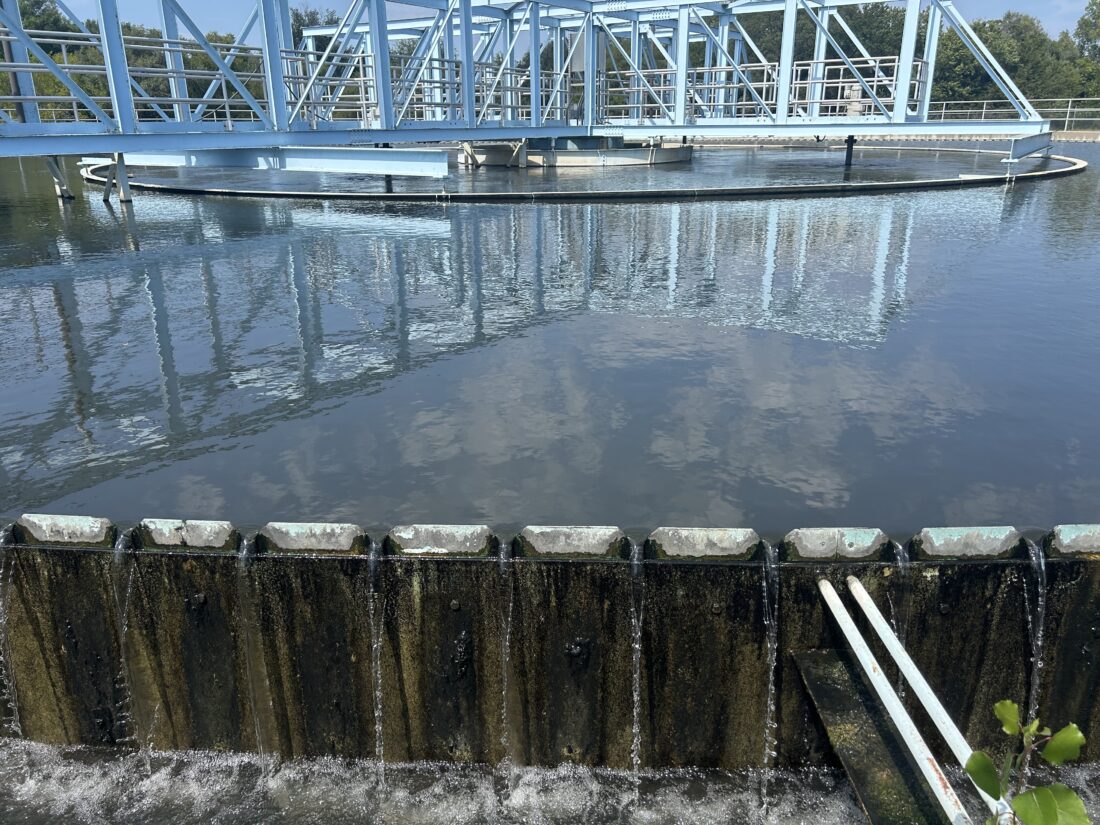
photo by: Bremen Keasey
Water flowing at the Clinton Lake Water Treatment Plant in Lawrence. Water from the plant recently won an award for best tap water in the state of Kansas.
WATER PLANT MISSES MARK
As any biologist would tell you, before there is sewer, there is often water. Indeed, a city water project might be the first example of the city getting burned by growth that didn’t live up to projections.
The city has two water treatment plants — one on the Kansas River and one that pulls water from Clinton Lake. The Clinton Lake plant is newer, and it also is the one the city has been expanding.
Since its construction in 1980, the city has expanded the Clinton plant in 2002, 2004, and 2009, according to city documents. Its capacity to treat water has grown from 10 million gallons per day to 25 million gallons per day. Combined with the Kansas River plant, the city has the ability to produce 41 million gallons of water per day.
How much water does the city normally produce on a given day? The average from 2015 to 2024 — the latest number readily available — was 10.5 million gallons per day. However, water systems are designed to meet peak needs, not average needs. When it is hot out, you don’t want to tell your residents to stop using water because you don’t have the capacity to treat it.
Lawrence has never come close to that situation. The peak day for water use in Lawrence required 24.6 million gallons, and that occurred in 2012.
In other words, for decades, the city hasn’t used more than 60% of its water treatment capacity, and on most days it uses about 25% of its capacity.
When city commissioners in the early 2000s were being urged to expand the Clinton water plant, such limited usage wasn’t the idea. Instead, the key study used to justify the plant’s largest expansions — the 2003 Water Master Plan — projected that the city in 2025 would be producing 22.5 million gallons of water per day, and needed to be prepared to accommodate peak demands of 49.6 million gallons of water per day.
In reality, the city has about half that demand.
The reason for the miss goes back to population projections. The city in 2003 was projecting population growth that was even more aggressive than what the city used in 2012, when it decided to build the second sewer plant.
The 2003 Water Master Plan projected that the city would top the 100,000 mark in population shortly after 2010. By 2025, the plan projected Lawrence would have a population of just less than 150,000 people. In reality, Lawrence has yet to top the 100,000 mark in population.
The 2003 plan even included a map that showed what the city limits were expected to look like in 2025. In the plan’s telling, the city development jumped west of the South Lawrence Trafficway in 2010. Sixteen years later, that largely has not happened.
The more eye-popping portions of the map are the areas expected to be developed by 2025. The plan expected the city limits to be well south of the Wakarusa River. The city limits would go all the way to North 1000 Road, which is the road where the county’s Wells Overlook Park is located. To the northwest, the city limits would stretch all the way to the intersection of U.S. Highway 40 and East 550 Road. If you are familiar with the big curve on Highway 40 where you can turn off and head to the unincorporated community of Stull, the East 550 Road intersection is another 1.5 miles west of that. Alternatively, it is about 5 miles west of where the Lawrence city limits currently end.
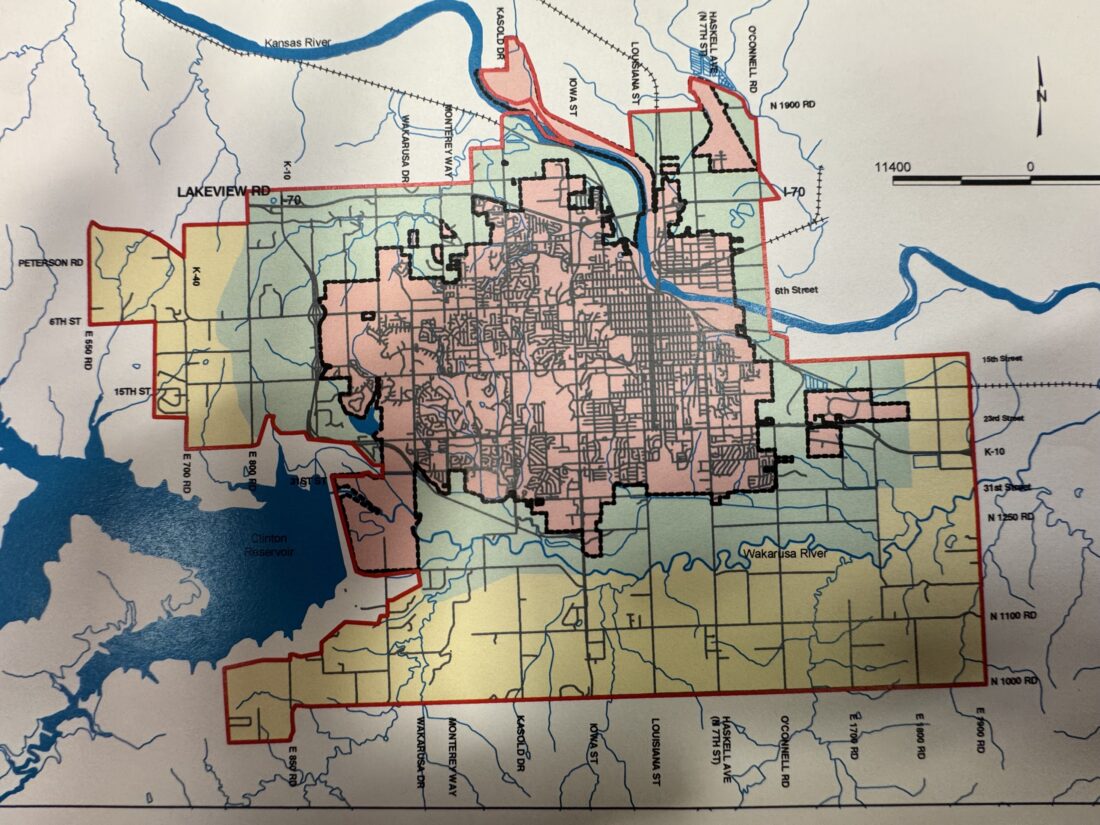
photo by: City of Lawrence
A map from Lawrence’s 2003 Water Master Plan shows the city’s projected city limits in 2025. The area in green represents territory the city was expected to grow into by 2010. The area in yellow shows growth projected by 2025.
STILL COUNTING ON GROWTH
If there is one thing messier than sewers, it might be population estimates. They are difficult because they require you to predict the future. City officials note that difficulty, and said they have been adjusting.
“Long-range utility master plans necessarily rely on projections,” Wallace, the city spokesperson, told the Journal-World via email. “As conditions change, plans are updated. While hindsight allows for clearer comparisons, decisions are made based on data available when those plans are developed.”
Lawrence is not alone in struggling with population projections. Unexpected demographic changes have occurred nationally over the last two decades. The Great Recession in 2008 dramatically reduced birth rates as families struggled with finances, as one example. That has impacted overall population growth for years, throwing projections off in many communities, although that is just one factor.
The U.S. Census Bureau reports that population growth has been declining since the 1990s. The last time that year-over-year population growth exceeded 1% for the nation was in 2000, and the Census Bureau does not predict it will ever top that amount again. Instead, the Census Bureau is projecting population growth will slow from its 0.5% level in 2025 to 0.1% in 2055.
But the difficulty of population projections does not change a key fact about them: Cities use them to make very big bets.
When the costs of the various Clinton water plant expansions and the new sewer plant are combined, the city spent well over $100 million in the 2010s for two projects that were counting on larger populations to help pay the costs.
While the bets are big, they often happen over a long period of time, and the projects quickly become complex with details of their planning often falling by the wayside. That becomes particularly true as key staff members change. Corliss, for instance, left Lawrence City Hall for a city manager job in Colorado in 2015, years before the plant he lobbied for ever opened. The city has had multiple city managers, finance directors and public works directors since then as well.
During the course of the Journal-World’s investigation, for instance, it was rare to find top city officials who had a working knowledge of the population projections upon which the two plants were built.
Some elected officials said figuring out how to ensure that institutional knowledge is preserved and passed along to city commissioners at key moments is important.
“I think staff has so much coming at them, and we have had commission changes so much that a lot of what is happening is procedural, but it is not necessarily connecting dots with decisions that have previously been made,” newly elected Commissioner Kristine Polian told the Journal-World.
There are times when connecting the dots can be critical. One of them may have been during a spring evening of May 2016 when city commissioners were getting briefed on a request to annex nearly 160 acres west of the South Lawrence Trafficway near the Bob Billings Parkway interchange.
If approved, the annexation would have been an opening of the door for large-scale development west of the SLT. The concept plan called for about 2,000 apartments in the first phase, and perhaps 600 single-family homes in a second phase.
One commissioner, Vice Mayor Leslie Soden, balked at even accepting the application request, citing concerns that the city would be facing a tough 2017 budget year. If the city were to annex the land, it would trigger city expenses, including getting city water and sewer lines beneath the South Lawrence Trafficway.
By that point in 2016, construction work was well underway on the $74 million sewage treatment plant that had a financial plan dependent upon the city having a population of just under 120,000 people by 2030.
City commissioners should have been under no illusion that the population projection was a slam dunk. In the lead-up to the commission’s decision to build the sewer plant, there was public debate over whether the population estimate was reasonable.
A June 2012 article in the Journal-World did the math for readers. The city began 2010 with 87,643 people, according to that year’s census. The city grew to that size by posting a 9.4% growth rate for the decade of the 2000s. What would happen if the city simply grew by that same rate for the next 20 years? The city would have just less than 105,000 people, not 120,000.
But the idea that the city needed a quickening of its population growth to make the financial plan for its $74 million sewer plan work did not become a topic of public discussion in 2016. Rather, commissioners did accept the annexation request, but the request never made its way back to the City Commission for approval. Developers pulled the plan after determining that it didn’t have the votes to make it through the city’s process.
Maybe the position of Soden and others that such an expansion during a tight budget would have been bad timing was correct. The fact that there was never any debate about whether the city was making a U-turn from the previous City Commission’s strategic decision to build the sewer plant is tougher to reconcile for some.
Polian said she wants city staff in the future — the city is in the process of hiring a new city manager to replace Craig Owens, who has been Lawrence’s leader since 2019 — to be on the lookout for moments when commissioners need to be reminded of past decisions.
“It is almost like we need someone to say, ‘Here are the five biggest initiatives we have made over the last 10 years,'” Polian said of how she envisions such issues being brought forward. “You can make your decision on this current issue however you want, but here are the repercussions of your vote.
“I don’t think a lot of that is happening. I’m not saying it is intentional in any way, but everything moves fast. We do have to go back and talk about what we have already done.”
Finkeldei, Lawrence’s mayor, said big-picture views are important for the City Commission. He wasn’t on the City Commission in 2012 when it was debating whether to move forward with the sewer plant. But he was in Lawrence and an active follower of city government. He thinks he understands the commission’s calculus.
The plant was needed for a variety of reasons, including regulatory ones to improve the quality of sewage treatment. But he’s also certain that the idea the plant would open up new areas of growth in west Lawrence was a major driver of the commission’s decision. It was a major part of the plan to pay for the plant, as well.
The fact that such growth hasn’t occurred has had a negative impact on rates, Finkeldei said. But big pictures can face both ways. Finkeldei said it is now important to look forward too. If growth now occurs, can it have a positive impact on rates?
“I think the reverse of that is true, which is the idea of expanding out west and continuing to grow the city will have a positive impact on utility rates in the future,” Finkeldei said. “That is certainly our hope. As we have been spending on utilities and other other infrastructure, it is for the long-term expectation that we can spread that cost out to more users.”
Later this year, city commissioners are expected to consider an annexation request for 650 acres west of the South Lawrence Trafficway — 16 years after city utility plans expected it to happen.
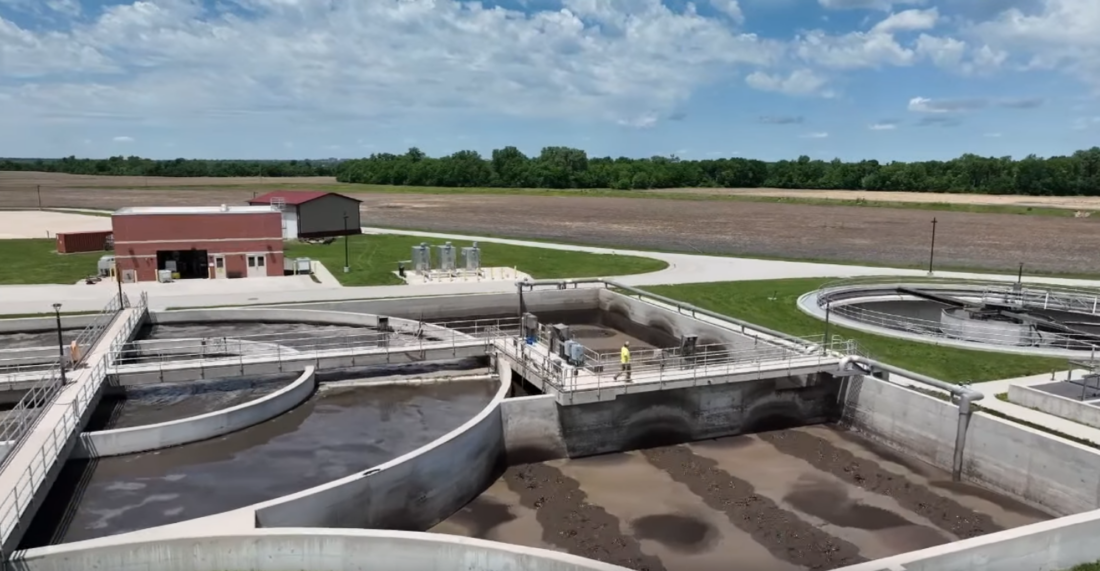
photo by: City of Lawrence
A view of a treatment basin at Lawrence’s Wakarusa Wastewater Treatment Plant is pictured.
City Government

Rising Rates: A three-part investigative series examines why Lawrence water and sewer bills have been soaring
Some leaders are now stating a new reason for why Lawrence’s utility rates are soaring: The city didn’t grow enough

Lawrence City Commission could start the process of finding a construction manager for new fire station
Lawrence is charging water, sewer customers a special tax not required by state or city law

Lawrence housing market strains residents as development fails to keep up, city’s affordable housing study finds