In vote against single-use plastic bag ordinance, city leaders cite concerns about enforcement, impact on small businesses
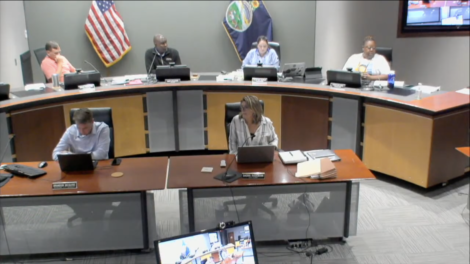
photo by: City of Lawrence screenshot
The Lawrence City Commission discusses an ordinance banning single-use plastic bags at its Tuesday, June 20, 2023 meeting. The ordinance failed to pass after a split 2-2 vote, with Mayor Lisa Larsen absent.
The years-long discussion about whether to impose a community ban on single-use plastic bags will continue at least a while longer after a pair of Lawrence city commissioners voiced concerns about its impact on local businesses and the logistics of hiring an additional city employee to enforce it.
Commissioners Brad Finkeldei and Amber Sellers, who are both running for reelection this year as their terms on the commission expire, were the deciding votes against passing the ordinance in a split vote Tuesday. Mayor Lisa Larsen was absent, so one of the two would’ve needed to vote in favor of the ordinance in order for it to pass with a simple majority.
The ordinance originally was part of the meeting’s consent agenda, and Finkeldei was the one who asked for the item to be pulled for further discussion. He said he did so to make it clear that he was concerned enough about how the current version would affect local businesses that he would be voting against it.
“I appreciate the changes made that we talked about last week,” Finkeldei said. “I think that they added some good exceptions and made some clarifications, but I’m still concerned about the impact on small businesses, our restaurants, our small retailers. I’m going to vote against it.”
Sellers, for her part, was hesitant to pass the ordinance because the city’s code enforcement division is requesting another full-time code compliance officer responsible for enforcing the ban as part of the 2024 budget process. That position would cost a total of $94,000, including its salary, benefits and the use of a city vehicle, and the new code compliance officer would spend about a third of their time enforcing the single-use plastic bag ban.
Passing the ordinance wouldn’t have dedicated the funding for that staff member, though, and Sellers said doing so when its enforcement would be predicated on approving a full-time employee to enforce it is essentially like imposing an “unfunded mandate” — a regulation or requirement imposed by a higher level of government on a lower one without the accompanying appropriations to cover the cost of compliance.
“As it stands, this is an unfunded mandate, that we’re saying ‘We’re going to pass this’ and if we don’t ensure that we put a body to this, then this is all for naught,” Sellers said. “… Essentially, we’re saying two things at once with this, so I just want to make sure that my fellow commissioners are aware of that when it comes time to vote.”
City staff had already informed commissioners prior to Tuesday’s meeting that if the ordinance were adopted but additional staffing weren’t approved, the city wouldn’t have the requisite staffing resources to enforce the ban.
Ahead of the vote, Sellers also wanted to know if there was a plan for engaging with small businesses and other members of the community to educate them about the timeline for the change. Kathy Richardson, the city’s sustainability director, told commissioners that while there had been a lot of conversation between staff and the city’s Sustainability Advisory Board about that topic, they had yet to develop any concrete plans because they weren’t sure if the ordinance would be moving forward or not.
But Richardson added that conversations with grocery stores and other businesses that would be affected by the ban had been ongoing for years.
“How it’s going to roll out and the education piece moving forward, if this is something that the commission wants to move forward with, that is going to be not only with input from the Sustainability Advisory Board but staff is definitely going to work on that and how we make those connections and that communication,” Richardson said.
The last time commissioners discussed the draft ordinance, it was to refine details such as what types of businesses, activities or establishments should be subject to the ordinance and what fines should be imposed for a first violation.
City Government

Leader of Lawrence’s Homeless Solutions Division feels like ‘nobody wants to hear the good news’
Lawrence Loop feedback is in: People prefer a downtown trail route near the river and away from traffic

Algeria coming to Lawrence, using Rock Chalk Park as its base camp for FIFA 2026 World Cup
Lawrence lawmaker rips proposed bill that would overturn local affordable housing ordinance; chides legislator for implying renters are ‘filthy’

Five poets win annual contest to feature poems on Lawrence Transit’s electric buses