

How Camera Angles Keep Live Dealer Tables Easy to Follow
A poorly implemented live dealer stream can become confusing even when nothing technically goes wrong. A decisive action may occur at the edge of a wide frame, disappear during a cut, or become buried beneath too much screen information. Clear coverage gives each visual element a specific job. A wider view establishes where the action is happening, a close-up confirms the detail that settles the moment, and a restrained graphic keeps essential information visible after the camera moves. The viewer can then follow the table without having to reconstruct the sequence from scattered images.
Sports broadcasts face the same visual challenge on a larger scale. An Axios report on new broadcast angles described more than two dozen drones being used during the 2026 Winter Games. Having so many options was useful because different camera positions change the information available to the audience. A wide view explains location and movement, while a closer perspective makes a specific physical action legible. Neither angle can perform both jobs continuously without sacrificing useful detail.
Wide Shots Establish the Table
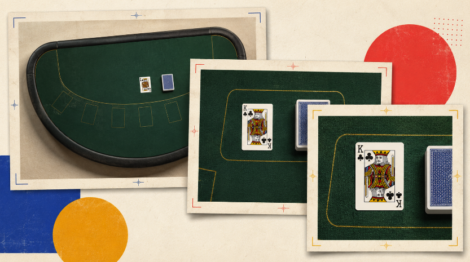
At a live dealer table, the wider frame establishes the dealer, playing surface, and active area before a particular detail demands attention. During blackjack or baccarat, it can show where cards are being placed and which hand the dealer is resolving. Roulette presents a different viewing problem because the wheel and betting area become important at separate moments.
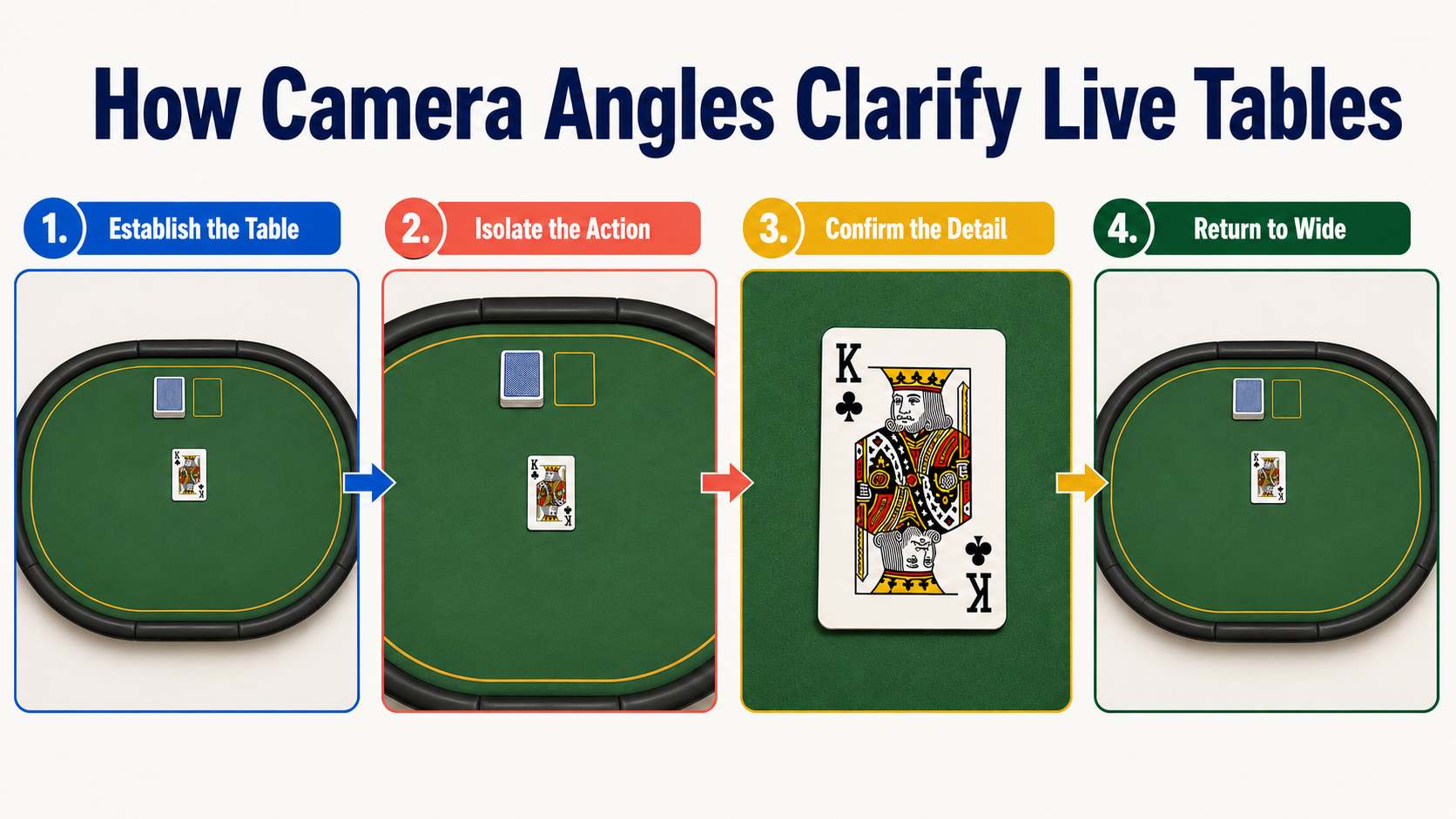
During a live casino stream, a close-up shot can confirm the value of a card, the position of the ball, or another detail that resolves the immediate question. The camera can then return to a broader view to ensure that that information is interpreted in the correct context instead of being read in isolation. If the cut arrives too early, the details might be missed. If it arrives too late, the viewer may find that they are missing the context needed to fully understand it. Effective camera changes follow the order of play: establish the table, isolate the relevant action, confirm the result, and restore the wider setting before the next sequence begins.
In a short clip featuring Xuan Liu, the final card completes a Royal Flush. The table remains visible long enough to establish the hand, while the decisive card is clear at the moment it appears. The reaction that follows confirms that the action has ended and gives the reveal a human endpoint. If the card were shown without the surrounding hand, its significance would be harder to recognize. If the camera stayed wide and the card remained too small, the viewer could see the table but miss the result that caused the reaction.
Close-Ups Confirm the Decisive Detail
A close-up works best when it answers an immediate question for the viewer. At a card table, that question might concern the suit and rank of a newly dealt card or a player placing a bet. At a roulette table, the important detail may shift from the betting surface to the moving wheel and then to the final resting position. Holding a close view for too long removes the surrounding information needed for the next action. Rapidly alternating between several tight views creates a different problem, forcing the audience to work out where each image belongs.
Timing therefore matters as much as magnification. The tighter shot should arrive after the wider view has established the action but before the decisive detail passes. Once the detail has been confirmed, the camera can move back without lingering on information that no longer changes the viewer’s understanding. Human reactions can remain part of the sequence, particularly when the dealer’s expression or movement signals that one stage has ended. They cannot replace a clear view of the table action itself.
Graphics Should Preserve the Action
Persistent graphics carry information that the camera cannot show clearly in every shot. A Television Academy feature on sports graphics described graphics used by Prime Video and Peacock to explain fuel use, defensive pressure, and shooting performance during live competition. These displays preserve facts that might otherwise disappear when the picture changes.
A table stream benefits from the same restraint. A compact graphic can retain the current stage of play or the result that has just been established, while the camera returns to a wider position. Large panels, repeated labels, and unnecessary animation can obscure the dealer’s hands or compete with the playing surface. Each element should answer a question the live picture cannot keep answering by itself.
Three checks reveal whether the screen is communicating clearly. The current view should establish where the action is occurring, a closer view should confirm the decisive detail, and the essential state should remain understandable after the shot changes. When one is missing, even a sharp, uninterrupted stream can be difficult to follow.