

How The Shift To Online Poker Has Changed The Way You Read Opponents
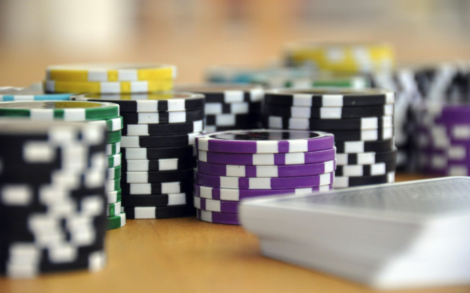
When playing online poker, there is a clear absence of body cues to follow. As a result, today’s online players depend on patterns, timing and online behaviour to achieve the upper hand.
The worldwide online casino and betting industry is on a hot streak, predicts Statista, reaching revenues of more than 200 billion U.S. dollars in 2025. With this growth, millions of players are shifting from live games to digital tables. Whereas classic poker places a great emphasis on reading physical body language, online playing revolutionizes the way the mind influences strategy, even for poker played online for free.
Why Physical Tells Don’t Translate Online
In real poker rooms, your body language has always been an essential component of the game. Nervous looks, trembling hands, or how a person places their chips often reveal hidden strength or weakness.
Online, all of these nonverbal communications are gone. A player might be drinking a cup of coffee in their pyjamas, placing an enormous bet and nobody would ever find out.
Rather than complaining about losing these tells, astute gamers realize that this levels the playing field. You all walk into the same blank canvas, avatars for faces, sliders for chips. Lacking physical body language doesn’t negate psychology; it simply shifts it into a new domain wherein all movement is read through clicks and time deltas rather than gestures.
Betting Patterns as the New Body Language
If live poker relies on posture and tone, free online poker depends on numbers and repetition. How many times does a player raise pre-flop? How often does a player make continuation bets on the turn? These betting cadences become the body language.
Statistics provide perspective. The chances of receiving pocket aces, the best opening hand in poker, are less than 1 in 221, or 0.45%. Any pocket pair, including 7-7 or Q-Q, appears roughly once in 16 times, or 5.88%. Suited connectors of 10♠-9♠, renowned for generating a straight and flush draw, occur a mere 4.17% of the time. Due to this infrequency, those who bet strongly in situations where powerful hands are improbable are perhaps advertising a bluff or overconfidence.
Understanding such patterns enables accomplished gamers to create mental maps of rival gamers. Just as a nervous smile might give away a bluff in a casino, an unusually large bet in a statistically unlikely situation could do the same online.
How Long a Player Takes to Act
Another subtle but potent internet signal is timing. In the absence of body gestures, the length of a delay before raising says a lot. Fast calls tend to imply decided-in-advance shakes, whereas lengthy delays preceding a raise can be a sign of thought processes or a deliberate ploy to try to bluff weak.
Multitasking habits of players who normally do it in an online game may occasionally make them unwittingly give away. A long delay before checking might just be a person checking a phone notification. But repeated timing behaviors create patterns for sharp players to crack. Psychology at the virtual table is not a matter of reading body language but anticipating hesitation, rhythm and tempo.
Using Chat and Table Behavior to Assess Confidence
Even chat boxes, seemingly casual additions, sometimes become doors to a player’s mind. A flurry of chatter after a large bet might be a desperate ploy to distract opponents and a quiet from a normally chatty player might spell nerves.
Aside from words, there are also behavioral cues to psychological information. Players who often sit out, rebuy on the spot, or flip back and forth between tables show varying degrees of confidence and interest. Just as vocal inflexion betrays mood in real life, such behavioral cues of poker tip to hidden strategy. Paying heed to them can give you an edge beyond the cards.
Bluffing and Counter-Bluffing in the Digital Age
Bluffing is still at the heart of poker, both in the real and virtual worlds. The issue when you play online is that you have to create credible histories relying on bets, time and conduct alone. A bluff going well on a site is likely because of thoroughness: setting a narrative and convincing opponents that a big hand is probable.
Of course, where there are bluffs, there are counter-bluffs. The best online players have to be mind readers and look for the time opponents are likely to be overplaying weak hands. They rely on the statistical unlikelihood of certain holdings, ike those rare suited connectors and call down bets when the story doesn’t add up.
Poker at the virtual table is as much a psychological game as its live counterpart. Lacking the advantage of body tells, poker players refine their focus on patterns, time, chat and betting storytelling. Complexity in the game comes from the scarcity of particular combinations and the statistical possibility of good hands, so the reading of the screen becomes an exciting undertaking.