Kansas’ fiscal woes J-W’s top story of 2016

Given that Lawrence’s largest employer is state-funded and that thousands of the city’s residents rely upon state pensions, the Journal-World’s newsroom staff has chosen the state’s fiscal problems — and the various offshoots it produced — as the top local story of 2016.
Granted, it was difficult for any story of 2016 to compete with the presidential election that gripped (or was it griped) the nation. But the Kansas Statehouse scene did its best to keep up. Yes, there were fewer pompadours and pantsuits, but Kansas politics produced plenty of drama.
A set of negative numbers hovered over the Capitol for much of the year. Kansas tax collections consistently came in below estimates. By the time the November estimates were released earlier this month, the state’s revenues were about $350 million less than what the state already had budgeted to spend. Looking further ahead, the state is now projecting about a $580 million shortfall for the next budget year, which begins July 1.
Given that Lawrence’s largest employer is state-funded and that thousands of the city’s residents rely upon state pensions, the Journal-World’s newsroom staff has chosen the state’s fiscal problems — and the various offshoots it produced — as the top local story of 2016.
The revenue shortfall caused Democrats — and some moderate Republicans — to call for an overhaul of the state’s tax code. The tax code previously was changed at the urging of Republican Gov. Sam Brownback to cut income tax rates and eliminate state taxes on some business income that is passed through to the owners of businesses.
Brownback had negative numbers of another kind hovering above him for much of the year. Opponents frequently pointed to surveys that labeled him the least popular governor in the nation, but Brownback did not alter his position on the tax cuts he has championed. He said Kansas finances were struggling because of deep downturns in the oil, gas and agricultural sectors, which historically have been keystones in the state’s economic foundation.
While the state’s declining checkbook balance was a near constant throughout the year, Kansas’ political scene also produced some short bursts of drama. The first came in June when the Kansas Legislature had to be called into special session to pass legislation to avert the closing of the public school system.
The Kansas Supreme Court in May had ruled that the formula the state uses to distribute one form of aid to local school districts was unconstitutional, and it gave the Legislature until June 30 to fix the formula. State lawmakers rather quickly passed a bill that reverted the state back to it previous funding formula and added about $38 million in funding to the formula to satisfy the Supreme Court.
The second piece of political drama predictably came during the election season. Both the primary elections in August and the General Election in November were dominated by the state’s fiscal condition. Several moderate Republicans defeated conservative lawmakers in the primary elections. Moderates and conservatives further improved their standing in the Legislature with additional victories.
When the new Legislature convenes on Jan. 9, it is expected to have a more moderate look. However, it will face many of the same old issues. Filling the state’s budget gap will be among the most pressing priorities, and lawmakers also are determined to create a new school finance formula, in part to satisfy a pending ruling by the Kansas Supreme Court.
Who knows what else 2017 may bring, but at the Statehouse expect this year’s themes to continue — which means we already have a strong contender for story of the year in 2017.
Here’s a look at the other top local stories of 2016, as decided by the Journal-World staff:
No. 2: The Oread tax scheme
This is the year that Lawrence City Hall leaders left no doubt about their thoughts on a controversial taxing scheme at The Oread hotel. The city filed a civil lawsuit against Lawrence businessman Thomas Fritzel and others involved in the development of the hotel at the edge of the KU campus. The lawsuit claims Fritzel engaged in racketeering when he allegedly improperly funneled non hotel-related sales through the special taxing district that exists at The Oread. The city contends those sales were run through the special taxing district in order for the Fritzel entity to receive tax rebates that it was not entitled to receive. The Oread developers have denied wrongdoing. In 2017 there is much to be played out — either in a courtroom or at a settlement table — on this story.
No. 3: South Lawrence Trafficway ribbon cutting
Perhaps you have heard of a project called the South Lawrence Trafficway. Perhaps you were wearing bell bottoms when you first heard of it. After about 30 years of planning and debate, the eastern leg of the South Lawrence Trafficway opened in November. The road — which was fiercely opposed by environmentalists and American Indian groups for its route through the Haskell and Baker Wetlands — connects Kansas Highway 10 east of Lawrence with Interstate 70 northwest of Lawrence. State officials say Lawrence stands to benefit from the easier access the road creates between Topeka and Johnson County.
No. 4: Former mayor convicted
Former Lawrence Mayor Jeremy Farmer pleaded guilty to a felony embezzlement charge in September. The charge was related to Farmer’s tenure as executive director of the Lawrence food bank Just Food. In one of the top stories of 2015, Farmer resigned his seat as Lawrence mayor amid allegations that he had stolen about $55,000 in funds from the nonprofit. After originally pleading not guilty, Farmer changed his plea and awaits sentencing in federal court.
No. 5: Chancellor changes
The University of Kansas will have a new chancellor in 2017. Bernadette Gray-Little, KU’s first black and first female chancellor, announced in September that she will retire in the summer of 2017. Gray-Little, who has held KU’s top post since 2009, will step away as the university and KU Endowment complete the $1.6 billion capital campaign “Far Above: The Campaign for Kansas,” which has been dubbed the largest higher education fundraising effort in Kansas’ history.
No. 6: City Hall changes
Tom Markus, a veteran city administrator who previously led City Hall in Iowa City, was hired in January to be Lawrence’s next city manager. During his first few months on the job, Markus recommended several staff reductions and other funding cuts in an effort to avoid a tax increase for the city’s 2017 budget. City commissioners took some of the recommendations, but avoided many of the staff reductions, and agreed to a property tax increase to fund the budget.
No. 7: KU Sexual Assault
KU faces a pair of federal lawsuits that allege two female KU students were sexually assaulted by a then-member of the KU football program. The lawsuits further allege the university did not do enough under its Title IX obligations to protect the female students or to punish the male athlete. KU has denied that the university acted improperly, and the lawsuits remain unresolved.
No. 8: Ticket fixing
A Journal-World investigation found that nearly 200 Municipal Court tickets were voided or dismissed by the Lawrence Police Department without going through the city’s approved processes. Following the investigation, the city agreed to conduct an annual audit of voided and dismissed tickets.
No. 9 (tie): South tensions
Police officers were called to a Lawrence school board meeting in December after audience members took control of the meeting in protest of an alleged racial incident involving a South Middle School teacher and his class. The district had accepted the resignation of the teacher, but the board took steps to conceal the identity of the teacher who had resigned. After an open records request by the Journal-World, the district conceded that it had entered a settlement agreement with the teacher, which requires that the district not divulge to potential future employers that the teacher had been investigated. The teacher has denied making racist statements. Members of the public — ranging from various parents to the NAACP to a group called Black Lives Matter-LFK — have objected to how the school board handled the incident.
No. 9 (tie): KU construction
Work began on the $350 million KU Central District project, which will include a new student union, new residential facilities, a new science building and other amenities on the portion of KU’s campus that is just west of Allen Fieldhouse. After hitting some snags with the Legislature over the project’s unique funding model, a public-private partnership, the Central District — believed to be KU’s largest construction project ever — is on pace to be completed in 2018.
No. 10: Voting rights
Federal courts struck down many of the controversial voter identification laws that had been championed by Kansas Secretary of State Kris Kobach, an immigration hard-liner who championed Donald Trump’s presidential candidacy and who has been working on the president-elect’s transition team.
City Government

Rising Rates: A three-part investigative series examines why Lawrence water and sewer bills have been soaring
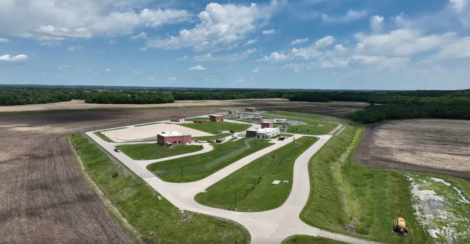
Some leaders are now stating a new reason for why Lawrence’s utility rates are soaring: The city didn’t grow enough

Lawrence City Commission could start the process of finding a construction manager for new fire station

Lawrence is charging water, sewer customers a special tax not required by state or city law

Lawrence housing market strains residents as development fails to keep up, city’s affordable housing study finds