Lawrence community photo studio brings art form back to the masses
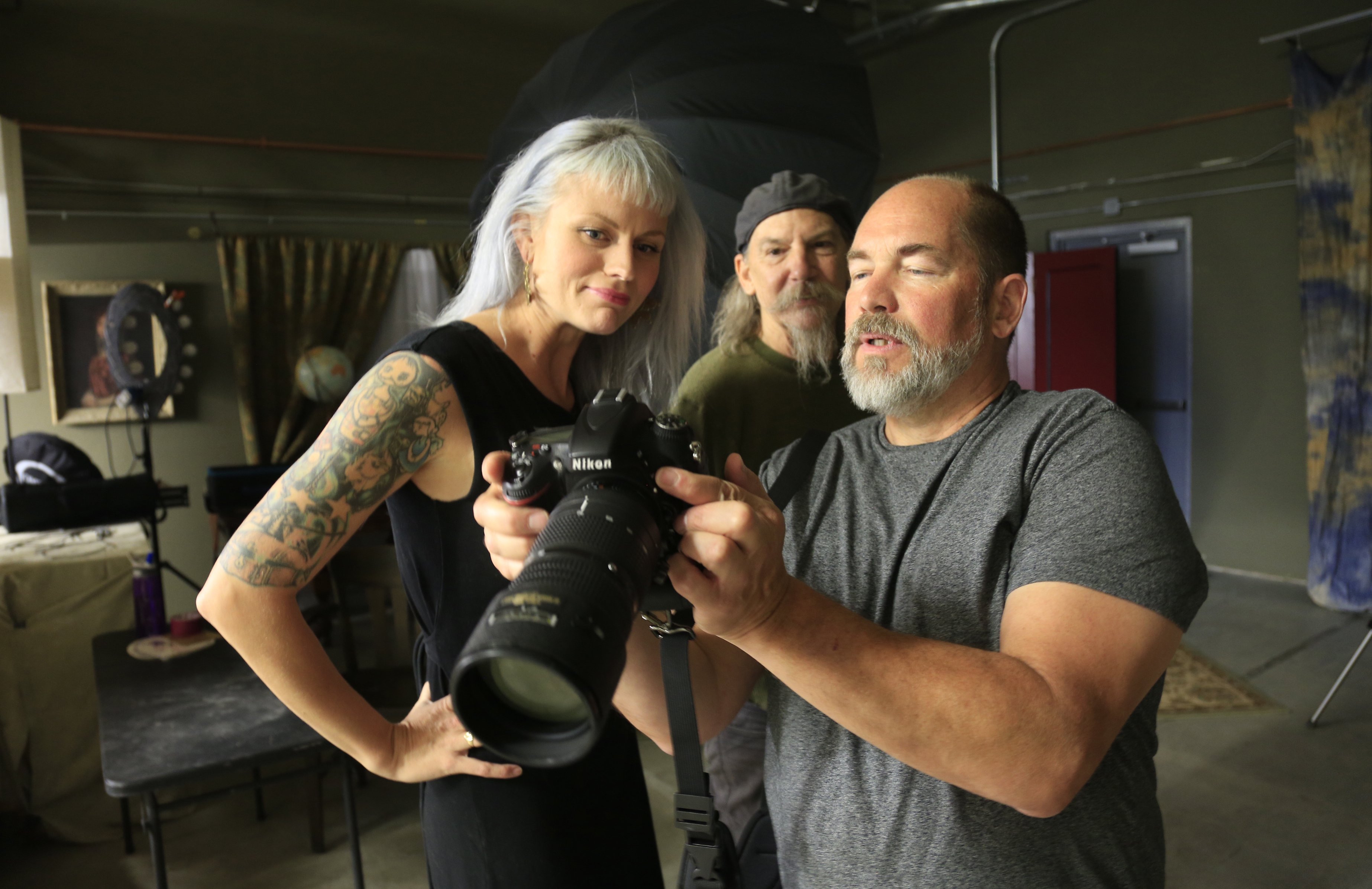
From left, artist Margo Holland, along with Jay Keim, and John Clayton check out some shots Clayton took of Holland at the Lawrence Community Photo Studio.
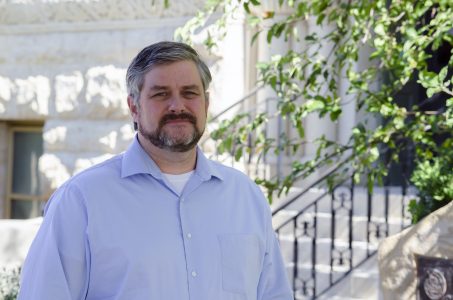
As a kid, Jay Keim would spend many hours tinkering around his family’s at-home darkroom.
It’s where his father, an avid amateur photographer, taught him the basics of developing images on film. It’s also where Keim, now 60, first fell in love with photography.
Keim, like many of his peers, has worked primarily with digital cameras since the technology’s advent about 20 years ago. But when the longtime Lawrence resident recently decided to revisit film, he had some trouble finding a place in town to develop it.
“I bought this film camera, figuring there was a darkroom I could use. And it turns out, there wasn’t,” says Keim, who owns and operates the recently opened Lawrence Community Photo Studio at 720 E. Ninth St., Suite 6.
The Lawrence Arts Center has a darkroom, he points out, but it’s open only to those enrolled in classes.
That’s not the case at Keim’s photo studio, where folks can rent out the darkroom, studio space and computers by the hour. “It’s for everyone,” Keim says, even “the digital guys.” Walk-ins are accepted, too, and regular patrons can even purchase membership plans to cut down costs further.
The studio also offers photography-related classes and workshops, sells cameras and supplies, and houses a large gallery space. Anyone is welcome to display work there, Keim says.
He wanted a place where experienced photographers — and those with a fledgling interest in the art form — could have easy access to facilities at a low cost, so he launched an Indiegogo campaign in the hopes of establishing what is now the Lawrence Community Photo Studio.
“We got a little bit of interest from that,” Keim says, but the money really started pouring in once Fractured Atlas, a New York City-based nonprofit that supports artists and arts organizations, took Keim’s project “under their umbrella.”
Because of the group’s 501c status, any donations made to the studio through Fractured Atlas are tax-deductable, Keim says.
Within six months, he met his original fundraising goal of $20,000 and doubled it.
Now, thanks to the additional funds, Keim says he’s going to start offering classes, which originally charged a small fee, for free — “we’re not doing it for the money,” he says.
“It’s pretty overwhelming, really. I’m still blown away by it because I didn’t think was going to happen,” Keim says of the studio’s fruition. “If I could raise enough money on the Indiegogo thing to have a little closet darkroom, I’d be happy. And then here we are a few months later, in this great space. There’s nothing like it.”
Developing a following
The facility, which opened officially during June’s Final Friday festivities, is nestled along a row of artist studios in East Lawrence’s Warehouse Arts District.
It’s relatively quiet now, Keim says, as folks are still discovering the studio. But he sees a steadily growing interest in the community — hundreds attended last month’s Final Friday at the studio, and fresh inquiries pop up on the Facebook page every day.
Keim’s 20-year-old daughter, Raven Harris-Keim, fields a lot of friendly questions from neighbors (many of whom work in the adjoining studios) about the space, which most recently housed a tattoo parlor.
She co-owns the studio with her dad, and spends a lot of her time there along with Lucy the dog and permanent resident Pepper the cat.
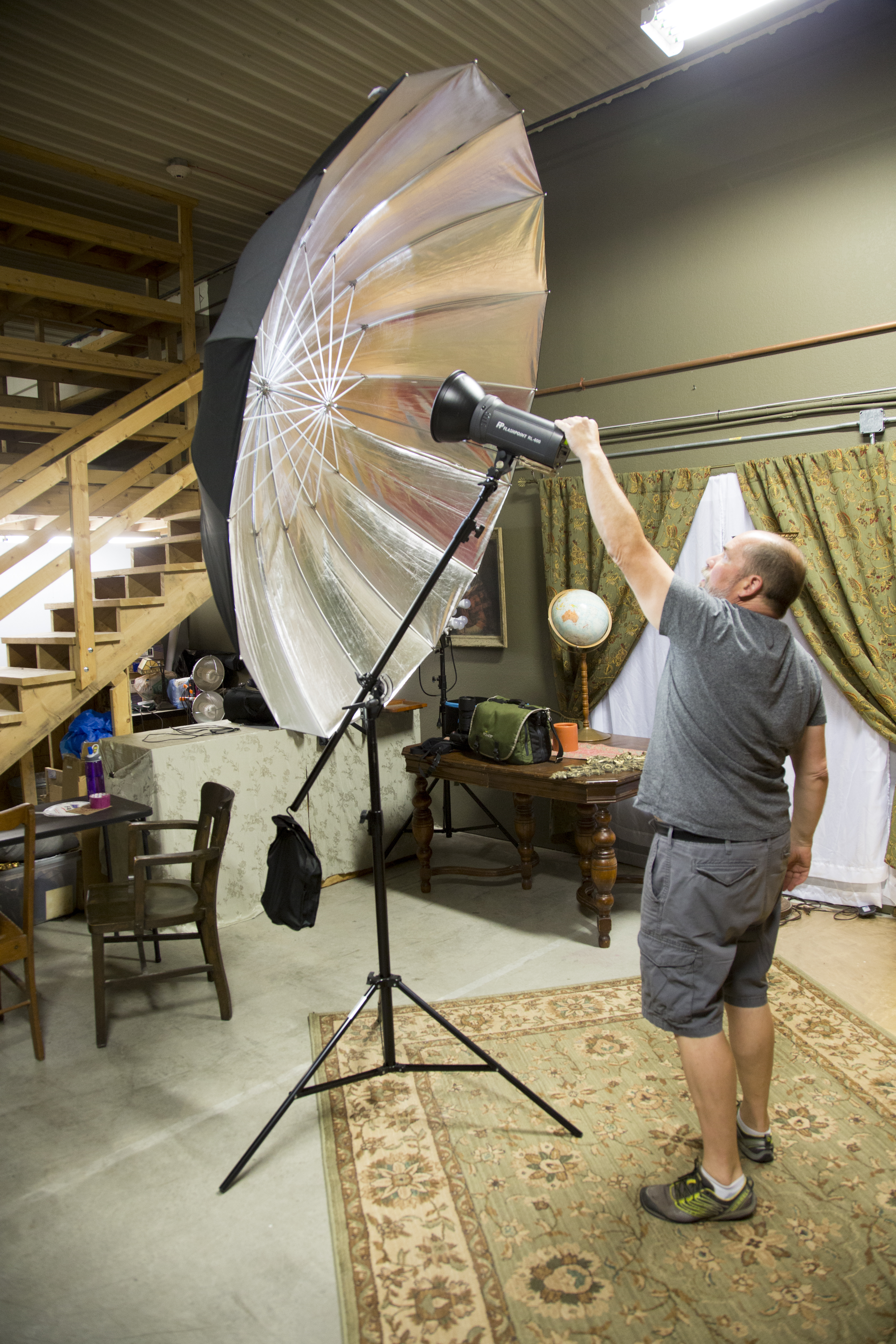
Adjusting a light, John Clayton gets things set for his shoot at the Lawrence Community Photo Studio, 720 E. Ninth St.
So does John Clayton.
Open the front door of the Lawrence Community Photo Studio, and you’re greeted with dozens of Clayton’s images, which document local nightlife and some of Lawrence’s more colorful characters, like the women of the Foxy by Proxy burlesque troupe.
By his own admission, Clayton is probably the studio’s most frequent visitor.
“How many times a day? Three or four,” he says with a laugh. “(Jay) gave me a key.”
Clayton, you might say, lives for photography — “that was two weeks of OCD right there, just making that come together,” he says, gesturing toward a still-life setup in the corner — but, unlike his longtime pal Keim, it’s something he only picked up later in life.
About five years ago, Clayton was working himself to the ground, running a care agency for people with developmental disabilities in Kansas City. The stress of the job combined with the long hours made him sick, and soon his “body started to rebel,” says Clayton, 54.
“I had this weird condition where over a few months, I wasn’t able to drive. I’d talk to people and I’d see a silhouette, but until I heard the voice, I didn’t know who I was talking to,” says Clayton, whom doctors ultimately diagnosed with a form of cataracts. “I had to get surgery, and at that point it was just time to change my life. So I changed careers, had the surgery done, and from there, it was just on.”
Even the most mundane objects appeared dazzling afterward (butterflies and clouds were initial fixations, he says), as if enhanced by some mind-altering drug. In his late 40s, Clayton was finally seeing the world through new eyes — literally — and he couldn’t get enough.
It almost became too much for his loved ones, Clayton jokes, until he picked up a camera for the first time.
“My sweetie would be driving with me and she’d say, ‘Dude, you’re driving a car. Please stop freaking out about clouds and pay attention to the road,'” Clayton says. “She said, ‘Here’s a camera. Show me what you see and what you think is beautiful.'”
Now, he takes pictures every day — wandering the Kansas University campus, taking walks down Massachusetts Street, at Keim’s studio.
Lately, he’s been using the space to shoot some of his recurring subjects, like local personality Dennis Abbott, who can often be spotted around downtown Lawrence.
‘A whole different ball game”
There’s only one part of the studio he doesn’t use much. The darkroom, Clayton admits, is not his domain.
“I’m strictly digital,” he says. “The darkroom gives me claustrophobia.”
And that’s OK, Keim says. The Lawrence Community Photo Studio, as its name implies, is for everyone. Though ask Keim about his darkroom, and you’ll notice a sense of pride in the way he talks about its light-diminishing revolving door (a steal, at $125, from Craigslist), ventilation and “top-quality equipment.”
Much of the darkroom’s equipment was donated by veteran Lawrence photographer Leo Lutz, who, now in his 90s and losing his vision, wanted to ensure its use for years to come.
“When he found out that we were going to be mainly a teaching place, he was really excited,” Keim says of Lutz. “We’re just thrilled that people like that are helping us.”
With many high schools doing away with darkrooms because of budget cuts, Keim says his studio offers resources for kids who might not otherwise have the opportunity to learn film photography. He hopes they’ll stop by.
Digital may be here to stay, but the old-fashioned methods have their place in modern photography, says Keim, who likens film to the recent resurgence in vinyl records — another technology that was once thought to be obsolete but retains a dedicated following.
“When the CD came out, people stopped making vinyl records for a long time. But real aficionados know there’s nothing like the tactile experience of the needle on the record,” he says. “It’s the same thing with film. And if you learn film, you’ll end up being a better digital photographer — if you really pay attention. It’s a whole different ball game.”
City Government

Rising Rates: A three-part investigative series examines why Lawrence water and sewer bills have been soaring
Some leaders are now stating a new reason for why Lawrence’s utility rates are soaring: The city didn’t grow enough

Lawrence City Commission could start the process of finding a construction manager for new fire station

Lawrence is charging water, sewer customers a special tax not required by state or city law

Lawrence housing market strains residents as development fails to keep up, city’s affordable housing study finds