

Garden Variety: Summer flowering bulbs
If you take a walk around the neighborhood to get ideas for your garden, the plants putting on their greatest show this month are summer-flowering bulbs.
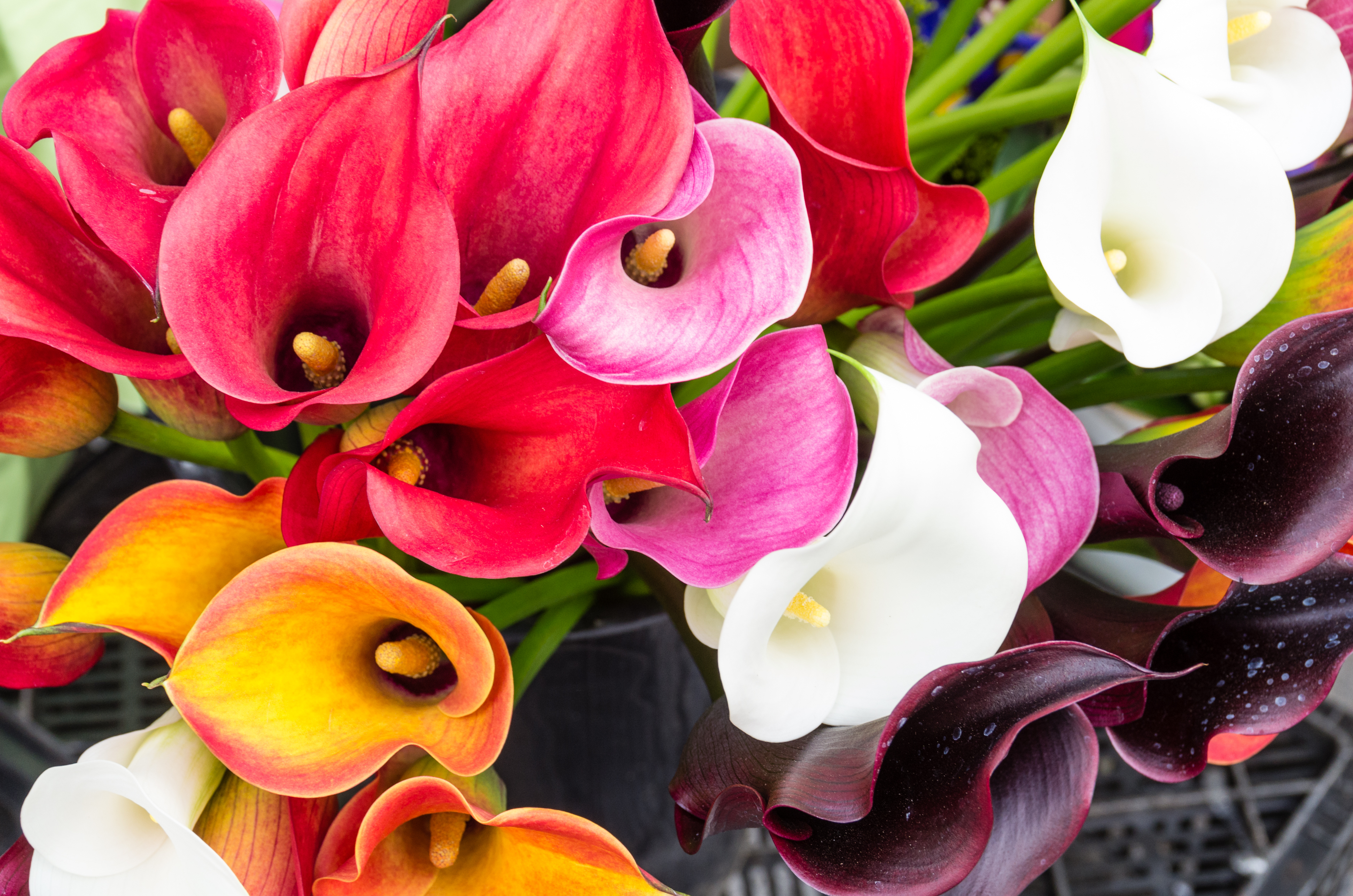
Calla lilies
Cannas, gladiolus, and surprise lilies are standbys in Midwestern gardens, but alocasias, colocasias, caladiums, and a variety of others are earning their place at expanding the local plant palette. Here are some of the top-performing summer-flowering bulbs you might want to try:
Alocasia (elephant’s ear) and colocasia (taro)
Alocasia and colocasia are both often called elephant’s ear for their large, rippled, heart- or arrow-shaped leaves. Each leaf is borne atop a single stem, with multiple stems emerging from a bulb.
Leaves may be variegated and are the primary attraction as these plants rarely flower. Both species need partial shade to keep from scorching in the summer sun and grow best in soils with high levels of organic matter.
Colocasia prefers more moisture than alocasia, making it a good option for a rain or water garden. Depending on the variety and specific site conditions, alocasias and colocasias grow to two to 6 feet tall and wide by mid-summer.
Alocasia and colocasia bulbs should be overwintered at 60 to 65 degrees.
If grown in a pot, simply cut the leaves back and bring the pot inside after the first fall frost. If planted in the ground, dig bulbs and shake off the soil before bringing inside. Store in peat, newspaper or other dry material. Plant or place back outdoors after the last spring frost.
Colocasia esculenta could also be an option for the edible landscape. The fleshy underground stems and young leaves of this species are a staple food in Hawaii.
Caladium
This is another plant grown for its attractive, exotic foliage. Leaves are born in the same manner as elephant’s ear but are much smaller.
Caladiums prefer full shade and typically have a great deal of variegation. They are especially great in containers. Overwinter in the same manner as alocasia or keep as a houseplant for the winter.
Tuberose (Polianthes species)
Tuberose is known in the cut-flower industry for its fragrance and white funnel-shaped flowers born down a long stem. In the garden, flowers are produced above grassy clumps of leaves. The plant grows well in full sun, but is only hardy to Zone 7.
When foliage dies back in fall, dig rhizomes and store in dry peat or vermiculite. Re-plant in spring after all chance of frost has passed.
Calla lily (Zantedeschia species)
You are more likely to see calla lily flowers in a decorative arrangement than in the landscape, but they are rightfully gaining some popularity for landscape planting as well.
The plants need part shade and can be planted in the same wet areas as colocasia. Overwinter as a houseplant or dig the rhizomes (fleshy roots) after first frost and wrap in moist peat to store for the winter.
Montbretia (Crocosmia species)
Montbretia produces sword-shaped leaves like iris and gladiolus, with tubular flowers ranging from orange to scarlet depending on variety.
This plant tolerates full sun, although it prefers a touch of afternoon shade. Montbretia can sometimes survive the winter in the Lawrence area but is more reliable if bulbs are dug after first frost and stored in a cool, dry location to be re-planted the following spring.
— Jennifer Smith is a former horticulture extension agent for K-State Research and Extension and horticulturist for Lawrence Parks and Recreation. She is the host of “The Garden Show” and has been a gardener since childhood. Send your gardening questions and feedback to Lawrence Living@ljworld.com.