

Evangelical: A Lawrence group attempts to break through the perceptions of a polarizing word
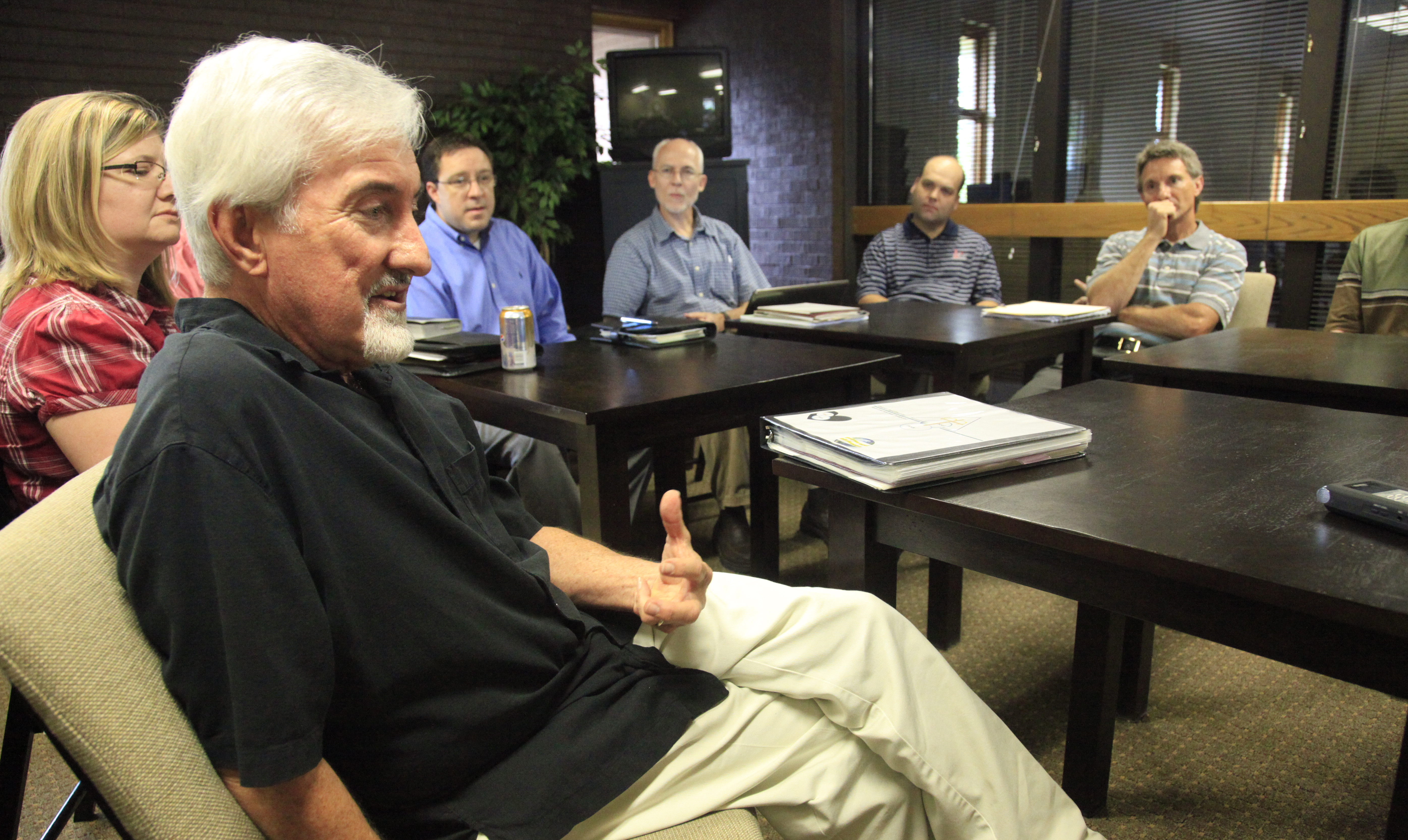
Lawrence pastors and Members of the Lawrence Association of Evangelicals, from left, Paul Gray, Brenda Wahl, Steve Koberlein, John McFarland, Barry Watts and Jeff Barclay, discuss group goals at a recent meeting at Christ Community Church, 1100 Kasold Drive.
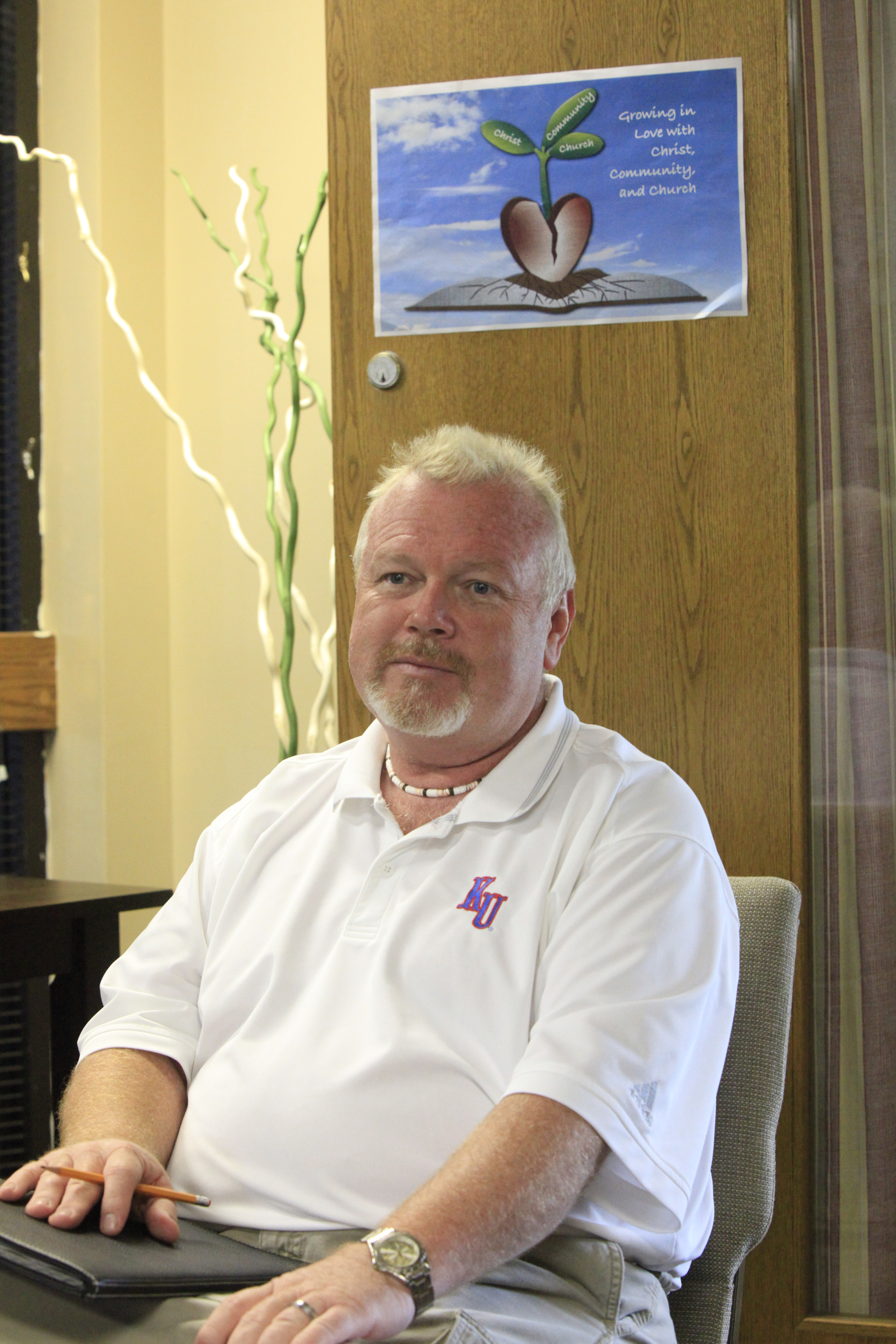
John Allen, senior pastor of Christ Community Church, 1100 Kasold Drive, listens during a recent meeting of the Lawrence Association of Evangelicals. Members of the group say they want to be identified with what they do — not what they are against politically.
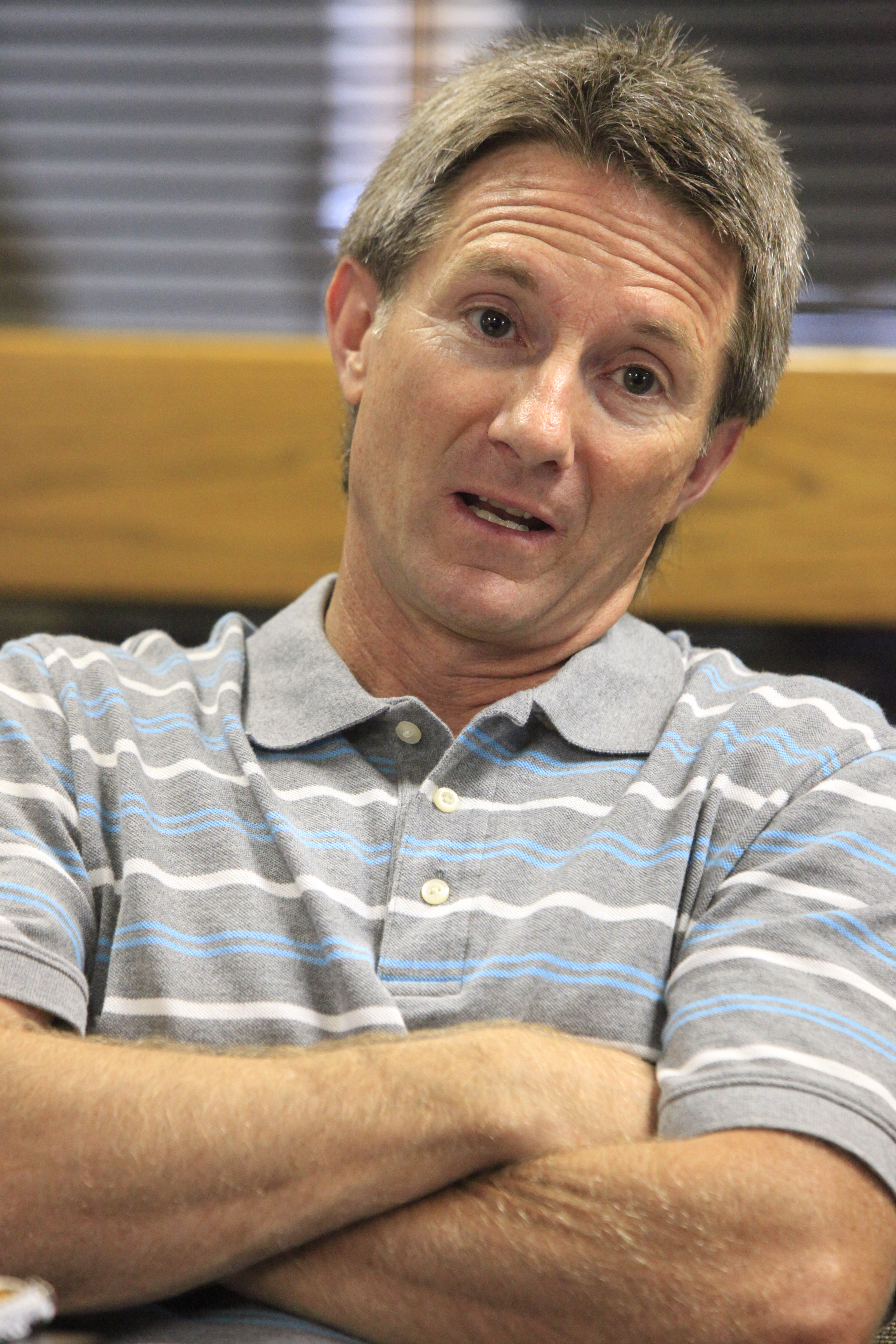
Jeff Barclay, associate pastor at Christ Community Church, 1100 Kasold Drive, is president of the Lawrence Association of Evangelicals.
Evangelical: A derivative of the Greek “evangelion” meaning the gospel or the good news.
Sounds simple and straightforward.
The connotations in the America of 2009? Anything but.
Just ask Jeff Barclay, president of the Lawrence Association of Evangelicals, about the word.
“When they use it in the New Testament, it meant ‘good news,'” says the associate pastor of growth and discipleship at Christ Community Church, 1100 Kasold Drive. “And we wish that it still did.”
This time a year ago, on the eve of the 2008 presidential election, the millions of Americans who identify themselves of evangelicals were a group much talked about in the media. “Evangelical” and “fundamentalist” and “conservative Christian” were terms used interchangeably and often to refer to a large, Christian voting bloc. In a Barna Group study at the time, 59 percent of American adults said they believed that evangelical voters would have significant influence in the election.
Tempers flared, as they often do in politics, and the picture painted of people identifying as evangelical wasn’t a pretty one.
And if you think evangelicals aren’t aware of how they are perceived, think again. The Lawrence Association of Evangelicals doesn’t try to sugarcoat public perceptions.
“I think some people view the word ‘evangelical’ as some narrow-minded people who have an agenda of telling you how you have to live,” says Paul Gray of Heartland Community Church, 619 Vt. “And I can say with great confidence that that’s not who we are and that’s not what we are about.”
Negativity and labeling
In fact, most in the group believe that more is made about what they’re not about than what they are.
“We’ve become known more for what we’re against than what we’re for,” says the Rev. John Allen, senior pastor at Christ Community Church. “And I think because of some very prominent folks who call themselves evangelical have stepped up there, we’ve become known (for) that, what we’re against rather than what we’re for.”
Allen names prominent voices such as the late Rev. Jerry Falwell as an example of an evangelical pastor who not only brought many to the evangelical movement but also added a divisive layer to it as well.
“I think when some of the negativity came about and the labeling came about with the Jerry Falwells and those that became very public in the political realm,” Allen says. “Which I don’t think Christians should be excluded from that, but that’s where a face came to it and this sort of whole moral-majority concept came about. I’ve seen a lot of good things that Jerry Falwell did, but I never heard too much about it. … It didn’t make the 6 o’clock news.”
What Falwell and the Rev. Billy Graham, as well as historical events, did do was provide a label for the followers of that brand of Christianity, says Barclay.
“Prayer was taken out of school, and then Roe v. Wade and the media just needed a way to talk about the people that had a position on that,” Barclay says. “And it’s kind of common. We probably do that, too. … And so in the media’s defense, I mean, they’re going to pick a word from somewhere because we do talk about Christian people.”
That’s not to say that this set of evangelicals wears the word on their foreheads, nor would they want to.
“We don’t live and die by the label of evangelical, or cast aspersions to those who would have other labels,” says the Rev. Nate Rovenstine, pastor of Lawrence Wesleyan Church, 3705 Clinton Parkway. “We’re so good at pigeonholing and labeling people. And I think the label’s not that important. That happens to be where we find ourselves sort of on the theological spectrum — that happens to be what draws us together. But what really draws us together is the mission of Jesus.”
So, what are the evangelicals in Lawrence about? The Rev. Shaun LePage of Community Bible Church, 906 N. 1464 Road, breaks it down.
“We’re about Jesus. We’re about his word and what he’s asked us to do about the poor and the widow and the orphan,” LePage says. “People don’t hear those thousands upon thousands of times when evangelical churches are out there helping people and giving and doing good things. Part of it is what is sensational and not. There’s a bigger story. There’s a much bigger story.”
Spreading love together
The story of the Lawrence Association of Evangelicals is one nearly two decades old. The group formed in 1990 when a handful of evangelical pastors — including several current members — decided that they would do well to join forces. It wasn’t a decision to be taken lightly, Rovenstine says.
“It was a pretty difficult decision because we didn’t want to create the image that is often created by evangelicals — that we pull off on our own little covey, but that’s kind of what we did,” Rovenstine says. “But we found something powerful there.”
That something powerful? An understanding and kinship beyond a label for the 30 to 40 pastors who are a part of the group.
“Churches, I think, often historically have been very isolated from each other,” says the Rev. Pieter Willems of Mustard Seed Church, 700 Wakarusa Drive. “So instead of us being afraid of the crossover and the change and the mixing with each other, we’ve embraced that as a good thing and actually draw strength and wisdom and courage from each other, and I think that’s really a big change from the way, if you look at how churches operated in this community in the ’60s, ’70s and ’80s, everybody was doing their own thing and a little wary of everybody else. And so a lot of walls have come down. Give God the credit for that. We’re not that noble.”
And the evangelicals present at the LAE’s most recent meeting hope that by explaining what evangelical means to them, they will have also broken down wall created by that evangelical moniker. Yes, they want to share the good news, work as the body of Christ, and they also understand that work can be as polarizing as fulfilling.
“To me being an evangelical (means) in a Christ-like way, telling everybody I know about him and how good he is. And it’s up to them to decide whether they want to follow or not,” Gray says. “And I think that’s what we’re about, not telling people you have to do this to be good or be right or be like us or whatever, but just to share Christ’s love with them.”