

Life savers: Child’s plea, new lungs pave way for second chance
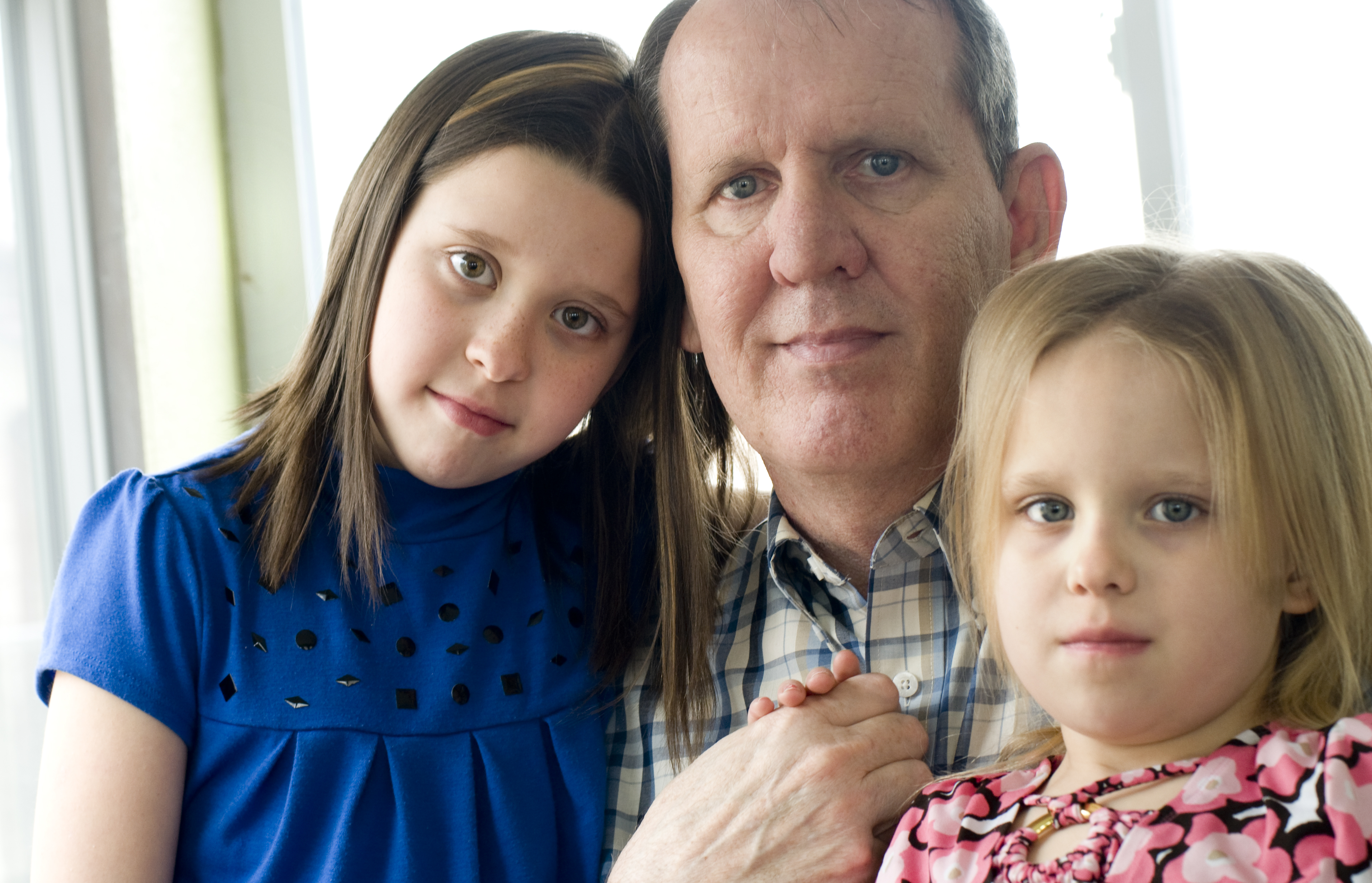
Lawrence resident Rex Williams, 57, is pictured with his granddaughters MaKenna Norcross, 9, and Tessa Norcross, 6, in his home. Williams, who once was a heavy smoker and alcoholic, was diagnosed with chronic obstructive pulmonary disease in 1995. In 2003, Williams received a lung transplant.
Two dates are deeply embedded in Rex Williams’ psyche: Jan. 31, 1998, when his daughter pleaded with him to stay alive, and July 13, 2003, when a lung transplant gave him a second chance at life.
“I was a heavy smoker and alcoholic,” he says. “Attempts to quit failed miserably, and I’d been diagnosed with chronic obstructive pulmonary disease in 1995.”
“I was holding my new granddaughter when my daughter begged me to change my ways because she wanted her children to know me. That night I knelt and wept. I pleaded with God for help.”
He hasn’t touched cigarettes or alcohol since.
In spite of changed ways, Williams’ health continued to deteriorate. He couldn’t walk or breathe unaided. His life expectancy shrank with each passing day. In early 2003, his cardiologist referred him to the lung transplant program at Oklahoma’s Integris Baptist Memorial Hospital.
In April, he and his wife, Judy, moved from Lawrence to an Oklahoma apartment because the transplant required him to remain near the hospital.
“I experienced mixed emotions,” Williams recalls. “Knowing someone had to die so I could live was hard to deal with. I went from feeling guilty to feeling blessed. Back and forth I’d go. I was told the surgery could last 12 hours and I could be heavily sedated for several days. It was pretty scary.”
The call saying lungs were available came on Sunday afternoon, July 13th.
Everything went extraordinarily well. The lungs matched perfectly; the surgery took less than three hours. He left intensive care within 24 hours, was discharged from the hospital after seven days and returned to Lawrence in September.
Williams knew his donor was a 23-year-old Oklahoma male who’d died from a brain aneurysm.
“We wrote to his parents via the transplant team, and prayed for their grieving family,” he says. “I felt guilty their son was dead and I was alive. My transplant doctor assured me I wasn’t the reason he died and said his parents accepted they were carrying out their son’s wishes. That helped a lot.”
After Christmas, he received a letter, without contact information, from his donor’s mother, Mary LaBeau, saying her son Matthew had been fit and full of life until his sudden death.
The next summer, Williams attended the Life Share of Oklahoma’s annual picnic for transplant patients and donor families.
“We or our donor family hadn’t planned to go and we hadn’t registered. We somehow ended up sitting a few feet apart,” he says.
“When Mary LaBeau saw my name tag she said, ‘I think you have my son’s lungs.’ We cried and hugged. Our families talked until we were the only ones left in the park.”
Williams believes God allowed the families to meet to enable a deeper healing process to begin. The two families have become fast friends.
“We share their family’s sorrow and they share our victory,” Williams says.