

Have a plan for when the sirens sound
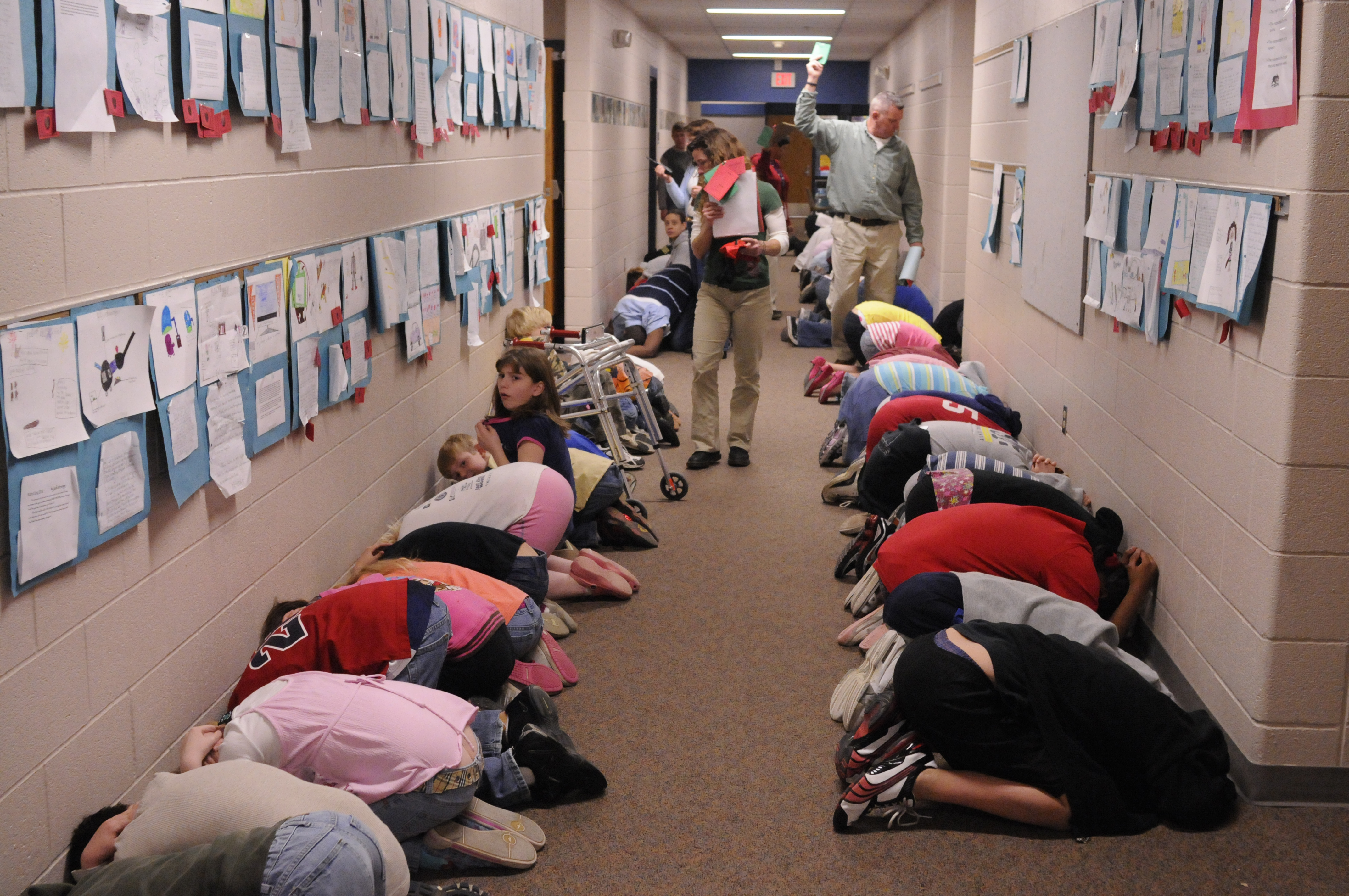
Prairie Park School students duck and cover during a tornado drill March 11, 2008, at the school, 2711 Kensington Road. In case of a tornado warning, it's best to seek shelter in a basement or lowest area possible, away from windows.
After the rough 2007 season in Kansas, the reminders are plentiful about having a plan for severe weather safety.
On the Fourth of July, a swath of dark clouds and strong winds swept through Douglas County, interrupting holiday gatherings and outdoor activities.
The tornado sirens sounded in the afternoon, and law enforcement spotted a funnel cloud near Kansas Highway 10 and Wakarusa Drive.
The sudden warning created some tense moments, especially for campers and boaters at Clinton Lake. The situation presents an important question: When you hear the sirens, what do you do?
Teri Smith, director of Douglas County Emergency Management, said it’s a question best answered by thinking about it ahead of time. In 2007, 137 tornadoes were spotted throughout the state, killing 14 people, injuring 82 and causing millions of dollars in damage.
Having a plan in place can make reactions second nature when the sirens do begin to wail, no matter where you are.
“It’s always a good idea to have those identified before the incident happens,” Smith said.
Smith and the National Weather Service offer tips on how to craft your plans.
¢ Shelter – If you’re at home or inside a building, designate a place, preferably a basement, as your shelter. If you can’t get to a basement, move to the lowest level possible and find a room in your house with no windows and the most walls between you and the outside.
It’s best to get under a sturdy piece of furniture. Smith said most businesses in Douglas County also have plans in place.
If you’re outside or in a vehicle, you’ll have to take other steps. Don’t try to outrun a tornado in your car, but just get out, Smith said. Also, don’t stop under an overpass to take shelter, because it can create a wind-tunnel effect, she said.
Instead, find a low-lying area, such as a depression or a ditch for shelter, but also beware of flash-flooding risks. It’s also best to abandon mobile homes because they offer little protection.
Also, if a storm arrives suddenly, and you’re outside at a softball or soccer field, find a sturdy building with an interior room, if it’s possible. Otherwise, a ditch or low-lying area is your best bet. Stay away from buildings with wide-span roofs, like a gymnasium, Smith said.
At one of the area’s most popular camp sites, Clinton Lake, park staff members try to warn campers if severe weather could be on the way, and sirens are placed in the area, said David Rhoades, park manager with the U.S. Army Corps of Engineers.
Many times campers chose to leave before the storm, he said, but also, the Bloomington Park offers its shower buildings for shelter in case of severe weather. Rhoades said in his 25 years working there, he cannot remember anyone suffering a major injury.
But it’s also important to prepare for severe weather, such as having your radio on during a watch.
“Have a plan and let someone know where you’re camping,” Rhoades said.
¢ Identifying weather conditions: Even if you have a plan, Smith said it’s also important to be aware of the weather and its risks.
The first rule might sound simple, but it’s to know the difference between a tornado watch, which means weather conditions could lead to developing tornadoes, and a tornado warning, which means a tornado has been sighted or indicated in the area, so it’s time to take shelter.
Watch for environmental clues, such as a dark and greenish sky, wall clouds, large hail, or if you hear a loud roar, like an approaching freight train. All could mean a tornado is approaching and that it’s time to seek shelter.
Most area media stations provide information if severe weather is in the area, and the public can also purchase a NOAA Weather Radio that has warning alarm tones.
Statewide, cities and counties tested their sirens and had drills at schools in March, and Smith said her department uses the month to get the public in the right mind frame.
“That’s a real opportunity for everybody to take the time to look at their plans,” she said.
That could mean preparing an emergency kit and practicing shelter plans. Because unfortunately, Smith said, severe weather can creep up faster than you think.