Winter squash excellent source of beta carotene
Q: Is winter squash nutritious?
A: Winter squash is a tasty source of complex carbohydrates (natural sugar and starch) and fiber. Fiber absorbs water and becomes bulky in the stomach. It works throughout the intestinal track, cleaning and moving waste quickly out of the body.
Winter squash also is a source of potassium, niacin and iron. The orange-fleshed squash also is an excellent source of beta carotene.
As a general rule, the deeper the orange color, the higher the beta carotene content. Beta carotene is converted to vitamin A in the body. Vitamin A is essential for healthy skin, vision, bone development and maintenance as well as many other functions.
The nutrient content of winter squash varies, depending on the variety. The following information is a summary of all varieties, cooked, baked and cubed:
Nutrition facts (1 cup cooked, cubes): 79 calories, 1.8 grams protein, 18 grams carbohydrates, 5.7 grams dietary fiber.
Q: How do you peel winter squash?
A: Peeling winter squash can be a challenge. The thin-skinned varieties (acorn, butternut, delicata and sweet dumpling) can be peeled with a paring knife or vegetable peeler.
Most recipes using these varieties call for cutting the squash in half. Position the squash on a cutting board, stem end facing you.
Place the blade of a heavy chef’s knife horizontally along the length of the squash. With a hammer or mallet, repeatedly hit the back of the blade near the handle to drive it into the squash until it breaks in half.
Place the larger varieties (Hubbard and Turk’s Turban) on newspaper and use a sharp cleaver to split the hard-rind open. Or use the chef’s knife method described above. Once you have a slit cut, bang on a hard surface and pull apart. Pieces are easier to peel. With a spoon, scoop out the seeds and strings and discard, or set aside if you plan to roast the seeds.
Q: How do you bake winter squash?
A: To bake any winter variety of squash, except spaghetti squash: Cut into halves or serving pieces. Remove seeds and stringy parts. Place cut side down in a shallow baking dish. Add a small amount of water (about 1/4 inch). Cook until almost tender, about 30-40 minutes at 400 degrees. Add more hot water if necessary. Turn pieces of cooked squash cut-side up. Sprinkle with salt, add seasonings and/or filling and continue baking until tender, about 20-25 minutes, depending on the sizes of the pieces.
If you are interested in preparing the squash for mashing, it is better to cook it whole until the skin softens. Then, in a pressure pan, steam 5 to 10 minutes or in boiling water, cook for 20 to 30 minutes. Drain, pare and mash. When tender, cut in half, remove seeds and fibers and use a fork to twist out the long strands of flesh.
Q: How do you microwave winter squash?
A: To microwave, wash and halve a 1 1/2 pound squash lengthwise and remove the seeds and fibers. (If the squash is hard to cut, microwave 1 to 2 minutes on high.) Cover each half with plastic wrap. Microwave on high power until tender, rotate and rearrange after half the cooking time. For 1/2 squash, microwave for a total of 5 to 8 minutes, 1 squash for 8 to 12 minutes and 2 squashes for 13 to 16 minutes. If desired, add butter and brown sugar and cover again with plastic wrap. Let stand for 5 to 10 minutes.
Q: How do you cook spaghetti squash?
A: You can boil, bake or microwave it. Prick whole squash all over. Boil (about 30 minutes), bake (about 1 1/2 hours at 325 degrees) or microwave (about 20 minutes on high) until tender. Cut lengthwise and remove seeds and fibers. Use a fork to twist out long strands of flesh. Serve with:
¢ butter, salt and pepper
¢ a sauce of melted butter, Parmesan cheese, basil, oregano, salt and pepper
¢ your favorite spaghetti sauce. Here’s a recipe you may want to try:
Spaghetti squash with parmesan cheese
One 4- to 5-pound spaghetti squash
1/4 cup olive oil
2 cloves minced garlic
3/4 cup freshly grated Parmesan cheese
1 teaspoon white pepper (optional)
1 tablespoon minced fresh basil or parsley
Additional parmesan cheese for passing
Pierce squash in several places with a long-tined fork or metal skewer. Place on baking pan and bake 1 1/2 to 2 hours. Using potholders, squeeze squash to test for doneness. It is ready when it gives slightly under pressure. Remove and cool.
Heat a saucepan over heat, pour in olive oil. Add garlic and cook until tender but not browned for about 5 minutes.
When squash is cool enough to handle, cut in half lengthwise and scoop out seeds and stringy portions. Using a fork, pull pulp from the shell in long strands and add them to the warm garlic oil.
Toss squash strands gently with pepper, salt and cheese. Pour into a serving bowl and garnish with basil or parsley. Serve immediately. Pass additional cheese at the table. Serves 6.
Q: What is a Cucuzzi squash?
A: The Cucuzzi squash also is known as a “New Guinea Bean,” “Tasmania Bean,” “Italian squash” and other names. They are grown as a novelty garden item, usually from seed, and advertised in seed catalogs.
The gourds look like a snake – long, cylindrical, up to 3 feet long and 3 inches wide (much fatter than a bean). Some of the gourds look like a cane with a hook. Others are coiled and twisted, and some are fairly straight and club-shaped. They are light green in color with a very smooth surface. The white pulpy interior has many seeds.
The gourds are edible in the young immature stage – up to 10 inches long; over that they are bitter. They grow on a vine that is 6-12 inches long. The plant is an annual, has a musky scent and hairy large, shallow-lobed leaves on long petioles. It grows like pole beans but needs a lot of room.
– Susan Krumm is an Extension agent in family and consumer sciences with K-State Research and Extension-Douglas County, 2110 Harper St. She can be reached at 843-7058.
Food
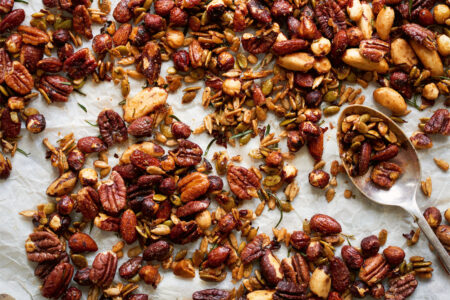
Ease into plant-based snacking with spiced nuts and seeds

A freezer full of stock and a handful of shiitakes make Chris Fischer’s mushroom soup

‘Trails That Connect Us’ to celebrate county’s outdoor opportunities

This breakfast dish is great way to use leftover matzo
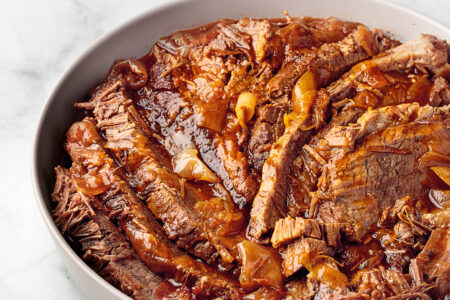
Instant Pot Jewish brisket adds sweet and savory flavor to Passover and many holidays