

Concerns grow for biotech rice
Harvest imperiled after discovery of modified crops in food supply
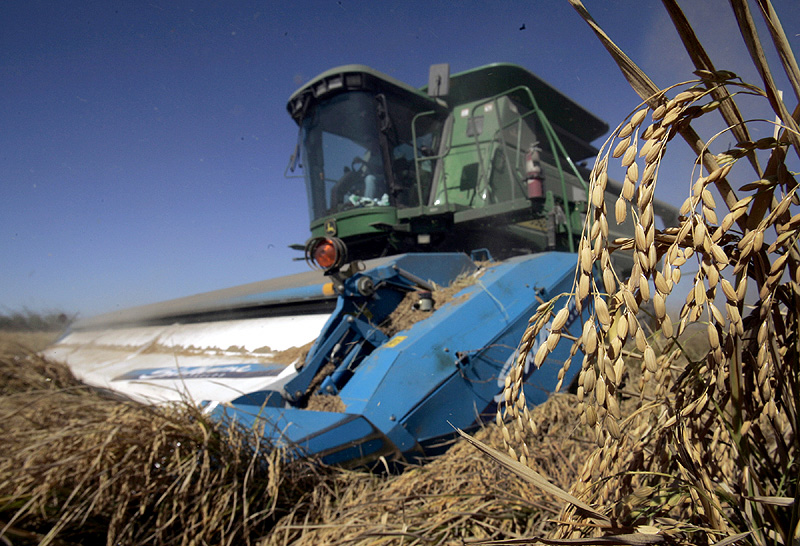
Grains of rice are seen close-up, top, as rice farmer Greg Massa harvests one of his rice fields last week near Princeton, Calif. The discovery of small amounts of experimental strains of genetically engineered rice in storage facilities holding crops destined for the food supply has caused Japan, the largest U.S. rice customer, to prohibit some varieties of U.S. rice and to threaten to ban all U.S. imports. Massa has spent the past three years publicly protesting the growth of genetically engineered rice anywhere and in any quantity.
Princeton, Calif. ? Fourth-generation farmer Greg Massa was in the middle of the rice harvest and he was dirty, angry and depressed.
The price of the gasoline that powers his water pumps and rice harvester has never been more expensive. A late planting season, hot summer and rising expenses had ensured a less-than-stellar harvest, with the U.S. Department of Agriculture forecasting a 13 percent drop compared with last year.
So the last thing Massa needed was a biotechnology blunder so disastrous that it prompted the rice industry’s biggest export customer – Japan – to prohibit some varieties and threaten to ban all U.S. imports. The European Union is making similar threats because genetically engineered rice continues to turn up on grocery shelves in Europe.
“If that happens, the California industry will evaporate,” said Massa as he drove the harvester around his farm about 80 miles north of Sacramento.
He has spent the past three years publicly protesting the growth of genetically engineered rice anywhere and in any quantity. Biotech-averse overseas consumers in Japan, Europe and elsewhere simply won’t buy it, he says, even if the crops are approved for U.S. consumption.
Production blunder
The U.S. rice harvest is imperiled by the discovery of small amounts of experimental strains of genetically engineered rice in storage facilities holding crops destined for the food supply. Bayer CropScience AG, the German company responsible for the mistake, is still investigating how the experimental rice got into the food supply. Federal officials say the company’s signature genetically engineered rice came from storage bins in Arkansas and Missouri, but they don’t know where it was grown.
The rice was genetically engineered by Bayer to be resistant to a weedkiller and had never been approved for human consumption. Federal officials and company executives say the strain posed no health threat and was similar to biotech rice that had been approved.
Kansas connection
In Kansas, farmers in the Junction City area soon could be asked to start growing genetically altered rice for Ventria Bioscience, a Sacramento, Calif.-based company that uses the material to manufacture medicines, including one to fight childhood diarrhea.
Ventria last month announced plans to spend $6 million renovating and equipping a former grocery distribution center in Junction City.
Still, Bayer’s blunder has been costly.
Rice futures plummeted by $150 million immediately after the contamination announcement, and biotech-hating European retailers pulled U.S. rice from their shelves. Growers in Arkansas, California, Louisiana, Mississippi, Missouri and Texas filed lawsuits against Bayer for hurting their sales.
Rice exports are worth $200 million annually to California, which is second only to Arkansas in rice production. Nearly all Japanese imports come from California, which grows mostly short and medium rice grains. Longer-grain rice is grown in the South. In all, the U.S. rice harvest fetches about $1.8 billion annually.
A Bayer spokesman declined to comment, other than to say that the company has no plans to commercialize any of its genetically engineered rice because few farmers are interested in growing it.
Rice farmers throughout Northern California are perplexed that companies and scientists are continuing to experiment with a technology so thoroughly rejected by the market.
Last month, Japan announced it would genetically test every rice shipment entering the country and shut down all U.S. imports if it found any more biotechnology crops. None of the genetically engineered rice at issue has been found in California.
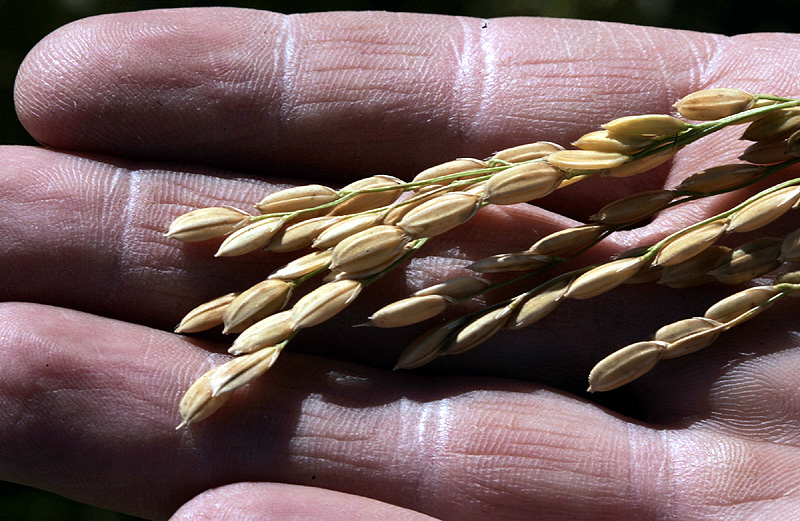
** ADVANCE FOR MONDAY OCT. 16 **Rice farmer Greg Massa displays some of the medium grain rice he grows near Princeton, Calif., Tuesday, Oct. 10, 2006. The discovery of small amounts of experimental strains of genetically engineered rice is storage facilities holding crops destined for the food supply has caused Japan, the largest U.S. rice customer, has prohibited some varieties of U.S. rice and has threatened to ban all U.S. imports. Massa has spent the past three years publicly protesting the growth of genetically engineered rice anywhere and in any quantity. (AP Photo/Rich Pedroncelli)
Many rice farmers see it as the last step before the country closes its borders to all U.S. rice.
“There are political forces in Japan that would very much like to see California rice no longer shipped there,” said John Hasbrook of SunWest Foods Inc., California’s largest rice miller. “It’s pretty much economic suicide to let genetic engineered rice creep into California and pose a contamination threat.”
SunWest has called for legislation banning genetically engineered rice in California.
Still, a few companies continue to tinker with rice genes, arguing that biotechnology can be beneficial to farmers, consumers and the environment. Researchers continue to genetically engineer rice that can tolerate drought, floods and disease.
Proponents hope that consumer attitudes will change over the next few years.