

Baldwin City man recalls Little League odyssey
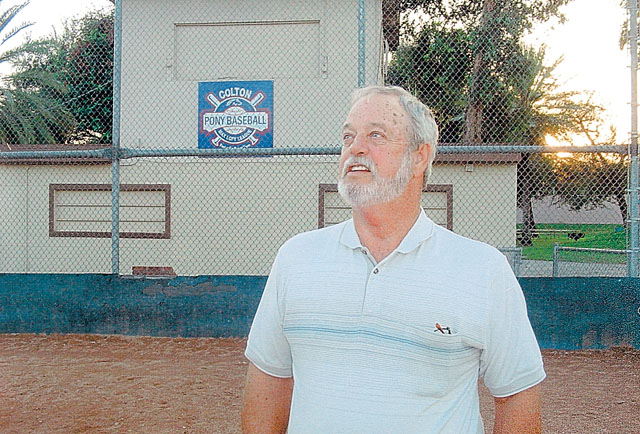
Clarence CB Brumm visits the original sandlot where he played at as a little leaguer in the early 1950s.
Most Baldwin Junior High students do not know that their head custodian once lived every Little Leaguer’s dream.
But in 1954, Clarence Brumm, or CB, as his friends call him did just that, reaching the championship game of the Little League World Series in Williamsport, Pa.
Those students probably also do not know that baseball landed CB in “Life” magazine and nearly earned him an endorsement deal with U.S. Rubber Co.
It’s all true, though; CB just rarely tells people about it.
When he does open up, though, CB has quite a story, one that includes a cross-country adventure, a minor run-in with the law, as much baseball as a kid could want, and more than one life lesson.
CB is no longer a small-town 12-year-old. He’s 65 now and lives in Baldwin City with his wife, Gretchen, but he still counts the summer of 1954 as one of the greatest learning experiences of his life.
Starting from scratch
CB’s hometown, Colton, Calif., was an agricultural town of about 3,000 people. Three major railroad lines intersected there, and the town had a racial diversity that was unusual for the 1950s.
The majority of adults in Colton worked for the railroads, and the pay was not great. There simply wasn’t money to put toward extracurricular activities.
But CB and his friends didn’t need money to play their favorite game.
All they needed was a sandlot, a few gloves and enough players to cover the field.
When a group of fathers finally formed an organized league in Colton, they drew names out of a jar to set the rosters. That led to mixed-race teams, unheard of at the time.
“We were kind of misfits,” CB said. “But that’s what made our league better off. We were doing something during the time that wasn’t supposed to be done.”
And they did it well.
At the end of the season, CB, a catcher, was picked for an all-star team that included the best players with the best sportsmanship from all four Colton teams.
Even then, the kids shared equipment and wore simple T-shirts, because anything more would have been too expensive.
The Colton All-Stars traveled to larger cities to take on the best competition in the area.
“We were invited to bigger cities to give them something to beat up on, but we beat the majority of them,” CB said.
Time after time, the All-Stars won the games they were supposed to lose.
“They were scrappy little kids with no organization,” CB’s wife, Gretchen, said. “They just played ball, and they just kept winning.”
They joined the official Little League Association and had to travel to other towns just to practice on a grass field. But they became district champions.
They beat teams from Arizona, Hawaii, Utah, Washington and British Columbia, and suddenly they were the West Coast champions.
CB had the RBI that made the All-Stars the first Western team to go to the World Series.
It also united a community.
Exploring the nation
The excitement the team stirred within the town meant the lack of individual wealth was no longer an issue. The team had to get from California to Pennsylvania, and the citizens of Colton banded together to make the trip possible.
Three companies pooled their resources to buy uniforms for the All-Stars.
“They didn’t want us to have to play in T-shirts and Levis,” CB said.
Southern Pacific railroad paid travel expenses, while another railroad donated a sleeping car and a riding car.
The parents didn’t have to come up with any money.
When the train pulled out, the only people on it other than the players were the coaches and their wives, a few people to look after the boys, and the mayor, who took along fliers advertising Colton to the rest of the country.
During an overnight stop in Chicago, the boys got their first look at a high-rise building.
While trying to find out just how high the buildings were, they dropped water balloons down to the sidewalk.
“It didn’t dawn on us that we were being ornery little country kids,” CB said.
Those country kids got the royal treatment in Chicago.
Jack Webb, an actor on the TV series “Dragnet,” donated his box seats to the team. And after the game, the kids from Colton got a thrill few Little Leaguers ever experienced.
“They let us go out and play catch on Wrigley Field,” CB said.
Later in the trip was a stop in New Orleans, where CB said they got to see “the real world.”
He said that growing up in Colton, kids did not experience much prejudice, so they had no idea how prevalent it was in the South.
“In the French Quarter, we went over and were drinking out of the colored fountain,” CB said. “We got into trouble because we were innocent, thirsty kids.”
CB said he and his teammates got into trouble for “mocking the color barrier,” as the locals put it.
“That didn’t sit right with any of us on the team,” he said.
Later, some of the All-Stars sat in the “colored” section of a New Orleans trolley car, and the conductor kicked them off.
“None of us understood the troubles we were confronting,” CB said. “We didn’t know what the big deal was.”
If the time spent in New Orleans opened their eyes to the world, the stop in Washington, D.C., proved just how much of a team they were.
When they visited the Washington monument, that “ornery country kid” factor kicked in once again.
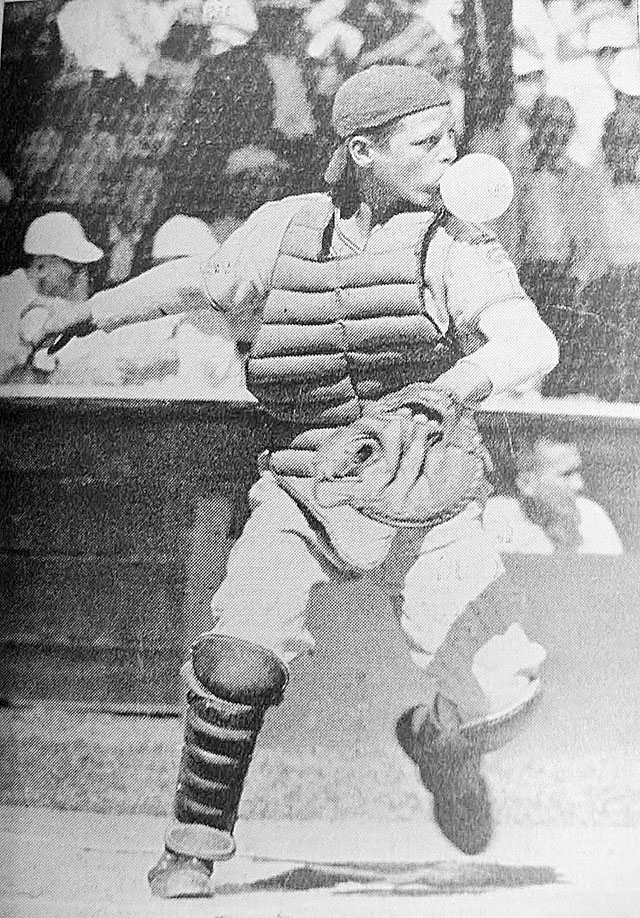
This 1954 photo of Clarence Brumm appeared in LIFE magazine that year.
“We dropped a ball out the window at the top to a kid waiting to catch it,” CB said. “Instead, it fell right by a policeman.”
The officer wanted to arrest the one who had dropped the ball and demanded to know which player had done it.
All six players who had been at the top admitted to it.
Because the officer couldn’t take them all into custody, they were all allowed to continue on their way.
Playing their game
Upon arriving in Williamsport, Pa., the home of the Little League World Series, CB said he and his teammates felt right at home.
The people there made sure of it.
“The whole town makes you feel like you’re home,” CB said. “If they know you’re a Little Leaguer, they make you comfortable.”
Teams stayed in college dorms, went to picnics and took part in several events so they could get to know each other.
But the kids from Colton may have had a little too much fun.
The All-Stars had shocked everyone by making it that far, but then they played themselves right into the championship game.
They would have to play it without two of their stars, though.
At one of the get-togethers, the star pitcher, Kenny Hubbs, broke his toe running a race. The home run-hitting first-baseman got into poison ivy. Both players had to sit out the last game.
That did not calm the buzz surrounding the game back home, though.
“All of Southern California was listening to that game on the radio,” CB said.
The All-Stars rallied from an early deficit to make the game close, but it soon became clear that the opponents from Schenectady, N.Y., had an unfair advantage.
The coach of that team had been to the Series the year before and lost, and CB said it was obvious he was not about to let that happen again.
The All-Stars spent their free time having pillow fights and meeting celebrities like Abbott and Costello, Buddy Hackett and Cy Young, but the Schenectady coach was not there for the fun.
He isolated his players and prevented them from attending any extracurricular activities.
CB said the difference between the two teams was that the Colton coaches knew that “if you weren’t having fun, it wasn’t worth playing.”
Martin Ralbovsky, a Schenectady player, later wrote a book called “Destiny’s Darlings” about the Series. In it, he said the coach had taught them to play dirty.
They would intentionally take out the second-baseman on double play attempts and throw directly at their opponents’ best hitters.
Ralbovsky wrote that the Colton team had more talent, but that his own team was meaner.
The injured All-Stars, the dirty play and a Colton home run that was ruled foul helped Schenectady to a 7-5 win.
CB said it was possible the Colton boys did not realize just what they had done, though.
“It didn’t dawn on us until later that we’d missed out, but now that I’m older, I really feel that our team came out the winner,” CB said. “I’ve learned a lot more in life by coming in second by doing things the right way than by trying to achieve first by doing things the wrong way.”
Continuing the legacy
Five Colton players eventually signed professional contracts.
Kenny Hubbs, the pitcher with the broken toe, was the National League Rookie of the Year in 1962, playing second base for the Cubs.
Tragically, Hubbs died two years later in a plane crash. His glove is now on display at the Baseball Hall of Fame.
CB was invited to the training camps of the St. Louis Cardinals and the Cleveland Indians, but a cut finger his sophomore year of high school set him back a year in baseball, and he wasn’t ever quite the same.
His biggest fame may have come from a picture of him rearing back to throw while a giant bubble hangs from his mouth as he warmed up for the championship game. That picture of 12-year-old CB was a “Life” magazine picture of the week, and it made the cover of a “Sports Illustrated” book of best sports photographs for 1955.
Dubble Bubble sent CB a box of gum to congratulate him.
Another picture was featured in an ad for U.S. Rubber Co., which sent him a $1 check as compensation for use of the image.
CB said he couldn’t cash the check back then, though, because it would have taken away his amateur athlete status. Now it is a keepsake.
In 2004, the team held its 50-year reunion back in Colton. Out of the 14 players, nine were able to return, along with a coach and the mascot.
Gretchen said that when it was time for dinner, one of CB’s old teammates had filled his plate with Dubble Bubble.
As part of the reunion, the team visited the old sandlot where it all began. CB joked that after learning to take the bruises that came with diving after balls on the sand, “diving in grass was like jumping into a feather bed.”
The players reminisced about their arrival back home in Colton after the championship appearance.
They were treated like kings, given the key to the city and paraded around on top of fire trucks.
The town had allowed their players to become stars, and the kids took the opportunity and ran with it to the pinnacle of Little League baseball.
CB has since surrounded himself with children. Not only does he work as a custodian at Baldwin Junior High, but he also makes stick ponies at the Douglas County Fair.
He coached baseball for years, and each of his three children with Gretchen played.
CB said he recommends that kids play sports if they have the right kind of coach.
“It hurts to see kids who can’t afford to play, though,” he said. “I’d like to see more towns support sports for kids who can’t pay for it.”
That was all it took for the Colton All-Stars to get from the sandlot to the World Series.